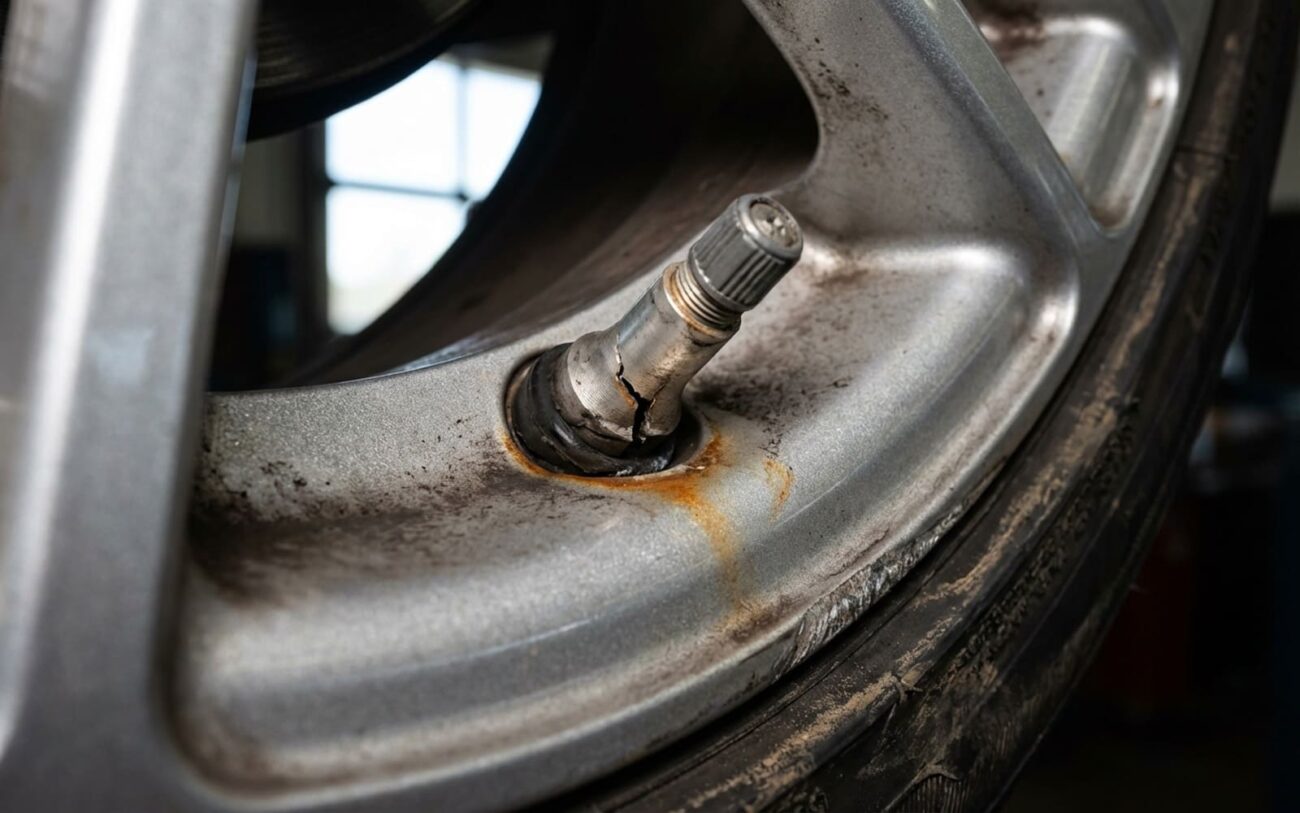
So your TPMS light came on right after you swapped wheels. Yeah, I see this every week—sometimes twice in a day. And no, the car didn’t just “forget” the sensors. That light’s telling you something real, and if you ignore it, you’re driving blind to tire pressure. That’s not just annoying; it’s dangerous. I’ve pulled into shops and seen customers roll in with 18 psi in a rear tire and no clue because the TPMS was dead. Blowouts don’t warn you twice.
What the TPMS Light Is Actually Saying
A solid TPMS light with no pressure readings? That means the system isn’t seeing any sensors. Not one. It’s like the car walked into a room and found it empty. This isn’t a slow leak. This is total communication failure.
Now, could the car’s TPMS module have died the same day you changed wheels? Sure—like a meteor could hit your garage. But in 25 years, I’ve never written a repair order for that. When this happens post-wheel-swap, the fault is almost always in the wheel or sensor setup. Period.
If the light flashes for 60 seconds after startup and then stays on? That’s different. The system sees something—maybe one sensor, maybe garbled data—but it’s not complete. That’s a red flag for mixed sensors (old and new), partial signal blockage, or a botched relearn. Either way, you don’t have a working system.
How I Diagnose This—No Guessing
Forget your OBD2 scanner. That thing reads engine codes, not TPMS signals. You need a real TPMS diagnostic tool—something that can wake up each sensor, read its ID, pressure, temperature, and signal strength. I use the Autel MX-Sensor. Others swear by the ATEQ. Doesn’t matter which, as long as it does the job.
Here’s my process:
- Check what sensor IDs the vehicle’s module currently recognizes.
- Walk around the car and use the tool to activate each sensor at the wheel.
- Compare what the tool picks up vs. what the car sees.
If the tool sees all four sensors but the car doesn’t, the issue is programming or relearn. If the tool can’t wake a sensor at the wheel? Then the sensor’s dead, damaged, or blocked.
On 2018+ Toyotas, I’ve seen the system store old IDs even after a relearn. Clear the module first—don’t just relearn over garbage data.
| Symptom | Likely in Wheel/Sensor Assembly | Common External Mimics | Definitive Test to Confirm Source |
|---|---|---|---|
| No pressure display for any tire | Sensors missing, damaged, or blocked by wheel design/material; incompatible frequency or protocol. | Failed TPMS receiver module or damaged antenna (usually in the trunk or under the rear glass). |
Use TPMS tool to verify if the module stores any sensor IDs. If empty, perform a relearn. If sensors can’t be woken at the wheels, the fault is in the wheel/tire assembly. |
| Pressure missing for just one tire | Single sensor damaged during tire mounting, dead battery, or loose connection. | On vehicles with indirect TPMS, a faulty wheel speed sensor or mismatched tire circumference can trigger warnings. |
Trigger the suspect sensor with the TPMS tool. If it responds, the issue may be in the vehicle’s receiver or programming. If silent, the sensor itself has failed. |
| System cannot complete relearn procedure | Aftermarket wheels made of RF-blocking materials (e.g., carbon fiber, thick aluminum) interfering with signal transmission. | Incorrect relearn sequence, disabled system in vehicle settings, or scan tool limitations. |
Test signal strength from a known-good sensor inside an OEM wheel vs. the new wheel. A significant drop confirms material interference. |
Where Things Actually Go Wrong
Let’s cut the fluff. The car didn’t break itself. The problem is in the wheel or sensor setup. Here’s what I find most often:
Physical damage during tire mounting. I’ve seen techs use bead breakers like they’re trying to split logs. One wrong move and the sensor’s cracked. Even if it looks fine, the internal circuit board can be fractured. These sensors aren’t tough—they’re precision electronics in a hostile environment.
And don’t get me started on valve stem torque. I’ve measured some shops cranking valve nuts down at over 100 in-lbs. The spec? 35–60 in-lbs. Overtighten it, and you crush the grommet or crack the sensor housing. Then you’ve got a slow leak or a dead sensor. Simple mistake. Costly fix.
RF signal blockage. OEM wheels are designed with TPMS in mind. Aftermarket wheels? Not always. Deep-lip wheels, double-walled barrels, carbon fiber, thick chrome plating—these can act like Faraday cages. I’ve tested wheels that look identical to OEM but kill the signal because the inner layer is painted or coated in a way that blocks 315 MHz or 433 MHz.
Even the valve stem matters. Some aftermarket metal stems enclose the sensor too tightly, trapping the signal. There’s a reason OEMs use specific designs. SAE J2657 spells it out—material thickness, geometry, antenna placement. It’s not magic. It’s engineering.
Wrong sensors. This one drives me nuts. Installer uses rubber snap-in valves—no sensors at all. Or they install sensors that fit physically but don’t match the vehicle’s protocol. A Ford sensor won’t talk to a Honda. A 315 MHz unit won’t work on a 433 MHz system. And cloning? Only works if the base sensor supports it. Don’t assume.
How I Fix It—No Guesswork
[DIY-FEASIBLE] Sensor Service or Replacement
[PROFESSIONAL-ONLY] Signal Blockage Due to Wheel Design Professional Only
[NON-REPAIRABLE → REPLACE SENSORS]
[TEMPORARY] External Clip-On Sensors
Did It Actually Work? Prove It.
Never assume. I don’t care if the light went out—prove the system works.
After relearn, take a 5–10 minute drive. Watch the dash. All four pressures should show up, update in real time, and match your handheld gauge within 1 psi. If one’s missing or stuck, the fix failed.
And pull out the TPMS tool again. Check signal strength, battery status, live data. The dash lies. The tool doesn’t. I’ve seen cars show “normal” pressure while the sensor battery was dead and the system was guessing. That’s not safety—that’s gambling.
Cost vs. Common Sense
| Repair Type | DIY Cost | Shop Cost | Success Rate | Secondary Risk if Failed |
|---|---|---|---|---|
| Sensor Service/Replacement | $50–$150 per sensor (parts only) | $200–$500 total (labor + parts) | 95% | Repeated tire mounting increases risk of wheel or bead damage. |
| Signal Booster Kit | $100–$200 (parts) | $300–$500 (parts + installation) | 80% | Booster may fail over time; adds complexity without guaranteeing signal. |
| Full Sensor Set Replacement (OEM) | $300–$600 (parts) | $600–$1,000 (parts + programming) | 98% | High upfront cost if original diagnosis was incorrect. |
Here’s my rule: if the repair cost hits more than 30% of what you paid for the wheels, stop. At that point, you’re better off selling the wheels and getting a set that plays nice with TPMS. I’ve had customers spend $800 chasing compatibility on a $2,000 wheel set. That’s not smart. That’s stubborn.
Don’t Fix It—Prevent It
The best TPMS repair is the one you never do.
When buying wheels, ask the seller: “Are these TPMS-friendly?” Give them your exact year, make, model, trim. Some brands—like Rotiform or SSR—publish compatibility guides. Use them.
And for God’s sake, don’t let the shop skip TPMS sensors. I’ve seen too many “budget” installs use rubber stems. Save $20 now, pay $500 later. Not worth it.
Key Prevention Steps
-
After installation, don’t drive away without verifying the system works.
-
Perform the TPMS relearn procedure immediately—before you leave the shop or your driveway.
-
Then take a short drive and watch the instrument cluster. Confirm all four pressures appear and match your handheld gauge reading.
-
This simple habit catches 90% of issues early. A working TPMS isn’t just about avoiding a warning light—it’s about maintaining a critical safety system from day one.
