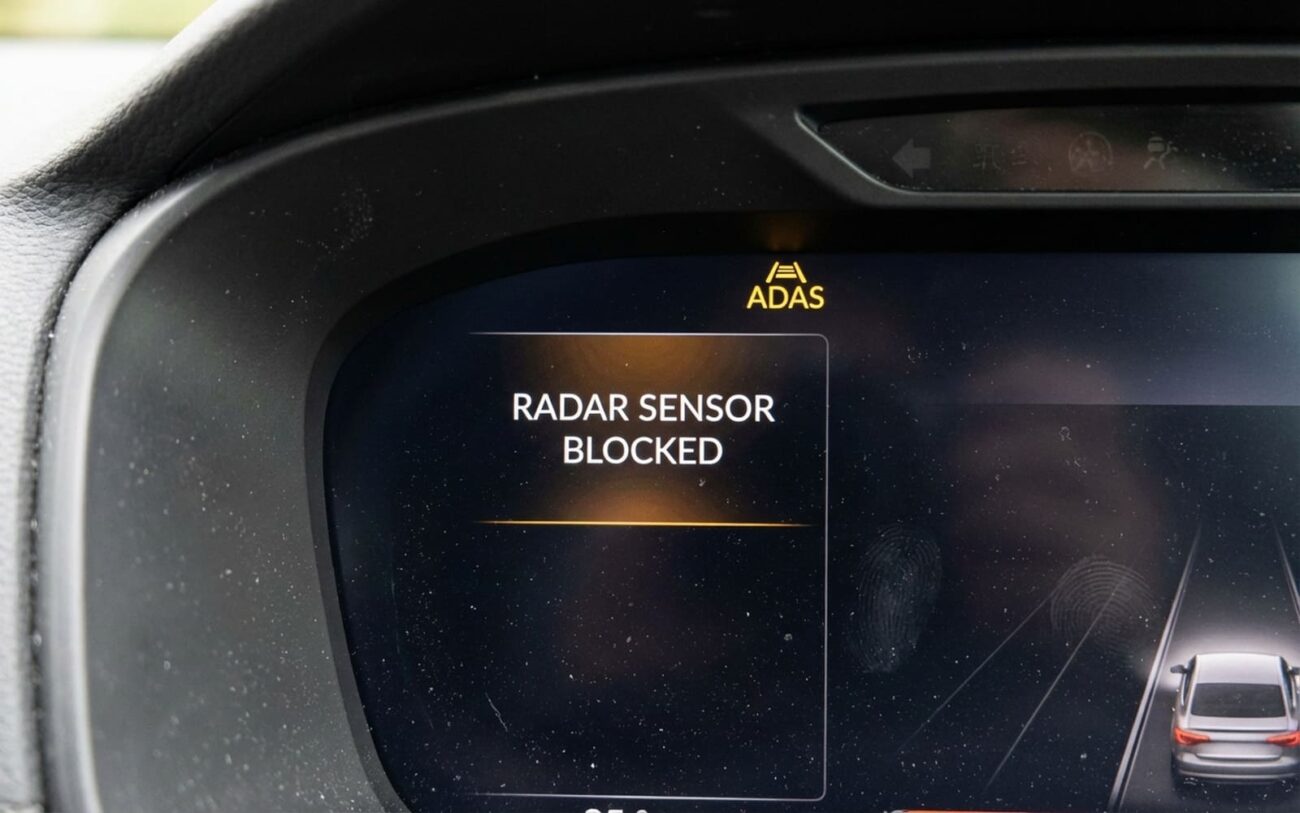
You’re driving down the highway, everything’s fine—then boom. GPS dies. Radar’s down. Your lane keep assist quits. Dashboard lights up like a Christmas tree. Most people panic, start calling dealers, or assume their car’s falling apart. But after 25 years in the bay, I can tell you: sometimes, the problem isn’t under the hood. It’s 93 million miles away—on the surface of the sun.
Sudden System Collapse? Check the Sky First
If every advanced system fails at once—GPS, radar, lane keep, adaptive cruise—it’s not a coincidence. I’ve seen this on BMWs in Colorado, Teslas in Maine, and F-150s in Texas. Same pattern: clean sensors, clear weather, no recent repairs, and then—everything goes dark.
That’s not a failing control module. That’s a geomagnetic storm hitting the ionosphere and scrambling the signals your car depends on. The worst part? Drivers don’t realize they’ve just lost all safety backups. They keep driving, assuming the car’s still watching for them. It’s not.
GPS drops first. Not “recalculating”—full loss of satellite lock. The system doesn’t know where it is. Then the radar says “blocked” even though it’s clean. Lidar returns go haywire. The car’s brain sees corrupted data and shuts things down. Adaptive cruise? Gone. AEB? Disabled. Lane keep? Off.
And yeah, you might get infotainment reboots or flickering instrument clusters. That’s not random gremlins. Long wiring harnesses act like antennas. When a solar flare hits, they pick up electromagnetic noise. That noise couples into the CAN bus, corrupts data packets, and modules start dropping offline.
Is It the Car or the Cosmos?
Look, I’m not saying every ADAS failure is solar-related. Most aren’t. But when I get a car in with five unrelated fault codes—all triggered at the same timestamp—and the customer says their phone GPS died too, I don’t grab a wrench. I grab my NOAA Space Weather app.
Here’s how I rule it in or out:
- Was it isolated? If only one car is affected, it’s probably not space weather. But if half the town’s luxury models are throwing radar errors at the same time—red flag.
- Was there a G3 or higher storm? Check NOAA’s archives. G3 (Strong) and above correlate with real-world GNSS disruptions. I’ve matched customer logs to solar flare timestamps more than once.
- Did it clear after a reboot? Solar-induced glitches are often transient. Power cycle the car—full shutdown, wait two minutes—and restart. If everything comes back? That wasn’t hardware.
But don’t skip the basics. I’ve chased “solar interference” only to find a cracked radar cover full of road grime. Clean the sensor first. Always.
What’s Actually Happening Under the Hood
Solar storms don’t “zap” your car like lightning. It’s subtler. Three things happen:
Ionospheric scintillation—when a coronal mass ejection (CME) hits Earth’s magnetic field, it disturbs the ionosphere. GNSS signals passing through it get bent, delayed, and scrambled. Your car’s receiver can’t resolve position data. That’s why GPS fails across regions, not just one car.
Geomagnetically Induced Currents (GICs)—fluctuating magnetic fields induce low-frequency currents in long conductors. Your car’s frame, battery cables, and wiring harnesses can act as paths. These aren’t enough to melt wires, but they can bias sensor references. I’ve seen this cause false “steering angle sensor fault” codes on Land Rovers during solar events.
RF interference—a solar flare emits broadband radio noise. Radar and lidar units are designed to catch faint returns. When a burst hits, their front-end amplifiers get overloaded. Sometimes they reset. Sometimes they burn out. If a radar module is dead, no live data, and no physical damage—chances are, it got cooked by RF energy.
What to Do When It Happens
If this hits while you’re driving: hands on wheel, eyes on road. Disengage all driver aids. Pull over when safe. This isn’t the time to troubleshoot.
Once stopped:
- Full power cycle. Turn off the ignition. Get out. Lock the car. Wait at least two minutes. This forces all ECUs to fully reset. On modern vehicles, a soft reboot won’t cut it—modules stay in fault mode.
- Restart and retest. Drive slowly, verify basic functions. Does GPS reacquire? Does radar see targets? If yes, you’re likely clear.
- If not, scan for codes. Use an OEM-level tool—generic OBD2 scanners won’t read ADAS modules. Pull all fault codes, clear them, then run manufacturer-specific initialization.
And yes—recalibration is mandatory. I don’t care if the radar “seems fine.” If it lost communication, it needs realignment. On a 2020+ Subaru, skipping this step means the car might not brake for a pedestrian. That’s on you.
Did It Really Work? Test Like a Pro
Clearing codes isn’t a fix. You need proof it’s working.
Step one: scan tool live data. Check that the forward radar detects vehicles ahead. Watch the camera’s lane recognition. Confirm GPS is locked to at least 8 satellites with SNR >35 dB-Hz. If any are missing, don’t drive it.
Step two: static calibration. Level ground, proper targets, factory software. On a Mercedes DISTRONIC system, even 0.2° misalignment causes cruise control to cut out on curves. I’ve had to redo jobs because the tech used a tape measure instead of laser guides.
Step three: road test. Follow a lead vehicle at 40 mph. Does adaptive cruise maintain distance? Force a lane departure—does lane keep gently steer back? (Don’t test AEB on public roads—use a closed course.)
If any step fails, don’t hand the car back. I’ve seen too many “fixed” cars come back with the same issues—because someone skipped validation.
What This Will Cost You
| Condition | DIY Cost | Shop Cost | Success Rate | Secondary Risk if Failed |
|---|---|---|---|---|
| Transient Event (No Damage) | $0 | $0 (driver reset only) | 100% | None. System resumes normal operation after reset. |
| Persistent Fault Needing Recalibration | Not Feasible | $150 – $500 (labor + calibration setup) | >95% (when performed correctly with proper tools) | Improper calibration leads to incorrect object detection—could cause delayed braking or false activation. |
| Persistent Fault Needing Sensor Replacement | Not Feasible | $500 – $3000+ (includes part cost and recalibration) | 100% (if replacement and calibration are done to spec) | High repair cost; potential insurance claim if storm-related damage is covered. |
That radar on a new Audi? Over $1,200. And it’s not covered under warranty if the cause is “external electromagnetic event.” But some insurers will pay under “acts of nature”—if you’ve got proof. I tell customers: save the NOAA alert. Print it. Keep the timestamp. It’s saved more than one claim from getting denied.
How to Stay Ahead of the Storm
You can’t Faraday-shield your daily driver. But you can be ready.
Download the NOAA Space Weather app. Set alerts for G3 and above. When one hits, expect degraded GPS and possible ADAS dropouts. Don’t panic. Just drive like it’s 2005—manual control, no assists.
Automakers do harden systems—shielding, ferrite beads, TVS diodes—but it’s not military-grade. And standards like SAE J2945/1 don’t test for sustained G5 storms. Real-world events exceed lab conditions.
So here’s my rule: when everything fails at once, don’t start replacing parts. Reboot first. Check space weather. Then decide.
And remember—no matter how many sensors your car has, the most critical one is the one behind the wheel. That’s you.
