That ‘clunk’ or ‘thump’ you feel right in the steering wheel when you’re pulling into a parking spot? Yeah, I know it. After 25+ years wrenching on cars, I’ve heard and felt that noise hundreds of times. It’s one of those issues you just can’t ignore because it’s literally in your hands.
Most folks jump straight to thinking it’s the steering rack, or maybe the steering column, and honestly, it’s usually one of the two. But mixing them up can cost you a bundle in misdiagnosed parts and wasted shop time. The real trick is knowing how to tell the difference, and with the right approach, you can pinpoint the source accurately.
First Clues: Listening to What Your Car Tells You
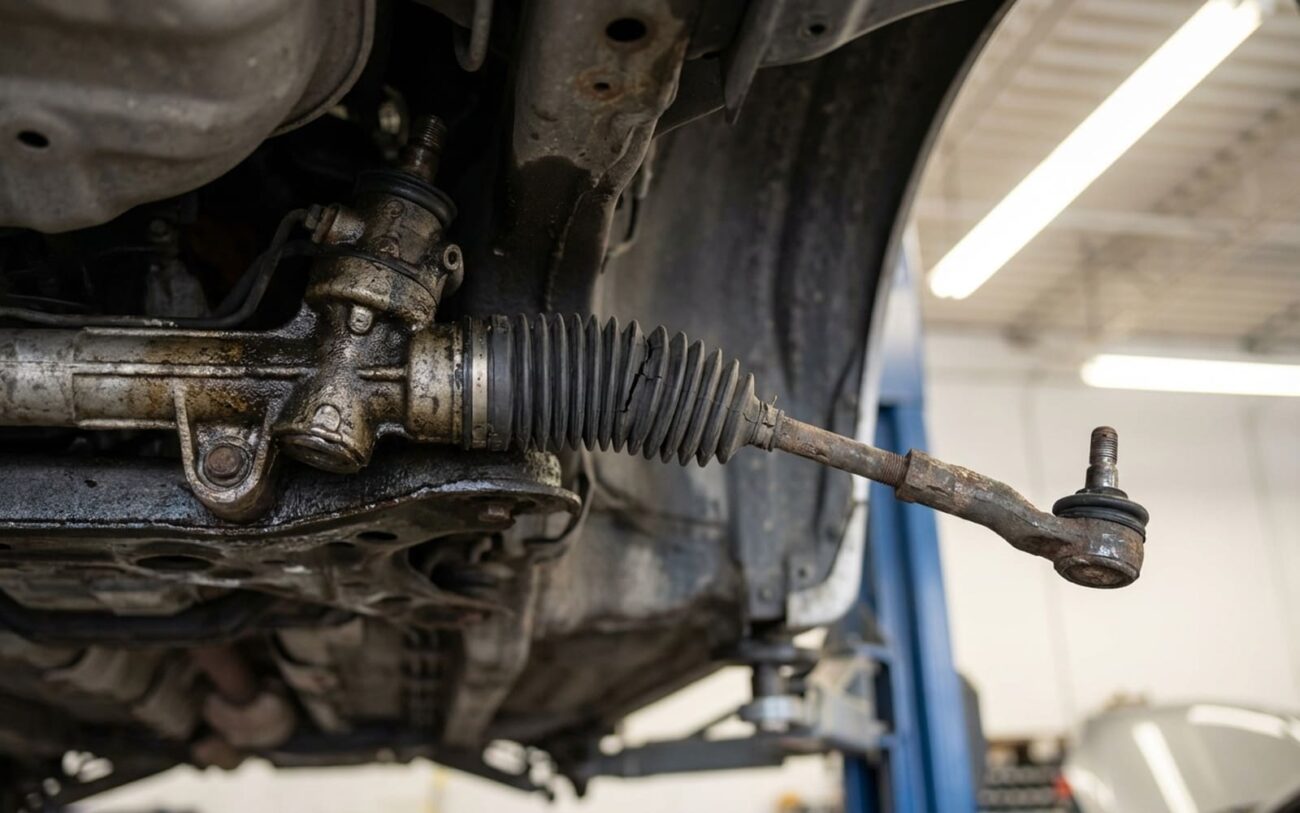
Where and when that noise happens is your first, best clue. In my experience, a knock that only shows up during slow, low-effort turns – like easing into a parking space or backing out of the driveway – usually points to internal wear in the steering rack.
You might feel a light “tap” or a soft “click” right in the wheel as you gently rock it back and forth while stopped. Sometimes there’s a slight notchiness, or the steering effort changes just for a second mid-turn. That kind of feedback tells me we’re likely looking at wear inside the rack itself – things like worn internal gears, pinion bearings, or the guide mechanisms that keep everything tight.
Now, if that knocking isn’t just limited to turning, but also pops up when you hit the brakes, accelerate hard, or even go over a bump, then the steering column is probably the culprit. I’ve seen worn upper or lower column bearings, loose mounting brackets, or even a failing intermediate shaft transmit those clunks right through the wheel when the car’s under different loads. And if you feel a gritty, grinding sensation as you turn the wheel, especially at certain angles, that’s a big red flag for column wear.
Quick Column Check:
Here’s a simple check I do: with the car off and parked, try to move the steering wheel up and down, or push it in and pull it out. Any noticeable play there? That could mean a collapsed column bearing or loose mounting bolts. If it binds up or crunches when you rotate it, stop driving. A seized column is a major safety hazard, no two ways about it.
Common Culprits & Sneaky Imposters
Steering noises are tricky beasts. A lot of other components can mimic a bad rack or column, sending vibrations right up to your hands. I’ve seen worn inner tie rods, failing ball joints, or even a damaged strut mount fool people into thinking they’ve got a bigger problem. But here’s a pro tip I’ve learned over the years: one of the most common causes of a steering wheel clunk, often mistaken for a column issue, is a worn U-joint on the intermediate shaft. Always, and I mean always, rule that out first. It’s a much cheaper fix than a whole column or rack.
My Go-To Diagnostic Steps: Isolating the True Source
To really pinpoint the problem, you’ve got to isolate the components. Here are the two main tests I rely on:
The Rack Isolation Test
Column Disconnect & Inspection
And don’t forget your trusty stethoscope. With the car running and someone gently rocking the steering wheel back and forth, you can often pinpoint the exact source of a clunk by listening to different parts of the column and rack.
Why It Fails: The Root Causes
So, why do these things fail? In the steering rack, it’s almost always internal wear. Those hardened teeth on the pinion gear and the rack bar just wear down over time, especially if the power steering fluid has been neglected or contaminated. Any moisture or debris in the fluid will accelerate the degradation of seals and internal bearings. I’ve also seen the rack’s internal piston guide spring fatigue and break, causing a rhythmic knock under load. And sometimes, the precision spool valve inside the rack can wear, leading to inconsistent hydraulic pressure and what feels like a “hydraulic knock.”
The steering column wears out in different ways. The nylon or composite bushings that support the shaft are common culprits, especially on older, high-mileage vehicles. The column’s mounting brackets can loosen or even crack, particularly after a minor fender bender or if someone’s been using the steering wheel to pull themselves into the seat. And that energy-absorbing section, designed to collapse in an impact, can deform over time or from improper loading, leading to binding or play.
Fixing It Right: Repair Pathways
Safety Critical Repairs
Alright, you’ve found the problem. Now, how do we fix it? Let me be clear: internal steering repairs are high-stakes. We’re talking about systems critical for safety. Working on columns often involves the airbag (SRS) system, and rack replacement requires precise torque specs and a professional alignment afterward. These are generally not DIY tasks unless you’re a seasoned mechanic with the right tools and knowledge.
Steering Rack Replacement Professional Only
Steering Column Service Professional Only
Intermediate Shaft Replacement
A Note on Band-Aids:
Power steering conditioners. They can sometimes quiet minor hydraulic knocks temporarily by swelling seals, but they don’t fix mechanical wear. Think of them as a temporary band-aid, not a cure. Use them only if you absolutely need a few more days before a proper repair.
After the Repair: Post-Validation
Once the new parts are in, or the old ones are serviced, you can’t just send it out the door. You’ve got to validate the repair. For a steering rack replacement, start with the car on level ground, engine running. Slowly turn the wheel from lock to lock a few times. It should be smooth, with no knocking, no binding, and no dead spots. Then, a road test is essential – the steering needs to return to center naturally and track straight.
If you serviced the column, verify there’s no play left using a dial indicator if you have one. And if your vehicle has electronic power steering (EPS), you absolutely must recalibrate the Steering Angle Sensor (SAS). Skip this, and you’ll likely have stability control warnings lighting up your dash.
The Bottom Line: Costs & Economic Decisions
Now, let’s talk about the money. These repairs aren’t cheap, and it’s important to make an informed decision. Here’s a general idea of what you’re looking at:
| Repair Type | DIY Cost (Parts) | Shop Cost | Success Rate |
|---|---|---|---|
| Steering Rack (Reman) | $400 + $100 alignment | $1,200 – $1,800 | 98% |
| Column Bearing Service | $50 (bearing kit) | $500 – $700 | 80% |
| Intermediate Shaft | $80 – $150 | $250 – $400 | 95% |
The 50% Rule:
Here’s a rule of thumb I’ve always used: if the total repair cost is going to exceed 50% of your car’s current fair market value, you need to think long and hard about whether it’s worth it. Dropping $1,800 into a new rack on a car that’s only worth $2,500 might get it running, but in my experience, that’s often just the beginning of a series of major repairs. Sometimes, it’s time to cut your losses.
Keeping It Healthy: Prevention & Monitoring
Maintenance Habits
-
Always use the manufacturer-specified power steering fluid. It’s designed to protect those specific seals and components.
-
Inspect your rack boots regularly. A torn boot lets in dirt and moisture, and a $20 boot replacement today can save you a $1,000 rack replacement tomorrow.
-
Avoid using the steering wheel as a handle to pull yourself into the seat. It puts undue stress on the column bearings and mounts.
-
And please, never hang heavy items from the turn signal or wiper stalks. That’s just asking for trouble with delicate column components.
