Alright, let’s talk about steering racks. If you’ve hit a curb and your car feels “off,” it’s easy to jump to conclusions. But in my 25+ years turning wrenches, I’ve seen a lot of steering racks get blamed when something simpler was actually the problem. This isn’t just about fixing a part; it’s about diagnosing it right the first time, because a bad rack is a serious safety issue and an expensive fix.
What a Damaged Steering Rack Feels Like (And Why It’s Dangerous)
So, you clipped a curb, maybe harder than you meant to. Now the car pulls, the steering feels vague, or you’re getting some weird feedback through the wheel. If that impact went straight into the steering rack, you’re not just dealing with an alignment issue; you’ve got a mechanical compromise inside one of the most critical parts of your steering system.
The biggest giveaway for a damaged rack isn’t just a pull—it’s a pull that won’t go away, even after you’ve had a professional alignment. I’ve seen it countless times: the car still wants to wander, or the steering wheel just doesn’t want to center itself after a turn. It might even bind slightly in one direction, like it’s fighting you. At low speeds, especially when you’re parking, you might feel a notchy, sticky resistance. That’s not normal friction; that’s internal damage messing with the rack gears or the valve body.
In more severe cases, you’ll feel a distinct clunk or a knock coming right through the steering column, especially when you hit a bump or turn sharply. That’s metal-on-metal contact. It means something inside the rack housing is bent, or internal components are moving where they absolutely shouldn’t be.
Stop Guessing: How I Diagnose a Damaged Rack (Or Rule It Out)
After a curb hit, it’s natural to assume the worst. But believe me, a lot of other components can mimic rack damage, and they often cost a fraction to fix. The key here is systematic diagnosis. You don’t want to replace a $1,000+ steering rack when a $60 tie rod end was the real culprit. I’ve seen too many shops do that, and it costs the customer a fortune.
Here’s how I approach it:
The “Pull” That Won’t Quit
If your car pulls hard to one side, even after a proper alignment, that’s a huge red flag for the rack. An alignment shop can correct toe and camber, but they can’t fix internal distortion in the rack housing or a messed-up valve body that’s causing unequal hydraulic pressure. My definitive test here is a hydraulic pressure test. If I see a difference of more than 150 PSI between the two sides, that tells me the internal valving or seals are shot, and it’s a rack issue.
Now, before you go there, make sure it’s not just a bad tire or a bent control arm. I always check those first. A simple tire swap from front to back can sometimes tell you if it’s a tire pull.
That Annoying Clunk or Knock
A clunk or knock coming through the steering wheel is another common complaint. This could be a cracked rack housing, damaged pinion gear teeth, or worn internal piston bearings. But here’s where you have to be careful: worn tie rod ends, a loose steering coupler, or even failing control arm bushings can make the exact same noise. I’ve even seen loose strut mounts get misdiagnosed as rack failure.
My go-to test for this: Get the car on a lift. Have someone gently rock the steering wheel back and forth (engine off, ignition on so the wheel isn’t locked). I’ll put my hand directly on the steering rack housing. If I feel the clunk in the rack body itself, and I’ve already confirmed the tie rods are tight, then I know the damage is internal. If I feel it elsewhere, I follow the noise. Check those inner and outer tie rods, ball joints, and control arm bushings thoroughly. A torn inner tie rod boot, for example, can let water and grit get in and destroy the inner joint, causing a clunk.
The Mechanics: How a Curb Hit Destroys a Steering Rack
When that front wheel smacks a curb, that force doesn’t just disappear. It travels straight up through the knuckle, into the tie rod, and directly into the steering rack. Now, racks are designed to handle steering forces—the normal push and pull of turning the wheels. They are not designed for sudden, violent impact loads.
The rack itself is bolted solid to the subframe. Under normal conditions, the internal gears and hydraulic valve move smoothly, all under controlled pressure. But a hard hit can bend that aluminum or cast iron housing just enough to throw off those internal tolerances. Even a tiny deformation can cause the pinion gear to bind against the rack gear, creating that “tight spot” you feel as resistance when you turn the wheel.
In hydraulic racks, that impact can distort the spool valve bore or damage sealing surfaces. What happens then? Unequal pressure distribution. That means you get a constant assist force to one side, and that’s why you get a pull that no alignment can fix. For electric power steering (EPS) units, the shock can damage internal position sensors or the delicate gear trains, leading to fault codes or erratic, unpredictable assist behavior. On some GM and Ford models, especially the 2015-2017 F-150s, I’ve seen service bulletins advising technicians to inspect the rack after any significant front-end impact, even if the alignment looks okay. Internal rack damage can hide without obvious external signs.
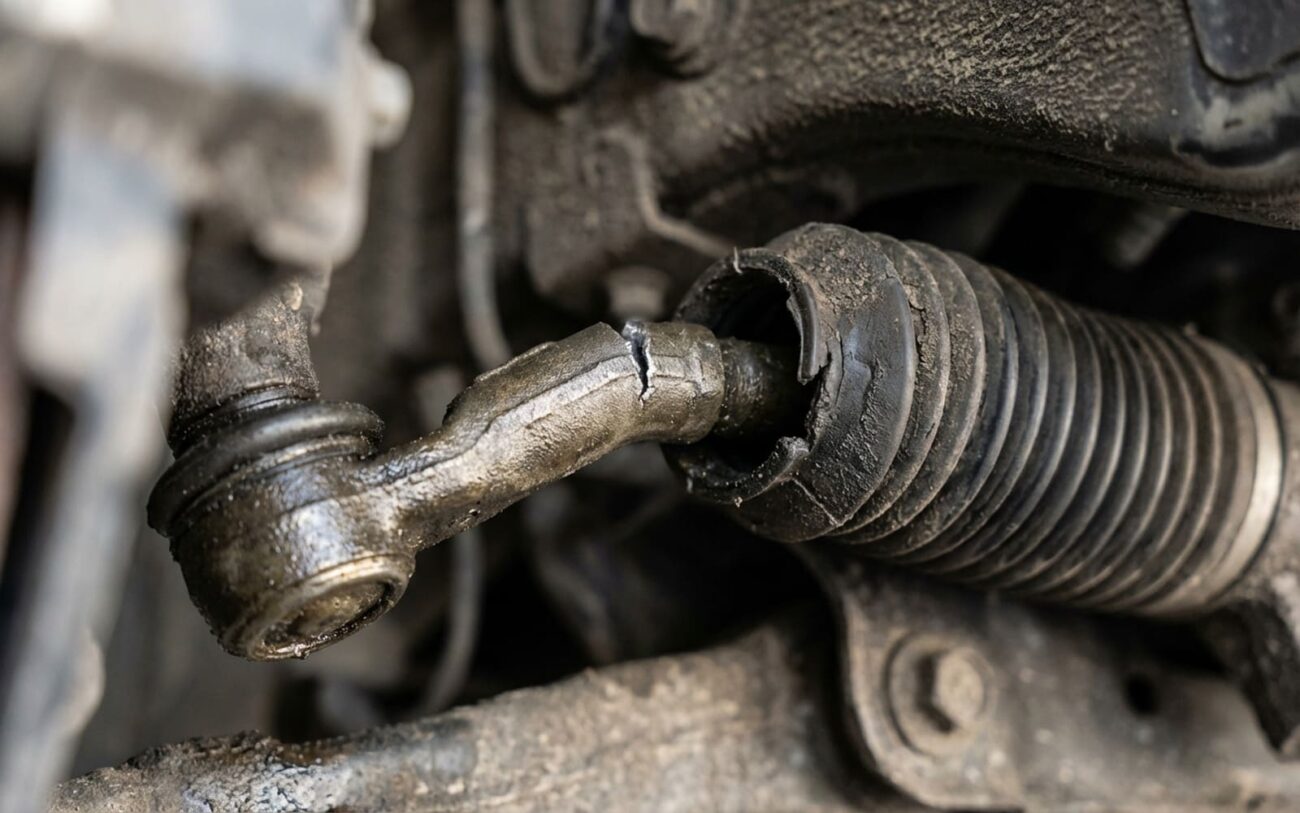
It’s really important to separate the rack itself from the bits bolted to it. A bent outer tie rod, a loose inner tie rod, or a torn rack boot? Those are common, relatively inexpensive fixes. But if the rack housing, internal gears, or valve body are damaged, that’s a whole different level of failure. That’s when you’re dealing with the core steering mechanism being compromised.
Your Repair Options: From Simple to Serious
Your next move depends entirely on what the diagnosis tells you. Let’s break down the realistic paths forward.
External Component Replacement
Full Rack Assembly Replacement Professional Recommended
The Acid Test: Making Sure the Repair Actually Worked
Replacing a steering rack is a big deal, and you don’t want to second-guess it. After installation and alignment, validation is absolutely critical. I always start with a thorough road test on a flat, straight road. The car should track perfectly straight without any drifting during acceleration or braking. When you let go of the wheel after a turn, it should return smoothly to center without hesitation or binding.
Next, I do a meticulous inspection for leaks. With the engine running and the steering fluid warm, I check every single connection: high-pressure and return lines, the rack seals themselves, and the pump fittings. Even a slow seep can lead to fluid loss, air getting into the system, and eventually, pump failure. While I’m under there, I listen for any whines or groans. Those are usually signs of air in the system or the pump straining.
Finally, I recheck the alignment. Sometimes, minor shifts can occur during the initial test drives. If the toe or camber is off, you’ll be back in my shop with uneven tire wear before you know it. And if the steering wheel is still off-center, that’s usually a linkage or adjustment issue, not the rack itself.
The Hard Truth: Weighing the Cost Against the Car’s Value
Let’s be honest: replacing a steering rack is a major repair. The cost can be hard to swallow, especially on older vehicles. You’re typically looking at anywhere from $400 to $1,200 for the part alone if you DIY it, and a shop will charge you between $1,000 and $2,500 for parts and labor. With a correct diagnosis, the success rate is high, around 95%.
Here’s a rule of thumb I’ve used with customers for years: if the repair cost exceeds 40% of the car’s current private-party value, it’s time to ask yourself some hard questions. Putting $2,000 into a $3,500 car might not be the best financial move, unless that car is otherwise in pristine condition and you plan to keep it for a long time. Sometimes, it’s just time to let go.
Keeping It Healthy: Prevention and Early Warnings
-
Inspect Those Rubber Boots: Get under there (or have your mechanic do it) and regularly check the rubber boots on both ends of the rack. If they’re torn, road salt, dirt, and moisture will get in and absolutely destroy the internal seals and gears. It’s a cheap fix to replace a boot; it’s a huge expense to replace a rack.
-
Use the Right Fluid: Modern power steering systems use very specific fluid formulations. Don’t just grab whatever’s cheapest off the shelf. The wrong fluid can cause seal swelling, leaks, and premature pump failure. Always check your owner’s manual.
-
Post-Impact Checks: After any curb strike, even a minor one, take a good look under the car for fluid leaks. And pay close attention to any change in steering feel or how the wheel centers itself. Don’t wait.
-
Monitor Tire Wear: Sudden feathering on the edges of your tires, or any other unusual wear pattern, is a huge red flag. It’s your car telling you something is off in the suspension or steering. Get it checked out before it becomes a bigger, more expensive problem.
