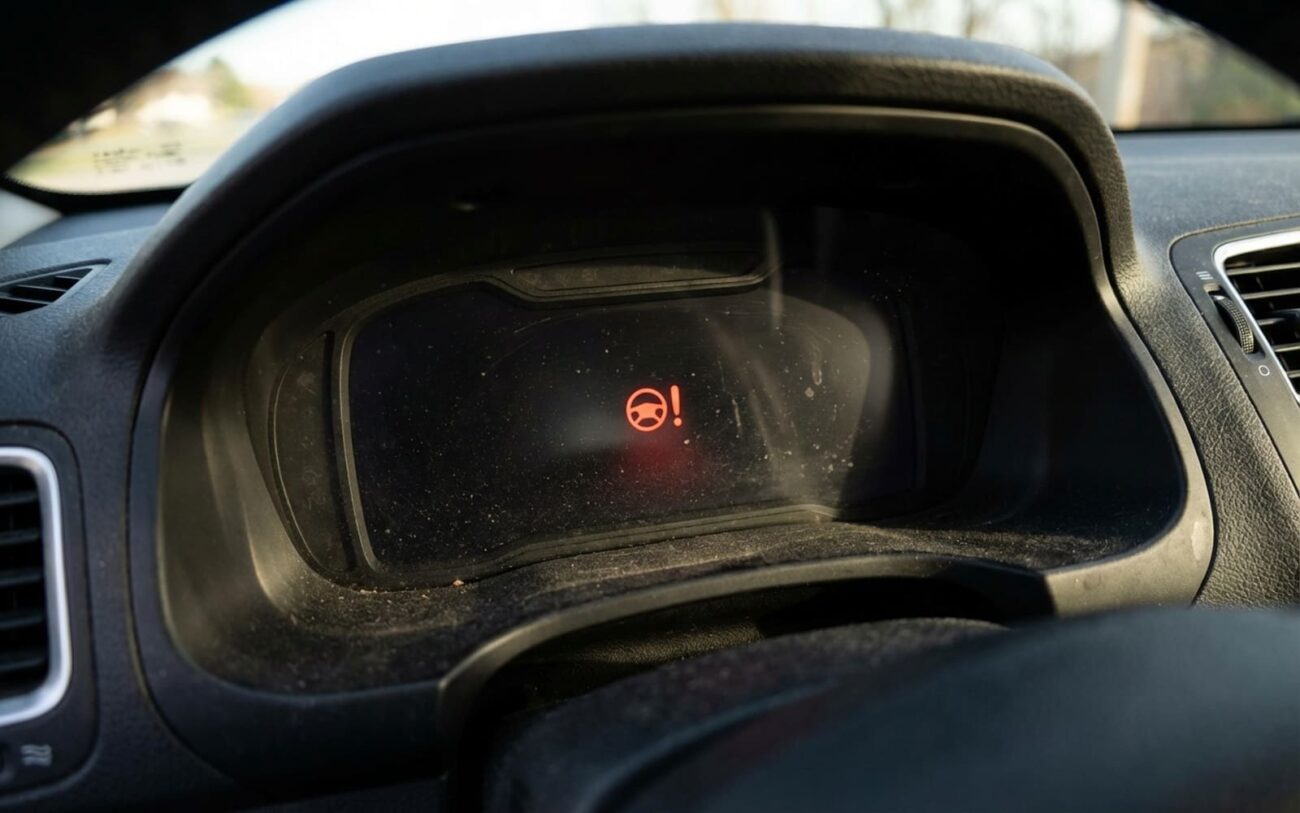
When Your Steering Fights Back: What That Light Really Means
Look, when that steering wheel light pops on and your wheel feels like it’s made of lead, the first thing everyone asks is, “Can I make it home?” My answer, after 25 years in this business? Maybe. Maybe not. It depends entirely on what’s gone sideways in the system.
That little steering wheel icon—sometimes it says “EPS” or “Steering Assist”—isn’t just a suggestion. It’s your car telling you the power assist is either cut back or completely gone. You can still steer, sure, but without the hydraulic muscle or electric motor helping out, especially at low speeds, it’s like wrestling a bear. I’ve seen folks practically break a sweat trying to park a car with no assist.
How it feels often gives you your first clue. If you’re hearing a loud whine or groan under the hood, particularly when you turn the wheel, you’re almost certainly dealing with a hydraulic system problem. That noise usually means the pump is running dry because of a leak, or the pump itself is just plain worn out. On the flip side, if the steering feels inconsistent—sometimes heavy, sometimes normal—and that warning light flickers on and off, you’re probably looking at an electric power steering (EPS) fault. These systems are all about sensors and electronics, so erratic behavior often points to voltage issues, a bad sensor, or a failing motor.
My Diagnostic Approach: Don’t Just Guess
One of the biggest mistakes I see, both in my shop and with DIYers, is jumping to conclusions. A heavy steering wheel and a warning light don’t automatically mean the pump or the EPS motor is dead. External factors can mimic a full system failure, and you’ll waste a lot of time and money replacing expensive parts if you don’t isolate the real culprit first.
Voltage is King, Especially for EPS:
I can’t count how many vehicles come in with a “dead EPS system” diagnosis that turned out to be a weak battery barely holding 11.8 volts. Or a failing alternator. The EPS module will often cut assist if system voltage drops below 11.5V to protect the car’s electrical system. Always, always test the charging system first. It’s fast, cheap, and could save you hundreds in unnecessary parts.
Here’s a quick rundown of what I look for and how I confirm it:
| What You’re Seeing/Hearing | Where I’d Look First (PS System) | Common Red Herrings (External) | How I Confirm It |
|---|---|---|---|
| Low fluid, whining/groaning under the hood, especially when turning. | Leak in a high-pressure hose, a rack seal, or a pump gasket. | External fluid seepage from cooler lines or reservoir cap. Or a loose/glazed serpentine belt that sounds like a pump. |
Clean everything up, run the engine, turn the wheel lock-to-lock a few times. Inspect with a UV dye and light. For pump noise, I use a mechanic’s stethoscope. |
| Groaning, foamy fluid in the reservoir, heavy steering. | Air getting sucked in on the pump’s suction side, or internal pump wear. | Chronically low fluid from an undetected leak. Or just old, contaminated fluid causing aeration. |
Check fluid level when cold. If it’s full but still foamy, I’m looking hard at the suction hose and reservoir seal for cracks or loose clamps. |
| Intermittent assist, PS light on, maybe dim dash lights. | Failed torque sensor, worn motor brushes, or an EPS control module fault. | Low system voltage from a weak battery or a dying alternator. |
Test battery voltage (engine off, should be >12.4V). Then I hook up the scan tool to monitor torque sensor data and the EPS motor’s current draw. |
Why These Parts Give Up the Ghost
Once you’ve ruled out the easy stuff and confirmed the problem is actually in the power steering system, understanding why it failed helps you make smart repair decisions. You don’t want to fix the symptom only to have the root cause take out the new part.
In hydraulic systems, pump failure usually boils down to three main issues: contamination, cavitation, or plain old bearing wear. Contamination—often from using the wrong fluid or just neglecting fluid changes—means abrasive crud is circulating, grinding down the pump’s guts. Cavitation happens when the pump sucks in air instead of fluid, typically from a leak on the suction side. Those tiny air bubbles collapse violently inside the pump, eroding internal surfaces over time.
For electric power steering (EPS), the big enemies are heat, moisture, and electrical stress. If you’re holding the steering wheel at full lock while stationary, you’re forcing that electric motor to draw maximum current. Do that repeatedly, and the motor or its control module can overheat, triggering a safety shutdown. Moisture intrusion into the steering column can corrode the torque sensor, leading to intermittent or false signals. I’ve seen it happen on some models where a clogged cowl drain lets water right in.
And let’s be clear about boundaries. A failed serpentine belt tensioner that causes belt slippage isn’t a power steering failure—it’s an accessory drive issue. Similarly, worn tie rod ends cause play and vibration, but they’re part of the steering linkage, not the power assist system itself. For more on that, see: Can a Worn Tie Rod End Cause Steering Wheel Vibration at Speed?
Your Repair Options: From a Drip to a Major Overhaul
Safety First, Always
Working on steering systems means you’re messing with safety-critical components. If you’re not absolutely sure about torque specs, bleeding procedures, or calibration steps, take it to a professional. A steering failure at speed isn’t just inconvenient; it can be catastrophic.
External Hydraulic Leak DIY FEASIBLE
Internal Hydraulic Failure PROFESSIONAL ONLY
EPS Component Failure PROFESSIONAL ONLY
Temporary Fix (Hydraulic Only) LAST RESORT
Did It Actually Work? Verifying the Repair
This is where a lot of repairs go wrong. You don’t want to finish the job, clean up, and then have the light come back on, or a new problem pop up. Verification is key.
My Post-Repair Checklist
-
For Hydraulic Systems: Run the engine until the fluid is warm. Then, perform at least 50 lock-to-lock turns of the steering wheel. This helps purge any remaining air. After that, inspect every connection for fresh leaks. The fluid in the reservoir must be clean, clear, and absolutely free of foam.
-
For EPS Systems: The warning light must stay off. Connect your scan tool and confirm there are no active or pending diagnostic trouble codes. Then, take it for a road test to ensure smooth, consistent steering effort in both directions, at various speeds.
-
Calibration Check: If you replaced any EPS components, or even if you just disconnected the battery for a while, always verify the steering angle sensor zero-point calibration. If it’s off, the car might feel like it’s drifting or pulling to one side, even if the alignment is perfect.
The Cold, Hard Numbers: Cost, Risk, and Your Car’s Value
Let’s talk real-world economics. Repair decisions aren’t just about turning wrenches; they’re about value and what makes sense for your car.
| What We’re Fixing | DIY Cost (Parts Only) | Shop Cost (Total) | My Success Rate (Typical) | Biggest Risk If Done Wrong |
|---|---|---|---|---|
| Replace hydraulic hose | $80 – $150 | $250 – $400 | 95% | Sudden fluid loss, which kills the pump. |
| Replace hydraulic pump | $200 – $400 | $600 – $1,000 | 90% | Inadequate bleeding, causing rapid new pump wear. |
| Replace steering rack | $400 – $800 | $1,200 – $2,000 | 85–95% | Improper installation leading to alignment issues or leaks. |
| Replace EPS column/motor | $700 – $1,200 | $1,500 – $2,200 | 98% | Incorrect calibration, causing uneven assist or pulling. |
Here’s the reality check: if the repair cost—especially for a rack or an EPS column—starts to climb past 50% of your vehicle’s current private-party value, you need to weigh that investment carefully. Mechanical soundness doesn’t always equal financial sense, and sometimes, it’s just time to let go.
How to Keep This From Happening Again
Prevention is Simple, But Often Overlooked
For hydraulic systems, the biggest thing is using only manufacturer-specified fluid. Don’t mix types, and don’t use whatever’s cheapest. Check your fluid levels monthly, and listen for any early warning signs like a faint whine during cold starts. Catching a small leak early can save you a whole pump.
For electric power steering, avoid holding the wheel at full lock while stationary for more than 5 seconds—that’s just stressing the motor. And this is huge: maintain your battery and charging system. A weak alternator or a dying battery is the number one cause of false EPS warnings and can even lead to real component failure over time.
