Steering Wheel Shake at Speed? Don’t Blame the Tie Rod First.
Alright, let’s talk about that steering wheel shake you’re feeling, especially around 60 mph. It’s a common complaint, and a lot of folks immediately wonder if a worn tie rod end is the problem. The quick answer is, yes, a bad tie rod can contribute to vibration. But in my 25+ years under the hood, I’ve found it’s rarely the main culprit for a steady shake at highway speeds.
I see this misdiagnosed all the time. A tie rod end only causes noticeable vibration when it’s so worn out that the front wheel’s toe angle is actually shifting dynamically as you drive. We’re talking about the wheel wobbling in and out, side to side, because the joint is just that loose. This level of play is extreme, and frankly, it’s dangerous. But honestly, it’s not what typically causes your run-of-the-mill highway vibration.
Confidence: High
So, what’s far more likely to be shaking your steering wheel at highway speeds? An unbalanced tire, a bent rim, or even a tire with a separated belt. Those are the usual suspects for that consistent shimmy. But here’s the critical distinction: while vibration often points elsewhere, things like clunking, knocking, or a general looseness in the steering almost always trace back to worn suspension or steering components, and tie rods are definitely on that list.
How I Pinpoint the Real Problem: Vibration vs. Clunking
Diagnosing front end issues, whether it’s a vibration or a clunk, really boils down to separating the symptoms. They might happen together, but they usually have different root causes. Get it wrong, and you’re wasting time and money, and potentially driving something unsafe. Here’s how I approach it in the shop:
If You’ve Got a Steering Wheel Vibration at Highway Speeds (around 60 mph):
Most of the time, this isn’t your tie rod. It’s usually something with the tire or wheel itself. I always start with the easiest and most common issues first. Think unbalanced tires – that’s the number one culprit. Could also be a bent wheel, a tire with a separated internal belt, or even a failing wheel bearing. Road force variation can also cause this, which is when the tire isn’t perfectly round or has inconsistencies in its stiffness.
My go-to test: Get a precision spin balance. We’re aiming for less than 0.25 ounces of imbalance. If that vibration persists after a good balance, then I start digging into the suspension components.
If You’re Hearing Clunking When Turning Slowly or Hitting Bumps:
Now, this is where a tie rod end really shines as a suspect. That distinct clunking or knocking sound, especially when you’re turning the wheel at low speeds or going over bumps, is a classic sign of a worn outer or inner tie rod end. But it’s not the only thing that can clunk. I’ve seen worn ball joints, loose strut mounts, or even failed sway bar end links make similar noises. (Just a quick note: stiff or leaking shocks rarely clunk; they usually just make for a rough ride or a squishy feel.)
My definitive test for play: Get the front end safely lifted off the ground. Have an assistant slowly turn the steering wheel side to side, just a little bit, while you get your hands on the tie rod ends and other steering components. You’re feeling for any tactile movement or hearing that tell-tale “clunk” as the joint moves. Sometimes, I’ll use a pry bar carefully to put a little upward or downward pressure on the joint to expose play.
Pro Tip on Pinpointing Play:
What feels like a bad outer tie rod end might actually be play in the inner tie rod joint (that’s the one hidden inside the steering rack boot), a worn ball joint, or even a loose control arm bushing. Don’t just assume. Always pinpoint the exact source of the play before you buy any parts. Trust me, it saves a lot of headaches and wasted money.
Why Tie Rod Ends Give Up the Ghost
After thousands of front-end inspections over the years, I can tell you there are really three main reasons why tie rod ends fail – and it’s not always just simple wear and tear. Knowing these can help you spot trouble early.
-
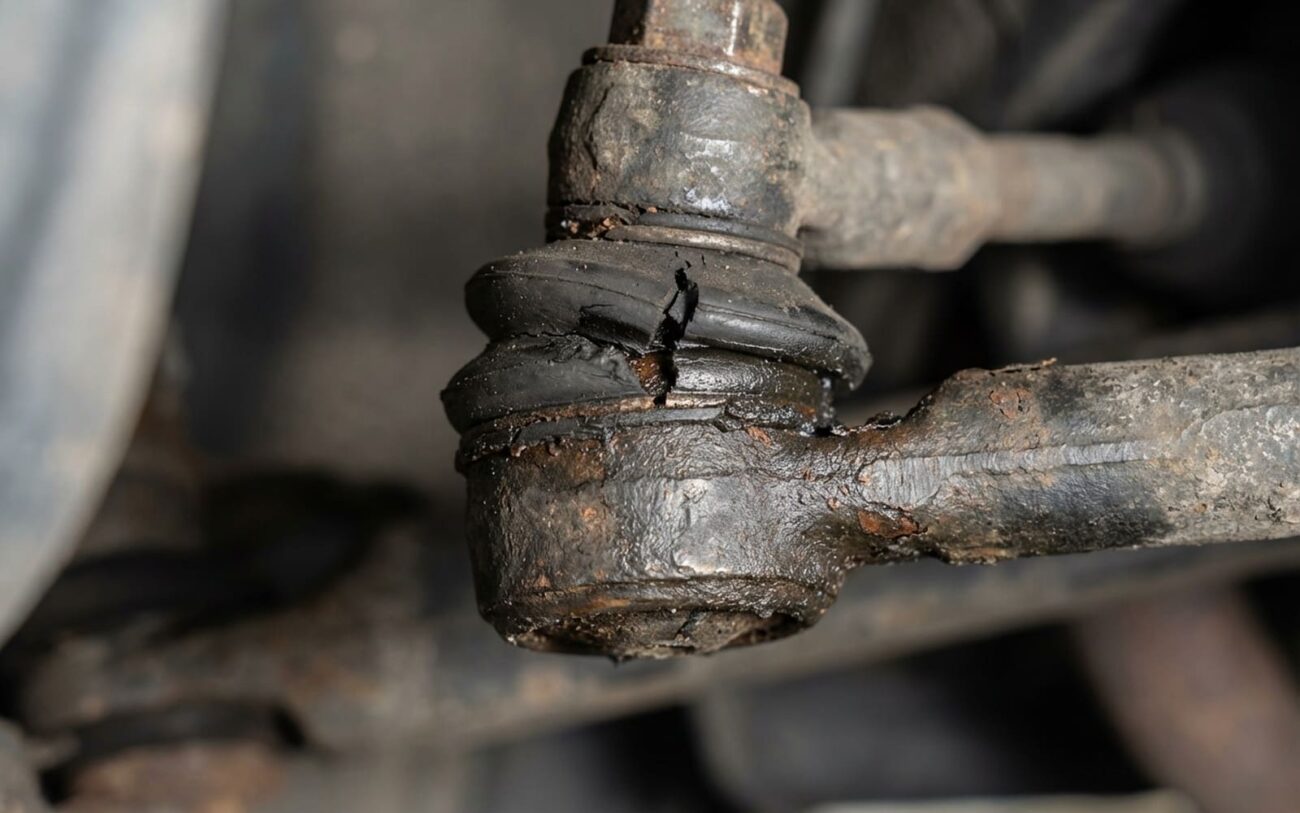
Boot Damage and Contamination: This is probably the most common killer. That rubber boot isn’t just for show; it seals in the grease and keeps out all the nasty stuff. If it tears, dirt, grit, and water get in, the grease washes out, and then it’s metal-on-metal. Once that happens, wear accelerates incredibly fast. I’ve seen boots torn by road debris, improper installation, or just plain old age.
-
Material Fatigue and Stud Failure: The tapered stud on the tie rod end takes a constant beating, especially on rough roads. Over time, that constant stress can lead to micro-cracks in the metal. In the absolute worst-case scenario, that stud can snap suddenly. I’ve unfortunately seen this happen mid-turn, and it’s a terrifying experience for the driver. That’s why I stress getting play checked immediately.
-
Corrosion Seizure: If you live in a place where they use a lot of road salt – like the Northeast or Midwest – corrosion is a big deal. The tie rod stud can rust solid inside the steering knuckle. When that happens, the joint can’t pivot anymore, making your steering feel stiff and unresponsive. All that stress then gets transferred to the inner tie rods or even the steering rack itself. Chrysler even has service bulletins about this, noting how it can sometimes mimic a steering wobble or vibration.
Getting It Fixed: What to Expect
How you tackle this repair really depends on exactly which part failed and how far gone it is. Here’s how I break down the different scenarios in my shop, from a quick DIY to a major overhaul.
Outer Tie Rod Replacement DIY Feasible
Inner Tie Rod Replacement Professional Only
Steering Knuckle Damage Professional Only
The “Temporary Fix” Last Resort (Don’t Do It)
Don’t Call It Done Until These Three Things Are Checked
Just swapping out a tie rod end isn’t the end of the job. Not by a long shot. There are three non-negotiable steps I always take to make sure the repair is done right and, more importantly, that the car is safe to drive.
-
Mechanical Integrity Check: Once that new tie rod is installed and torqued down, I grab it firmly and try to move it. There should be absolutely zero play – none. I also give the new boot a good once-over for any tears, pinching, or improper seating. If I feel any movement, or see an issue with the boot, that joint is either defective or wasn’t installed correctly. Back to square one.
-
Front-End Alignment (Toe Adjustment): This is mandatory. I don’t care how carefully you marked the threads; you cannot guarantee accurate toe without a proper alignment. Most OEM specs require toe to be within a tiny window, usually ±0.10 degrees. Skipping this step means you’re going to chew through a new set of tires in no time, and your steering won’t feel right.
-
Road Test: You’ve got to drive the car. I take it over some bumps, make slow, full-lock turns in both directions. The clunking or knocking should be completely gone. If you still feel a vibration, then it’s time to revisit the tire balance, check for a bent rim, or start looking at a failing wheel bearing.
A quick note on tools: You absolutely need a good torque wrench for accurate fastening, a sturdy pry bar for checking play, and access to a professional alignment rack. These aren’t optional for a complete, safe repair.
What This Repair Will Cost You
Costs can swing quite a bit depending on the parts you choose, the shop’s labor rates, and how complex your specific vehicle is. But based on what I see daily, here’s a realistic breakdown of what you can expect.
| Repair Type | DIY Cost (Parts) | Shop Cost (Total) | Success Rate | Secondary Risks |
|---|---|---|---|---|
| Replace one outer tie rod end | $40 – $120 | $200 – $400 | 99% | An under-torqued nut can lead to separation (catastrophic); skipping alignment will ruin your tires quickly. |
| Replace inner & outer (both sides) | $150 – $300 | $600 – $1,000 | 95% | Improper inner rod installation can damage the steering rack threads, which is a $1,200+ repair on its own. |
How to Keep This From Happening Again
Preventing tie rod failure is actually pretty simple – and cheap. Every time you get your tires rotated or an oil change, take just 30 seconds to quickly inspect those rubber boots on your tie rod ends. Look for any cracks, splits, or signs of grease flung around the wheel area. A torn boot is basically a death sentence for the joint; once dirt and water get in, it’s only a matter of time before play develops and you’re back in the shop.
The Annual Manual Check I Recommend
Once a year, or if you ever suspect an issue, do this: With the car on level ground, have someone sit in the driver’s seat and turn the steering wheel gently back and forth, maybe a quarter turn each way. You get down and place your hand directly on the outer tie rod end, feeling for any knocking, clicking, or excessive movement. Early detection here can mean a $100 part and an alignment. Ignoring it? You’re risking a sudden, dangerous loss of control.
