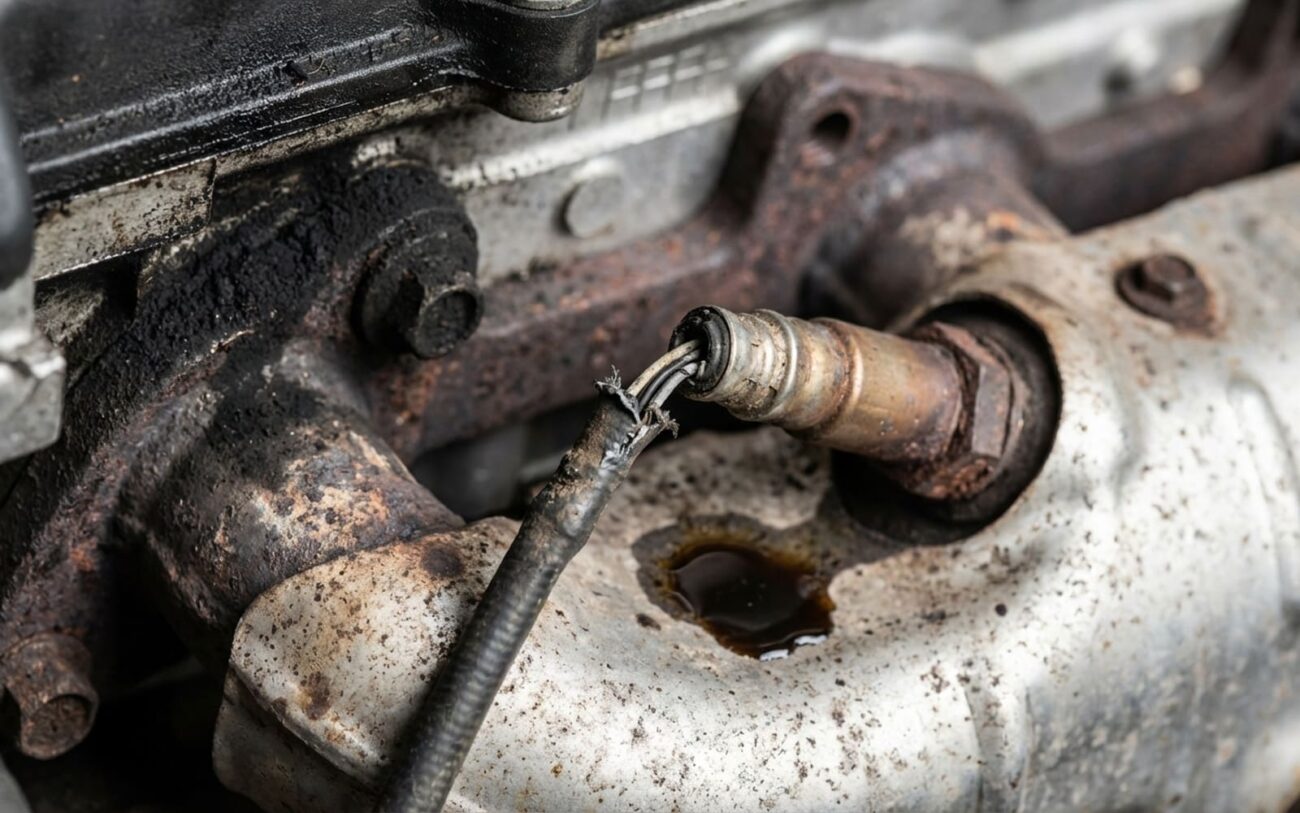
Alright, let’s talk about the oxygen sensor, or lambda sensor if you’re across the pond. I’ve been turning wrenches for over 25 years, and one of the most common frustrations I see is folks replacing an O2 sensor only for that check engine light to pop right back on, sometimes before they’ve even driven ten miles. It’s maddening, I know. But here’s the hard truth I’ve learned in the bay: the light isn’t lying.
When that light comes back, it’s almost never because your new sensor is bad. What’s usually happening is one of two things: either the sensor wasn’t the root problem to begin with, or your new, working sensor is now correctly reporting a deeper issue that’s still active in the system.
Think of it like this: if a lightbulb keeps blowing, you don’t just keep replacing bulbs. You check the wiring, the voltage, the switch. The bulb isn’t the problem; it’s just the messenger. Same with your O2 sensor.
Decoding the Trouble Codes: What the Light is Really Telling You
When you get codes like P0135 (oxygen sensor heater circuit malfunction) or P0133 (slow response), and they come back quickly after a sensor swap, that’s a huge clue. It tells me the fault is likely outside the sensor itself. We’re talking wiring, connectors, or even the control module (PCM) that drives the sensor.
On the other hand, if you’re seeing codes like P0171 (system too lean) or P0420 (catalyst efficiency below threshold), your new downstream O2 sensor is probably doing its job perfectly. It’s accurately detecting that the exhaust gas composition hasn’t improved because the real problem—like a vacuum leak, a faulty MAF sensor, or a dying catalytic converter—was never addressed.
My Diagnostic Flow: Pinpointing the Real Culprit
The code is just the starting point. My job is to interpret what that code means in the context of the whole system. Is it a circuit fault, a sensor response issue, or a wider engine problem? Here’s how I break it down:
| What the Car Says (DTC) | Where I Look First (O₂ Sensor Circuit) | Common Mimics (External Issues) | My Go-To Test |
|---|---|---|---|
| P0135: Heater Circuit Malfunction | Open or short in the heater wiring, a failed heater element inside the sensor, or a dead driver circuit in the PCM. | Cheap aftermarket sensor with incorrect heater resistance, or poor contact in the connector. |
I’ll test the heater resistance (should be 2–15 ohms). Then, a voltage drop test on both the power and ground sides of the circuit. |
| P0133 / P0130: Slow Response / Performance | Contaminated sensor tip, damaged signal wire shielding, or high resistance in the connector. | An exhaust leak upstream of the sensor (letting in ambient air), a fuel trim imbalance, or a faulty MAF sensor. |
I graph the live O₂ voltage at a steady 2500 RPM. A healthy upstream sensor should switch rapidly between 0.1V and 0.9V. |
| P0171 / P0174: System Too Lean | Sometimes a false lean reading due to an exhaust leak before the sensor, where ambient air gets sucked in and fools the sensor. | A genuine lean condition from a vacuum leak, low fuel pressure, or restricted fuel injectors. |
I monitor Short Term Fuel Trim (STFT) and Long Term Fuel Trim (LTFT). Then, a smoke test on the intake system and a fuel pressure check. |
And let me tell you, wiring issues are far more common than most people realize. Corrosion in connectors, especially here in areas with road salt, creates high resistance. If you’re chasing electrical ghosts, knowing how to spot oxidation or corrosion in engine bay or door wiring harnesses can save you days. And yes, a frayed wire in the conduit can absolutely cause false or erratic sensor codes. I’ve seen it make grown men cry.
Why O2 Sensors Get Blamed (Even When They’re Not the Problem)
When the fault does truly lie within the oxygen sensor system itself, it usually boils down to one of these primary failures:
-
Defective Replacement Sensor: Not all O₂ sensors are created equal. I’ve seen plenty of counterfeit or low-quality aftermarket units that have heater circuits out of spec or are sluggish right out of the box. Stick with OEM or a reputable brand.
-
Contamination During Installation: If anti-seize compound or grease gets on the sensor tip, it’s game over. That zirconia element is sensitive. Only apply sensor-safe anti-seize to the threads, and keep it away from the tip.
-
Wiring Harness Damage: The pigtail on these sensors often runs near hot exhaust. It can get pinched, rub against the manifold, or melt. Even minor abrasion can expose wires and cause shorts or opens.
-
Connector Degradation: Connectors exposed to heat, moisture, and road grime are prone to corrosion or terminal push-out. Either way, it interferes with signal accuracy or heater circuit function.
Resolution Pathways: Getting It Fixed Right
When to Call a Pro
While swapping a sensor can be a DIY job, diagnosing harness shorts or PCM driver failures requires advanced electrical testing, specialized equipment, and a deep understanding of automotive electronics. Messing with sensitive electronics without the right knowledge can cause more damage than you started with.
Sensor Replacement & Cleaning DIY-FEASIBLE
Harness & Connector Repair Professional Only
PCM Replacement or Reflash Professional Only
Confirming the Fix: Post-Repair Validation
Just clearing the code isn’t enough. You have to confirm the repair worked under real operating conditions. After I clear the codes, I always drive the vehicle through a full OBD2 drive cycle. Once the engine is warmed up, I use my scan tool to graph the oxygen sensor voltage at a steady 2500 RPM. A healthy upstream sensor should switch rapidly between 0.1V and 0.9V, at least once per second.
My Validation Checklist:
I monitor Short Term Fuel Trim (STFT) and Long Term Fuel Trim (LTFT). If both are consistently within ±10%, the system is balanced. If that voltage is flat-lined or the light comes back within a few kilometers, I know the root cause wasn’t fixed, and I’m back to diagnosing.
Cost, Risk & The Real-World Decision
Here’s a quick look at what you’re up against, cost-wise, and the risks involved with different approaches. This is what I tell my customers when they’re weighing their options:
| Type of Repair | DIY Cost (Parts Only) | Shop Cost (Parts & Labor) | My Estimated Success Rate | Biggest Risk |
|---|---|---|---|---|
| OEM Sensor Replacement | $100–$300 | $250–$500 | High (>80%) | Wasting money on parts if the real issue is an exhaust leak or wiring. |
| Harness Repair | $50–$150 | $300–$800 | Very High (>95%) | Intermittent faults if the repair isn’t done precisely (poor soldering, bad connections). |
| PCM Replacement | $500–$1500 | $800–$2000 | High | High financial risk if the PCM is misdiagnosed and replaced unnecessarily. |
Prevention & Proactive Monitoring
My Best Proactive Tip
During routine maintenance, I always recommend periodically checking live data. A sudden drop in O₂ sensor response rate or increasing Long Term Fuel Trim values can signal developing issues—like a small vacuum leak or a slightly weak fuel pump—long before the check engine light ever comes on. Catching these early can save you from much bigger problems down the road, like catalytic converter damage.
