No Spray? That Whine Means Trouble — Here’s What’s Really Going On
You hit the washer switch. Nothing. Maybe a quick whine under the hood—then silence. I’ve seen this a hundred times, especially in January. It’s not just “the fluid froze.” That’s the easy answer. But the real issue? It’s what happens after you keep hitting that button, thinking it’ll magically clear. That’s when you burn out the pump or crack the tank. Let me tell you what’s actually failing—and how to fix it without making it worse.
That Whine? It’s the Pump Fighting Ice
The telltale sign: you hear the pump engage—just for a second—then it cuts out. That’s not a dead motor. That’s the thermal protector kicking in because the impeller’s locked. Ice is jamming the intake or the chamber. I’ve pulled pumps out of 2018 Camrys and 2020 Silverados where the ice literally pinned the impeller in place. No movement, no flow, just heat buildup.
And here’s what most people don’t get: the pump isn’t designed to run dry. Even a few seconds without fluid overheats the motor windings. Do it three or four times in a row? You’ve just shortened its life by half.
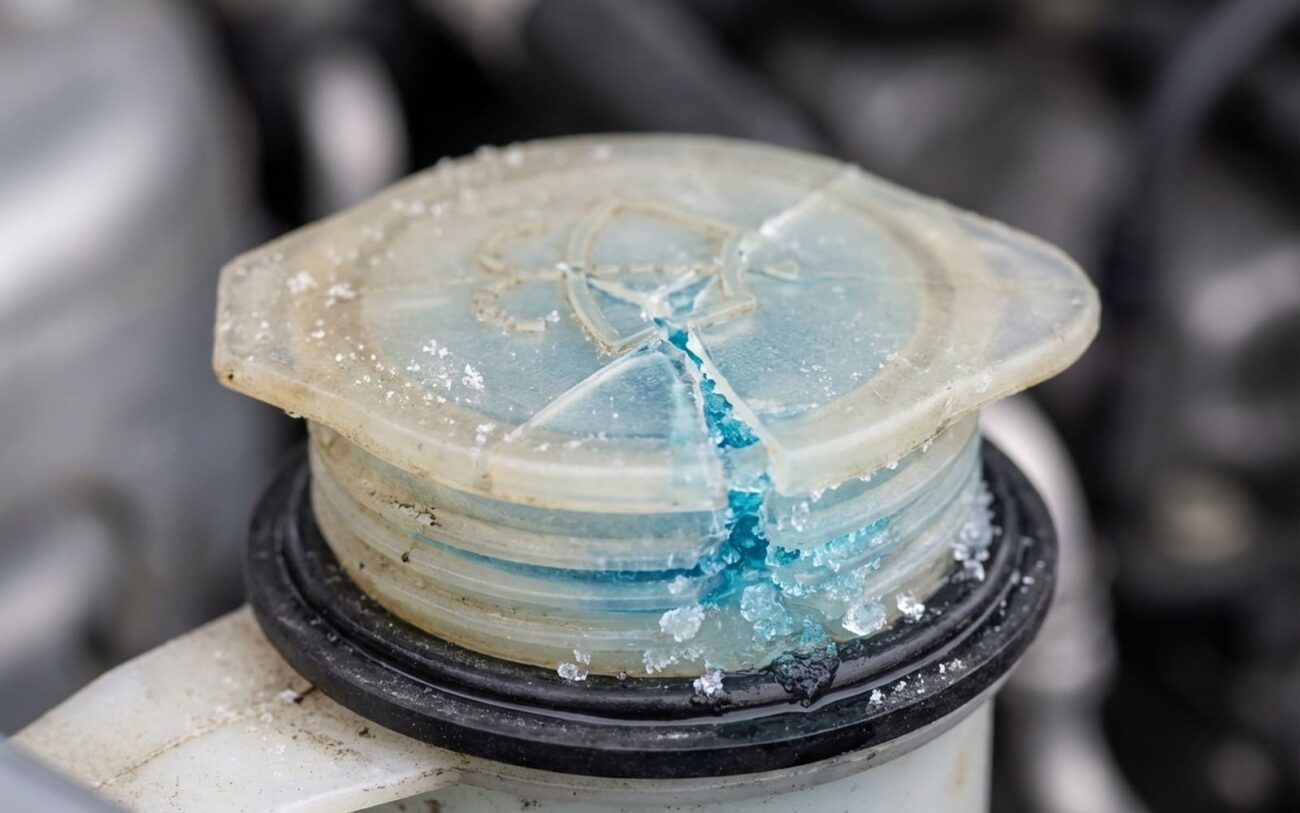
If you can get to the reservoir—usually tucked in the fender well—shine a flashlight through it. Look for cloudiness, slush, or chunks. On a 2016–2021 Escape, the tank’s translucent gray. I’ve seen ice expand enough to bulge the side near the pump mount. Once that happens, you’re not just thawing—you’re dealing with a leak waiting to happen.
Is It Frozen, or Something Else?
Don’t assume it’s ice. I’ve had guys come in convinced their fluid froze, only to find a blown fuse or a clogged nozzle. Or worse—a collapsed hose from old age. That’s why I don’t guess. I test.
Here’s how I break it down in the shop:
| Symptom | Frozen Reservoir | Other Causes | How I Confirm |
|---|---|---|---|
| Pump runs, no spray | Ice blocking intake or outlet | Clogged filter, pinched hose, blocked nozzles |
Disconnect the inlet hose at the pump. Try to drain fluid by gravity. If nothing moves and the tank feels solid, it’s frozen. |
| Whine, then silence | Impeller locked by ice | Mechanical seizure, worn brushes, bad ground |
Pull the pump, thaw it, and bench-test in a cup of washer fluid. If it spins freely, the problem was ice. |
| No sound, no spray | Frozen fluid breaking sensor circuit (some models) | Blown fuse, bad switch, broken wire |
Check the fluid-level sensor. If fluid is present but frozen, it won’t conduct. Infinite resistance on a meter means the sensor sees “empty.” |
Frozen Fluid vs. Cracked Tank — Know the Difference
Here’s the thing: frozen fluid is a fix. A cracked reservoir? That’s a replacement. Water expands when it freezes. Most washer fluid is water-based. You do the math. I’ve seen tanks split along the seam, especially around the pump grommet. Once that plastic cracks, it’s done.
And don’t think you can just epoxy it and forget it. I’ve tried. On a 2014 Accord, I used a polyethylene-rated epoxy. Held for three weeks. Then one cold morning, the pump cycled, pressure spiked, and it split again—this time dumping fluid onto the exhaust shield. Smelled like burnt plastic all the way home.
The point: if the tank is cracked, skip the repair. Replace it. And while you’re at it, don’t reuse the old pump seal. That rubber grommet hardens over time. Replacing it takes 30 seconds and costs $5. Not replacing it? That’s how you get a slow drip that eats your wiring harness.
What to Do Based on What You Find
Once thawed, siphon out the old fluid. I use a turkey baster—cheap, works every time. Then refill with a real winter blend. Look for -20°F or lower. Rain-X De-Icer, Prestone Winter Wash, or OEM fluid. And for the love of all things electrical, don’t mix in plain water. That kills the freeze protection.
Replacement is the only real fix. Drain the tank, disconnect the pump, remove the mounting clips (usually 20–35 in-lb—don’t crank them down), and swap it out. On some Fords, you’ll need to pull the fender liner. On Hondas, it’s usually a few bolts and you’re in. Always transfer the sensors and float arms. And again—new grommet. Always.
Test It Like It’s Winter
Don’t just turn it on and walk away. Test it like you mean it.
Final Checks
-
After refill: Run the system in below-freezing temps. You should get full spray within five seconds. Delayed or weak flow? Ice still in the lines.
-
After epoxy: Check daily. Shine a light on the repair after each use. Even a damp spot means it’s failing. Seven days without a leak? You bought time. Not a fix.
-
After replacement: Cycle the pump ten times. Watch for drips under the tank. Confirm full spray coverage. If it holds, you’re golden.
Cost vs. Risk: What You’re Actually Paying For
| Fix | DIY Cost | Shop Cost | Success Rate | Risks |
|---|---|---|---|---|
| Thaw & Refill | $5–$15 | $50 | 100% (if done right) | Pump burnout from repeated attempts |
| Epoxy Repair | $10 | $100–$200 | <30% | Leak, dry pump, debris in system |
| Replace Reservoir | $50–$150 | $200–$400 | 95% | Leak from bad seal or over-tightened clips |
If a shop wants $350 to replace the tank on a 10-year-old Camry, just do it yourself. The part’s $80. The labor’s not hard. And you’ll know it’s done right.
How to Never Deal With This Again
Use winter fluid. Not “all-season.” Not half-water, half-summer mix. Real winter fluid. -20°F minimum. Check the bottle. I’ve seen people pour in blue summer fluid in December and wonder why it froze. It’s not magic.
Test the system early. Don’t wait for the first snow. If it sprays slow or sputters at 30°F, you’ve got partial freezing. Fix it then.
And one last thing: never, ever use engine coolant in the washer tank. I’ve seen it eat through rubber hoses, clog nozzles, and ruin pumps. It’s not a substitute. It’s a death sentence for the system.
This is one of those fixes that’s simple, cheap, and totally preventable. Do it right once, and you won’t be cursing at a frozen windshield in January.
