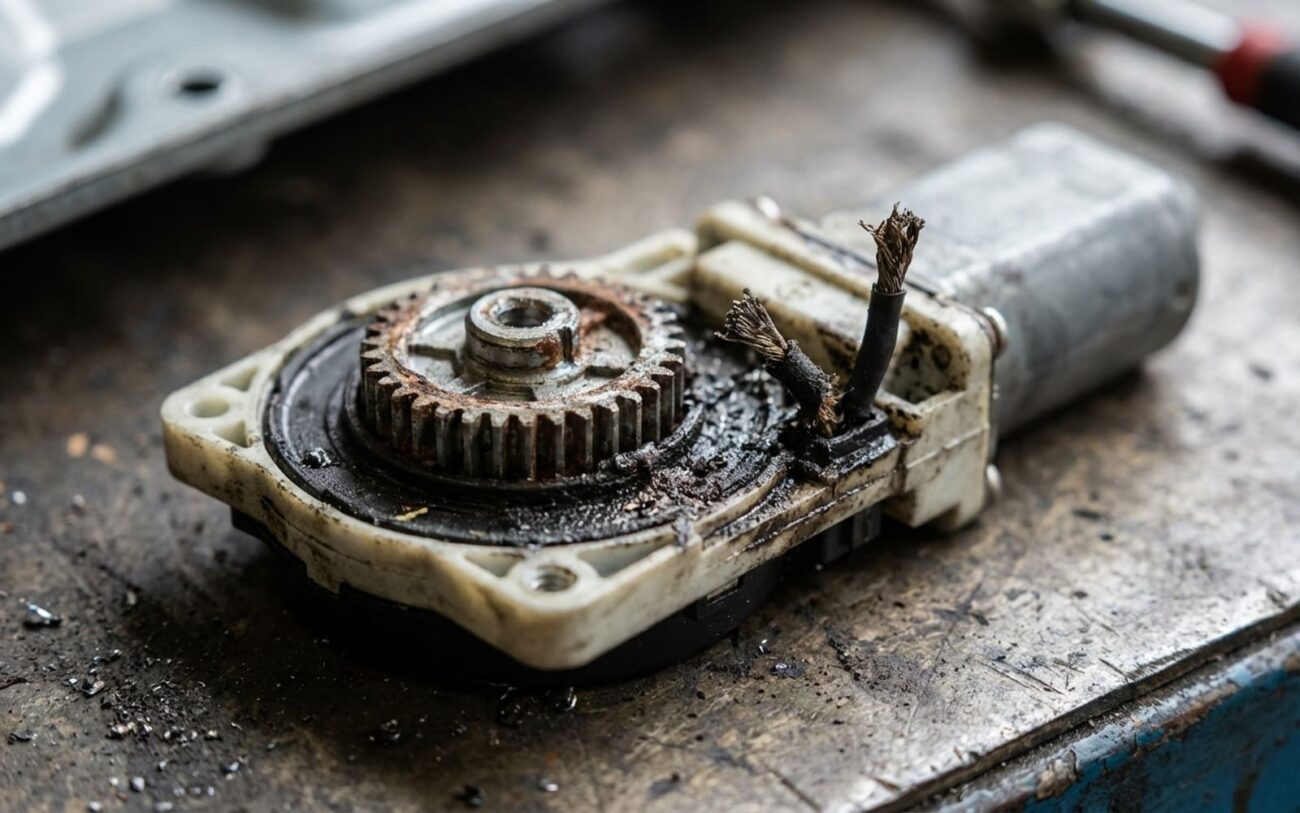
Your Power Window’s Acting Up? Let’s Figure It Out.
Alright, so your power window is acting funny—moving slow, making weird noises, or maybe not moving at all. Most folks, and even some greenhorn techs, jump straight to blaming the motor. And yeah, sometimes they’re right. But after tearing apart hundreds of door panels in my 25+ years in the shop, I can tell you the motor is just one piece of the puzzle. You’ve got the regulator, the switches, the wiring, and the tracks all working together. Symptoms can overlap a lot, so just throwing a new motor at it can cost you time, money, and a whole lot of frustration. Let’s get this diagnosed right the first time.
What a Dying Window Motor Really Sounds Like (and Why)
A failing motor usually doesn’t just up and quit. It gives you warnings. The trick is to pay attention to both the sound and the speed. Here’s what I typically see:
If the window is consistently slow—takes noticeably longer to go up or down than it used to, regardless of how hot or cold it is outside—that’s a strong indicator of internal motor wear. This slowness comes from increased electrical resistance inside the motor, like it’s trying to run but it’s choking on its own power.
What’s going on in there? Usually, it’s worn carbon brushes. These brushes transfer power to the spinning armature. Over thousands of cycles, they wear down, spring tension drops, and you get poor contact. Less current flows, less torque, and the motor just doesn’t have the muscle it used to. Sometimes the commutator (the copper segments the brushes ride on) gets dirty or pitted from arcing, which makes things even worse. Failing armature bearings can also cause this drag.
Now, if you hear a rhythmic clicking when you hit the switch, and the window either doesn’t move or just barely twitches, that’s a different beast entirely. That clicking is almost always stripped plastic teeth on the motor’s internal drive gear. The motor spins, but the gear can’t engage the regulator, so nothing happens. You might even hear a grinding or free-spinning noise if the gear is completely gone.
One more thing: lubrication breakdown. The little gearbox inside the motor has grease that can dry out, especially in extreme climates. When that grease goes bad, friction goes up, causing heat and accelerating wear on everything—gears, bearings, brushes. It’s a compounding problem.
Diagnosing It Right: Is It the Motor, or Something Else?
This is where most people, even some experienced DIYers, get tripped up. A slow or stuck window can be the motor, absolutely. But it’s just as likely to be a binding regulator, corroded wiring, a failing switch, or dried-up window channels. You need to isolate the motor from the rest of the system to know for sure. Don’t guess. Test.
For a Slow Window:
First, get that door panel off. You’ll need a trim panel removal tool—don’t try to pry it with a screwdriver unless you like broken clips. Once the panel’s off, disconnect the motor from the wiring harness. Now, apply 12 volts directly to the motor’s terminals using a power probe or some jumper leads. Make sure you get the polarity right to test both up and down directions.
- If the motor still runs slow under direct power, the problem is internal to the motor—worn brushes, dirty commutator, maybe bad bearings. That motor is toast.
- If it runs strong and fast with direct power, then the motor itself is fine. The issue is somewhere else in the circuit: a bad switch, a faulty relay, or high-resistance wiring (corroded connections, a partially broken wire).
While you’ve got the motor disconnected, try moving the glass up and down by hand. If it binds, feels gritty, or is just plain hard to move, then your regulator or window tracks are the culprits, not the motor. Clean those channels, lubricate the regulator, and see if that frees it up. A motor can fail prematurely if it’s constantly fighting a binding regulator, so address the root cause.
For a Clicking or Non-Moving Window:
Again, door panel off. Disconnect the motor from the regulator mechanism. This usually means unbolting the motor from the regulator assembly. Then, activate the window switch.
- If the motor’s output shaft spins freely and you hear that clicking sound, but it’s not turning anything, then the stripped gear is definitely inside the motor.
- If the motor doesn’t spin at all and just clicks (or makes a faint hum), the armature or internal clutch might be seized. That’s a goner.
- If the motor runs smoothly and quietly, but the window still doesn’t move when connected, then the failure is in the regulator itself—commonly a broken cable, a snapped plastic guide, or a damaged sector gear.
Just to be crystal clear:
If the window is stiff because the rubber channels are dried out, or the regulator is bent, that’s not a motor failure. That’s a mechanical bind. The motor is just the victim, working overtime under extra load. Always, always rule out binding before you condemn the motor.
Repair Options: What You Can Fix and What You Can’t
Once you’ve pinpointed the problem, you’ve got a few choices. Some things are fixable, some aren’t. And some are only worth fixing if you’re doing it yourself.
Brush Kit Replacement DIY-FEASIBLE
Internal Gear Replacement DIY-FEASIBLE ONLY IF A GEAR KIT IS AVAILABLE
Full Assembly Replacement NON-REPAIRABLE → REPLACE ASSEMBLY
One TEMPORARY trick for a slow motor: if you suspect it’s just brush dust or grime on the commutator, you can try spraying electrical contact cleaner through the motor’s vent holes. Gently rotate the motor while spraying to help the cleaner reach all the internal parts. This can sometimes restore contact and get you a few weeks or even months of normal operation. But be warned: the solvent can wash away the internal lubricant, which will accelerate wear in the long run. It’s not a real fix, just a diagnostic aid or a short-term workaround to get you by.
The Cost and When to Call It Quits
Here’s the reality check: labor and parts add up. Whether you tackle this yourself or take it to a shop often depends on the vehicle’s value and your own skill level. I’ve put together some typical costs based on what I see in the shop.
| Repair Type | DIY Cost (Parts Only) | Shop Cost (Labor + Parts) | Success Rate | Secondary Risk if Repair Fails |
|---|---|---|---|---|
| Brush Kit Replacement | $15 – $40 | $150 – $300 | High (>80%) if commutator is not damaged | Wasted time and effort; eventual motor replacement still needed |
| Internal Gear Replacement | $20 – $60 | Rarely offered—most shops replace the assembly | Moderate (~60%) due to reassembly complexity | Motor rendered inoperable from incorrect assembly or missing parts |
| Complete Motor Replacement | $80 – $200 (new or reman) | $250 – $500 | Very High (>95%) with quality part | Defective reman unit; damage to regulator if motor gear binds on install |
Here’s a rule of thumb I use in the shop: if the repair cost starts creeping up past 25% of the car’s market value, you really need to consider if it’s worth it. For an older vehicle, especially a rear window that doesn’t get much use, you might just opt to disable the motor and secure the glass in the up position with a zip tie or a simple bracket. It’s not ideal, but it’s safe and functional, and it saves you a chunk of change.
Keeping Your Windows Rolling Smoothly
Prevention is simple, but it’s often overlooked. The biggest thing you can do is reduce the motor’s workload. Clean those window channels (the rubber guides) every six months or so. Use a gentle brush to get out any grime, then apply a light coat of silicone-based lubricant. I’m talking about a spray, not a heavy grease. And avoid petroleum-based sprays—they’ll degrade the rubber over time. A sticky window forces that motor to draw more current, generates extra heat, and that heat is what shortens brush and gear life.
Also, pay attention to early warning signs. That slight hesitation on a cold morning, or a faint whine when you’re raising the window—those are red flags. Don’t ignore slow operation. Addressing it early can save you a lot. Ignoring it lets heat build up, which can melt internal components and turn what could have been a $30 brush job into a $200 replacement. Trust me, I’ve seen it a hundred times.
Cost-Saving Tip
If you’ve just replaced one front window motor, especially on a high-mileage vehicle, consider doing the other front one preemptively. The driver’s side always fails first because it gets the most use, but the passenger side usually isn’t far behind. You’re already in there, so save yourself another trip later.
