Look, if your key fob buttons still lock and unlock the doors just fine, but the passive entry — that’s touching the door handle to get in, or hitting the start button without ever taking the fob out of your pocket — isn’t working, then you’re almost certainly dealing with an issue in the vehicle’s Low-Frequency (LF) antenna system. Not the fob itself. This is a critical distinction, and it’s the first thing I tell customers when they bring their car in for this kind of problem.
The way this system works is pretty clever: your fob is always listening for a low-power signal from the car. When you touch the door handle, or when the car senses you’re inside and trying to start it, the vehicle sends out a short-range LF “ping.” If the antenna responsible for that signal is damaged or disconnected, the car can’t “wake up” the fob. So, no response, even if the fob is perfectly healthy and has a fresh battery. I’ve seen it countless times.
What I See: Symptoms on the Rack
Intermittent behavior is a huge red flag here. If passive entry works at the passenger door but not the driver’s, or the trunk release fails while the doors are fine, that strongly points to a localized antenna failure. Most modern vehicles use multiple antennas for this system: you’ll usually find one in each front door handle, several inside the cabin (for push-button start recognition), and often one in the rear bumper for hands-free trunk operation. A failure confined to just one of these zones makes diagnosis much more straightforward for me.
From my perspective as a technician, this symptom profile is far more indicative of a vehicle-side antenna, wiring, or module problem than a bad fob. And while there’s no immediate mechanical risk, ignoring it leaves you dependent on the fob’s battery and its RF transmitter. If that fob battery dies, many vehicles won’t even let you start the engine, even if you insert the mechanical key into the ignition. The immobilizer system stays active. You could end up stranded, needing a tow to a dealership or a locksmith. I’ve seen it happen more than once, especially on European and Japanese models where the backup start procedure isn’t always intuitive.
My Diagnostic Approach: Ruling Out the Mimics
Before I even think about replacing parts, we have to rule out the common mimics. A weak fob battery, a software glitch in the Body Control Module (BCM), or even a faulty door handle request switch can present identical symptoms. Jumping straight to antenna replacement without verification is a great way to waste money and get frustrated. Here’s how I break it down:
Step 1: The Basics (Always Start Here)
First things first, check the fob battery. Yeah, I know it sounds basic, but I’ve seen too many people overlook it. If the fob is weak, passive entry often goes first. Also, make sure the car’s main 12V battery is strong. A low car battery can cause all sorts of weird electrical gremlins, including intermittent PEPS (Passive Entry Passive Start) issues.
Then, check for any obvious physical damage. Is the door handle loose? Has the car been in a fender bender that might have affected a bumper-mounted antenna? Sometimes it’s that simple.
Step 2: Getting Technical with the Scan Tool
This is where a good, professional-grade scan tool earns its keep. Generic OBD2 readers won’t cut it here; you need something that can talk to the BCM or PEPS module directly. I’m looking for specific live data streams and active tests. Here’s what I’m checking:
- Passive Entry Fails, Button Press Works: If this is the main symptom, I’ll run an active LF antenna diagnostic test. The system should individually poll each antenna zone (driver’s door, passenger door, trunk, interior zones). If a specific zone fails this test, that confirms a circuit or antenna fault in that area. This tells me if it’s a broken or corroded LF antenna coil, an open circuit in the wiring, or a poor ground connection.
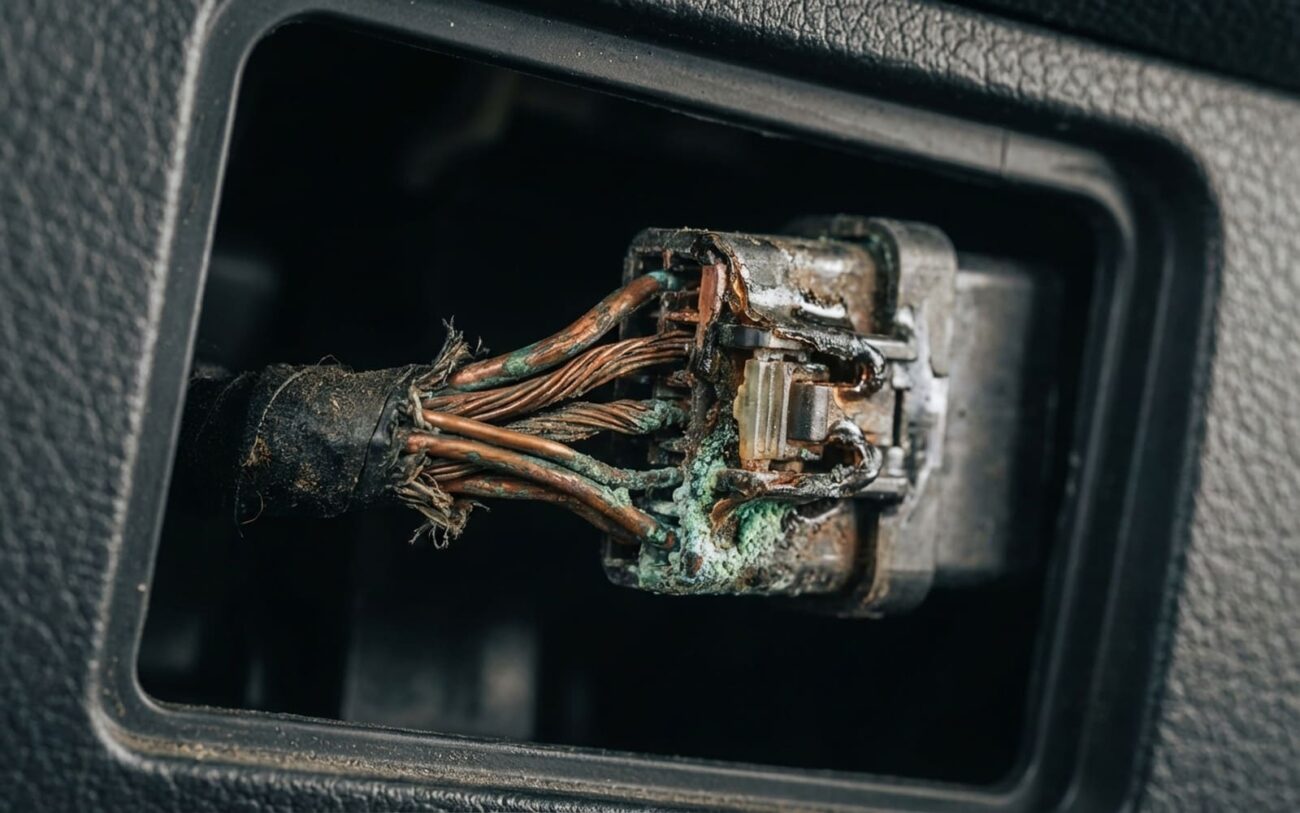
- Intermittent or Spotty Passive Entry: This usually points to a corroded connector, a chafed or broken wire in the door boot (where the wires pass between the door and the body), or moisture ingress. I’ll perform a voltage drop test on the antenna power and ground circuits while triggering passive entry. I’m also watching live data to monitor zone detection consistency. If the signal drops out when I wiggle a wire, I’ve found my culprit.
- Push-Button Start Fails (Fob Inside): If the car won’t start even with the fob sitting in the cup holder, but passive entry still works, I’m looking at a cabin-mounted LF antenna failure (these are often under the console, dash, or seats). The scan tool’s live data will show which zones are active during a start attempt. If the interior zones aren’t detecting the fob, that confirms an interior antenna fault. I’ll also quickly check the brake light switch and the main immobilizer ring antenna (if separate) as common look-alikes.
My Tip: For really stubborn intermittent faults, an oscilloscope can be invaluable. It lets me visualize the LF signal waveform directly. If the BCM sends a clean signal but the antenna isn’t transmitting, that points directly to a failed coil or an open circuit in the antenna itself.
Why They Fail: Root Causes I’ve Seen
These antennas aren’t just simple wires; they’re precision components, tuned LC (inductor-capacitor) circuits designed to operate at a specific frequency, usually 125 kHz. When they fail, it’s almost always one of a few things:
- Internal Coil Breakage: The most common failure is a break in the fine-gauge copper coil itself. This can be due to constant vibration, thermal cycling (hot summers, cold winters), or internal corrosion. Even a tiny fracture changes the inductance enough to detune the circuit, preventing effective communication. In some sealed modules, failed internal capacitors or resistors can have the same effect.
- Physical Damage & Moisture: This is especially prevalent in door handle and bumper-mounted antennas. A minor impact, a poorly installed aftermarket accessory, or even just improper door seal maintenance can allow moisture to seep in. Water gets into the housing, leading to terminal corrosion or shorted windings. I’ve opened dozens of door handle antennas where the housing looked perfectly intact from the outside, but inside, the water had corroded the solder joints or degraded the coil form. The damage is already done.
Manufacturers aren’t blind to this stuff. For certain models, there are known issues. For example, some Nissan and Infiniti vehicles from the mid-2010s had documented problems with solder joint integrity in the door handle antenna connectors, leading to intermittent passive entry. While I won’t cite specific TSB numbers here, it’s accurate to say that similar issues have been addressed in service literature for various makes. The key is understanding that this isn’t random; it’s a known failure mode in certain designs.
It’s important to distinguish between the vehicle’s LF antennas and other components. A malfunctioning fob receiver circuit is a fob issue, not an antenna problem. The RF receiver that picks up your button presses is separate from the LF system. And the capacitive sensor in the door handle — the part that detects your touch — is a different component altogether. It signals your intent to unlock; the antenna confirms the fob’s proximity.
Fixing It: Repair Options & When to Call a Pro
Professional Territory Only
Fixing keyless entry antenna issues isn’t always a DIY job. While some interior antenna replacements are manageable for a skilled DIYer, working on door handles or requiring module reinitialization demands specialized tools, proper procedures, and often a factory-level scan tool. There’s no safe shortcut for complex repairs.
The repair approach depends entirely on where the faulty antenna is located and how it’s integrated into the car. There’s no one-size-fits-all solution.
Interior Antennas: DIY Friendly (Mostly)
For interior-mounted antennas — like those behind the B-pillar trim, under the center console, or near the dashboard — the job is often manageable for a skilled DIYer. You’ll need a good set of plastic trim tools to avoid scratching anything, a multimeter, and the correct OEM or high-quality aftermarket antenna. Carefully remove the trim, disconnect the old unit, and it’s a good idea to verify the wiring with a resistance check (typically 1–10 ohms, but check your vehicle’s specific service manual). Reconnect the new antenna, reassemble, and test. Torque any mounting screws to 3–5 Nm — over-tightening can easily crack plastic housings, and I’ve seen that happen.
Door Handle Antennas: Shop-Level Work
But when the antenna is built into a door handle, this becomes a shop-level repair, plain and simple. You’ve got to remove the entire door panel, disconnect the window regulator, and possibly detach external seals. The handle assembly often includes the lock mechanism and wiring harness, making replacement quite complex. Bolt torque for the handle itself is typically 8–12 Nm. More importantly, many vehicles require a module reinitialization or antenna calibration using a factory-level scan tool after replacement. Skipping this step can leave the system non-functional, and you’ll be scratching your head wondering why it still doesn’t work.
No Repair, Only Replacement
If the antenna is sealed and non-serviceable — which is almost always the case — repair is not an option. You cannot rewind or patch the internal coil without altering its electrical characteristics. Any such attempt will result in unreliable detection or complete failure. Replacement is the only reliable solution.
Temporary Fixes (Use with Caution)
For temporary fixes, if my diagnosis reveals corrosion at the connector rather than a broken coil, cleaning the terminals with electrical contact cleaner and applying dielectric grease can sometimes restore function. This won’t fix a damaged coil, but it can extend the life of a marginal connection. Just remember: this is a temporary workaround. If your fob battery fails while this fix is in place, you may not be able to start the car, and then you’re really in a bind.
Verification: Don’t Assume It’s Fixed
Look, I don’t care how good you are, you never assume the job’s done after installation. Validation is critical. That’s how comebacks happen. Here’s my process:
- Electrical Check: Start with an electrical check. Measure the resistance of the new antenna with a multimeter. It should be within ±10% of the manufacturer’s specification — usually between 1 and 10 ohms. A reading outside this range indicates a defective part or a wiring issue you missed.
- Scan Tool Check: Next, use your scan tool to run the LF antenna diagnostic routine again. The system should recognize the new antenna and report no faults. Clear any stored codes to ensure a clean slate.
- Real-World Testing: Finally, perform real-world functional testing. Test passive entry at every single access point — driver’s door, passenger door, trunk — at least 10 times each. Confirm that the push-button start works with the fob placed in common interior locations: cup holder, center console, your pocket. Consistent performance across all zones means the repair is complete. Skipping this step risks missing an intermittent fault or a misaligned calibration.
Cost, Risk, and When to Walk Away
So, what’s this going to cost you? It varies significantly based on the antenna’s location and the labor complexity. Here’s what I typically see in the shop:
- Accessible Interior Antenna: If you’re doing it yourself, parts might run you $50–$150. In a professional shop, expect $200–$400. The success rate is high, over 95%, but watch out for broken trim clips or improper connector seating if you’re DIYing it.
- Integrated Door Handle Antenna: This is where it gets pricier. Parts alone can be $200–$600, and a professional repair will usually be $500–$1,000. The success rate is still high with proper tools and procedures, but the secondary risks are real: water leaks from improper seal reinstallation, or even damage to the window regulator if you’re not careful.
- BCM/PEPS Module (Misdiagnosis Risk): If someone misdiagnoses it as a module issue, you’re looking at $300–$800 for parts (DIY) or $700–$1,500+ professionally. This is a variable success rate because misdiagnosis is a big problem here. The risks are high too: programming errors, immobilizer lockout, or even total system failure if not done correctly.
Be realistic about your vehicle’s value. If the total repair cost approaches 25–30% of the car’s market value, it may not be worth fixing. In that case, I’ll be honest with a customer and tell them to commit to using the fob buttons and keep a fresh battery on hand. You lose a bit of convenience, but you avoid a costly repair on an aging vehicle. Always carry a spare battery for your fob, by the way — it could save you a tow.
Prevention and Early Detection Tips
There’s no scheduled maintenance for these antennas, but you can definitely reduce your risk. Moisture is the enemy here. Inspect your door and trunk seals regularly for cracks or deformation — compromised seals are a direct path for water into areas housing antennas, especially in door handles and rear quarter panels. And when you’re washing the engine bay, avoid high-pressure sprays near electronic modules or wiring routes.
Early Detection is Key
Make it a habit to test all passive entry points monthly. If one zone starts acting up — requiring you to stand closer or reposition your fob — treat it as a red flag. A zone-specific issue is almost always a failing antenna in that exact location. Catching it early means you can plan the repair before corrosion spreads or an intermittent fault becomes a complete failure. That small inconvenience today could save you a major repair tomorrow, and I’ve seen that play out more times than I can count.
