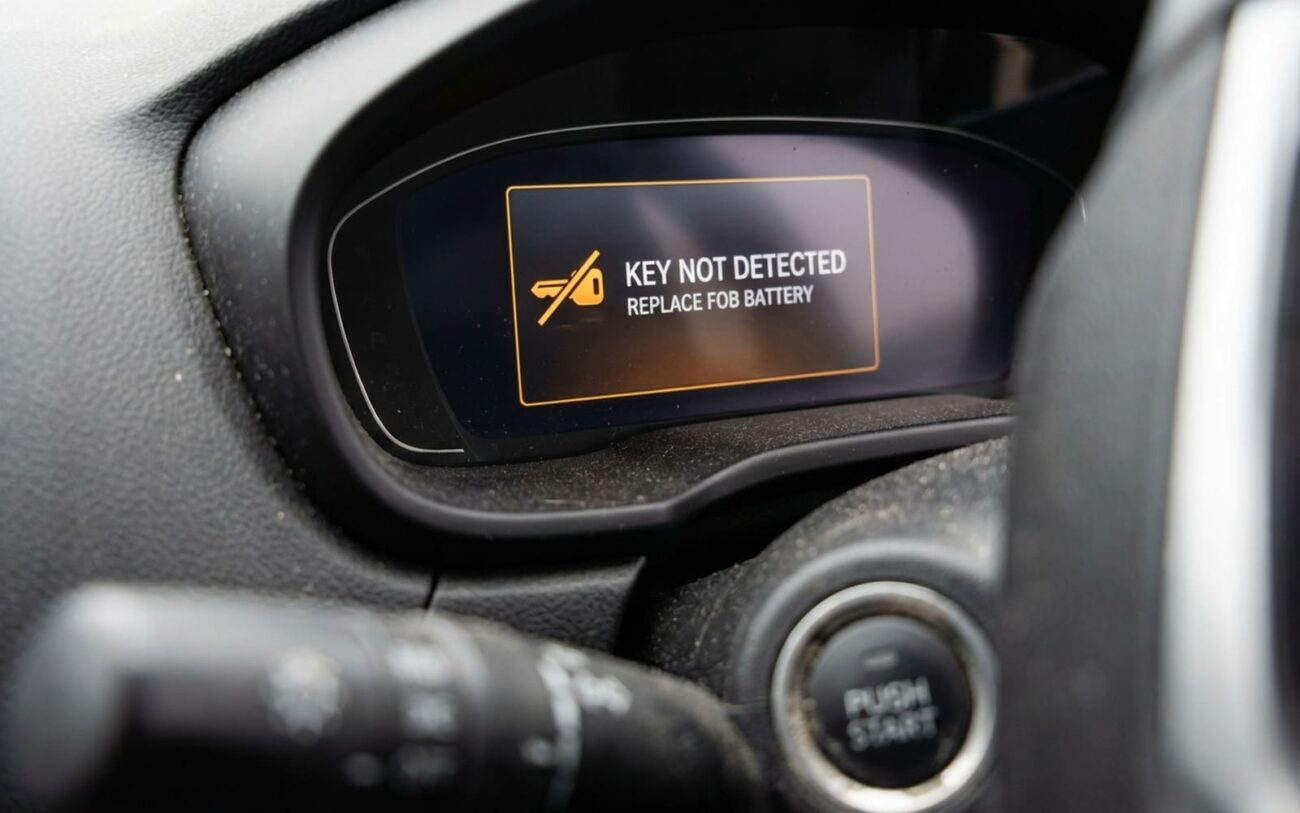
Alright, let’s talk about that moment. You hop in your modern ride, hit the push-button start, and… nothing. The dash lights up like a Christmas tree, but the engine doesn’t even make a peep. No click, no groan, just dead silence. I’ve seen that look of panic on a customer’s face more times than I can count over my 25+ years in the shop.
Here’s the thing: most folks immediately think “dead engine” or “starter’s shot.” But in my experience, that’s rarely the case with this specific symptom. More often than not, we’re looking at something much simpler, and cheaper: a weak or dead battery in your key fob. The car’s security system, its immobilizer, relies on a strong radio signal from that fob to say, “Yep, this is the right key, let’s start.” If that signal is too weak, or just plain gone, the car locks down the starter. No signal, no start. It’s a security feature, not a mechanical failure.
And no, you’re not hurting anything by mashing that start button repeatedly. You’re just telling the security system to say “no” again and again. The car knows something’s off and it’s doing its job to protect itself. Most vehicles will even give you a clear message on the dash: “Key Not Detected,” “No Key Found,” or “Place Key in Backup Location.” That message is your first, best clue. Sometimes, you’ll see earlier signs, like the remote lock/unlock buttons only working when you’re practically hugging the car. That’s usually the fob battery’s last gasp.
But here’s my first piece of advice: Don’t assume. Those same symptoms can also point to a weak 12-volt vehicle battery, a faulty antenna inside the car, or a glitch in the anti-theft system itself. You gotta verify before you start throwing parts at it.
My Diagnostic Process: Pinpointing the Real Problem
Before you even think about replacing a battery or, worse, buying a whole new fob, you need to rule out the other suspects. A quick guess can cost you time and money. Here’s the sequence I use in the shop to figure out what’s really going on:
Step 1: Check the Vehicle’s 12-Volt Battery First (Always!)
This is critical. The entire key detection system in your car runs off the main 12-volt battery. If that battery is weak, the car simply can’t “hear” the fob, even if the fob itself is screaming its signal at full strength. I’ve seen countless “no key detected” issues that were actually just a low car battery. Grab a multimeter and check the voltage across your main battery terminals. You want to see at least 12.6 volts. Anything below 12.4 volts and I’m looking at charging or replacing that main battery first. Don’t skip this. It’s the most common mimic.
Step 2: Try the Emergency Start Procedure
If your 12-volt battery checks out, this is your next move, especially if you’re stranded. Most modern vehicles have a backup system to start the car even with a dead fob battery. First, use the hidden mechanical key in your fob to unlock the door (yes, there’s usually one in there, check your owner’s manual if you can’t find it). Then, once inside, place the entire fob directly against the start button. On some vehicles, there’s a specific backup location, like a marked spot in the center console or a cup holder. These spots have an inductive coil that can power the fob’s chip directly, bypassing its dead internal battery. If the engine fires up when you do this, you’ve confirmed it: the fob battery is the culprit. This is a temporary solution to get you home, not a permanent fix.
Step 3: Test Fob Button Functionality
If your remote lock/unlock buttons have stopped working entirely, or only work when you’re practically touching the car, that’s a strong indicator of a dying fob battery. If they’re completely inoperative, try replacing the fob battery with a fresh, known-good, name-brand cell (more on this below). Then, test the remote functions from 10-30 feet away. If they come back to life, problem solved.
Step 4: For Intermittent Issues, You Need a Scan Tool
This is where it gets tricky. If you’re getting “No Key Found” messages that come and go, or the car sometimes starts and sometimes doesn’t, you’ve got an intermittent problem. A multimeter won’t tell you much here. You need a professional-grade scan tool – the kind a dealership or a good independent shop has. I use it to monitor the Body Control Module (BCM)’s “Key Recognized” or “Key ID Valid” status in real-time. I’ll watch that parameter while trying to start the car, wiggling the fob, moving it around the cabin. If that status flickers from “valid” to “invalid” even with a brand-new fob battery, then the problem isn’t the fob itself. It’s in the vehicle’s detection system – maybe an antenna issue (like in the steering column or door handle) or a BCM software glitch. Don’t guess here; measure what the car is actually seeing.
Understanding Why Fob Batteries Fail
Once you’ve confirmed the fob battery is the issue, it’s usually for one of a few reasons:
- End-of-Life: The most common cause. Most fobs use a CR2032 lithium coin cell, and these typically last 2-4 years, depending on how often you use the fob. They’re not rechargeable in standard fobs, so they just wear out. It’s normal wear and tear, not a defect.
- Increased Internal Resistance: This is a sneaky one. A battery might show a healthy 3.0 volts on a multimeter when there’s no load on it. But when the fob tries to transmit its radio signal – which draws a quick burst of power – that voltage can drop below the threshold needed for communication. As batteries age, their internal resistance goes up, making them less able to deliver that power burst. So, a “good” battery can still be bad under load.
- Corrosion: Especially in humid climates or if the fob has gotten wet, I see corrosion on the battery contacts. That white or green crust acts like an insulator, increasing resistance and blocking power. I always clean those contacts with isopropyl alcohol and a cotton swab when I’m swapping a battery.
- Parasitic Drain (Rare): Very occasionally, a button gets stuck, or there’s an internal short on the circuit board, causing the battery to drain much faster than it should. This is rare, but it happens.
Some manufacturers have even issued service bulletins for specific models regarding fob contact corrosion, particularly in regions with high humidity. But again, remember that a bad vehicle antenna, a faulty BCM, or a weak 12-volt battery are not fob battery problems. They just mimic the symptoms, and the fix is completely different.
Getting You Back on the Road: The Fixes
Once you’ve isolated the problem, here are your resolution pathways, from easiest to most involved:
DIY Coin Cell Battery Replacement
Integrated or Rechargeable Battery Professional Only
Internal Fob Damage
Emergency Start Procedure (Again)
Confirming the Repair: Trust, But Verify
After you’ve done any work on the fob or the vehicle’s key system, you’ve got to confirm the fix. For a simple battery swap, test the remote functions from at least 30 feet away. The push-button start should work normally from anywhere inside the cabin – no need to hold the fob against the button anymore. If you’ve programmed a new fob, make sure all remote functions work (lock, unlock, trunk, remote start if applicable) and that the immobilizer light on the dash goes out immediately when the engine starts. Any delay or warning light means the security system hasn’t fully accepted the key.
For those tricky intermittent issues, the only real way to validate the repair is to use that scan tool again. Monitor the BCM’s “Key ID Valid” status during repeated start attempts. If it consistently reads “valid,” you’ve likely nailed it. If it still drops out, then the problem is probably still in the vehicle’s antenna system or wiring, not the fob.
What It’ll Cost You (and When to Call the Pros)
Here’s a realistic breakdown of your options, based on what I see in the shop and typical parts pricing:
| Repair Type | DIY Cost | Shop Cost | Success Rate | Secondary Risk if Failed |
|---|---|---|---|---|
| Replace Coin Cell | $3–$10 | $10–$50 | 99% | None, assuming you use the correct, quality battery and install it properly. |
| Professional Fob Repair (soldered battery) | N/A | $50–$150 | 85% | Risk of damaging the fob casing or circuit board during disassembly or soldering if done improperly. |
| Fob Replacement/Reprogram | N/A | $200–$600+ | 100% (if done correctly) | Financial loss if a cheaper solution was available, or if an aftermarket fob has limited functionality (e.g., no remote start or specific security features). |
Look, there’s no real “economic threshold” here – you need a working key to drive your car. But if a dealership quotes you over $500 for a new fob, it’s worth calling a trusted independent locksmith. Many of them have OEM-level programming tools and can often program a used or aftermarket fob for less. Just be aware that some high-security vehicles (like certain Mercedes, BMW, or higher-end Fords with PATS systems) might only accept brand-new OEM fobs, and programming might require VIN-specific authorization directly from the manufacturer. Always ask about aftermarket options and their limitations.
On a related note, if you’re driving an EV, always check your high-voltage battery warranty status before authorizing any major electrical repairs. While a key fob is low-voltage, it’s good practice to know your warranty coverage for the big stuff.
Keeping It From Happening Again: Prevention is Key
The best repair, in my book, is the one you never have to do. Treat your key fob battery like any other maintenance item. I recommend replacing it proactively every 2-3 years, especially if you use your fob daily. I’ve seen countless no-start calls that were just a $5 battery swap away from being avoided. And again, use a quality, name-brand battery. I’ve pulled apart fobs where cheap batteries had leaked and destroyed the internal contacts beyond repair.
Watch for those early warnings: if you have to stand right next to the car to lock or unlock it, or if you get a brief “Key Not Detected” message on the dash while driving (yes, some systems check periodically), that’s your cue. A weak signal now means a dead fob soon. Address it before you’re stranded in a parking lot. And always keep that mechanical key accessible. Don’t just bury it in a drawer at home. It’s your last line of defense when the electronics decide to quit.
Cost-Saving Tip
Your car’s dashboard is full of warnings, but not all are created equal. A low fob battery alert might seem minor, but it’s one of the most preventable causes of a complete no-start situation. Heed that warning, and you’ll save yourself a lot of headaches and potential tow bills.
