That Whine in the Dash? It’s the Blower Bearing — Here’s How I Know
I’ve pulled over 300 blower motors in my career. When a customer says, “It whines when I turn the fan up,” or “The passenger floor shakes,” I already know where we’re headed. It’s not the resistor. It’s not a duct rattle. It’s the bearing in the blower motor. And if you’re hearing it, it’s already failing — not “might be.” Let me show you how to confirm it, fix it right, and not waste time on bandaids that don’t work.
What the Noise Actually Tells You
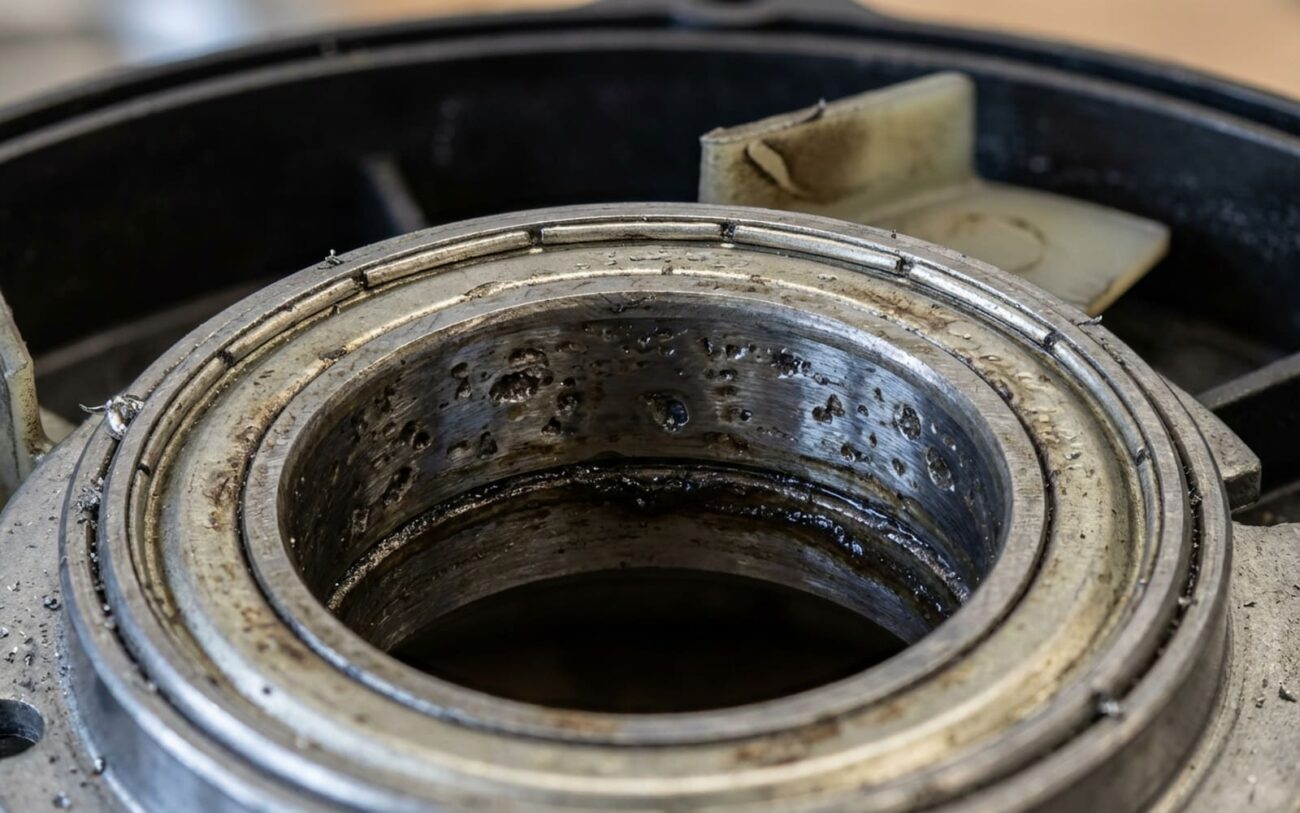
That whine isn’t random. It’s mechanical. And it follows a pattern: the faster the fan spins, the louder and higher the pitch. Not gradual — instant. You turn the dial, and the noise ramps up like a drill bit biting metal. That’s the bearing’s inner race grinding on pitted balls. No grease, no clearance, just metal-on-metal at 3,000 RPM.
And if you feel vibration in the dash or glove box? That’s shaft play. The bearing’s collapsed enough that the armature wobbles. I’ve seen up to 0.030″ of radial movement on bad ones — that’s like running a tire with a bent rim. It’s not just annoying; it’s tearing itself apart.
But here’s where shops get it wrong: they hear “fan noise” and throw a resistor at it. Or blame a clogged cabin filter. A dirty filter might whistle, sure — but it won’t make your dash shake. And it won’t change pitch instantly with fan speed. That’s key. If the sound or shake syncs exactly with blower speed, it’s mechanical. Full stop.
How to Confirm It — No Guessing
Before you touch a screwdriver, do this: run the fan on high. Then unplug the blower motor connector under the dash. If the noise stops immediately, it’s the motor. If it lingers or changes tone, you’ve got an electrical issue — maybe the resistor or control module buzzing from PWM signals.
Next, pull the motor. On most cars, it’s behind the glove box. You’ll need a T20 or T25 Torx, trim tools, and 20 minutes. Once it’s out, spin the wheel by hand. A good bearing feels smooth — like spinning a fidget spinner. A bad one? Gritty. Catchy. Might even click.
Then check for play. Grip the shaft and wiggle it. Any up/down or in/out movement? That’s it. The bearing is done. I don’t care if it’s “just a little” — once there’s play, it’s over. And while you’re in there, shine a light into the HVAC housing. Leaves, plastic bags, pine needles — I’ve pulled out everything. But debris makes a thumping sound, not a whine. If the wheel’s clean and the shaft wobbles, the motor’s the culprit.
Why It Failed — And It’s Not Just Age
Yes, bearings wear out. But I see patterns. On Subarus from 2014–2018, the rear seal leaks — moisture gets in, rust pits the race, and the bearing dies by 90k miles. Hondas? Same issue. GMs? Some models use a bearing that wasn’t rated for the load. Factory defect, plain and simple.
But the biggest killer? Moisture. The HVAC drain clogs, water backs up, and the motor sits in a puddle. I’ve pulled units where the rear bearing was seized solid from rust. And if the cabin filter’s missing or clogged, dust and leaves hit the wheel at high speed — throws it off balance, beats the bearing to death.
Oh, and don’t confuse this with an electrical whine. That’s a high-pitched buzz from the resistor or module — sounds like a mosquito. It doesn’t change with fan speed the same way. And it won’t make the dash shake. That’s not mechanical. That’s a circuit issue. Different fix.
How to Fix It — Skip the Hacks
Forget Replacing Just the Bearing
Replace the Whole Motor — It’s Easier Than You Think
Lube It? Only If You’re Desperate
Did It Work? Test Like a Pro
Don’t just turn the fan on and walk away. Run it through all speeds. No whine. No shake. If you’re unsure, use a stethoscope — touch it to the motor housing. Silence is what you want.
And if you’ve got a multimeter with min/max amperage, check the draw. On high, it should be steady — 8–12 amps on most cars. If it spikes or jumps, the motor’s binding. Could be a bad replacement, or you pinched the wheel during install. Pull it and check.
Also, listen for air leaks. If the rubber seal around the motor housing is twisted or missing, you’ll get a hiss. Not a bearing noise, but annoying. Replace the seal if it’s torn. They’re cheap.
How to Keep the Next One Alive
Prevent Repeat Failures
-
Change the cabin filter every 12K miles: It’s not just for air quality. A clogged filter forces the motor to work harder, increasing load on the bearing. I’ve seen motors fail 30% faster on cars with neglected filters.
-
Clear the HVAC drain yearly: It’s usually a rubber tube coming out of the firewall. Poke it with a wire or blow it out with air. If it’s clogged, water sits in the case. That’s a death sentence for the motor’s rear bearing.
And listen. Every spring and fall, when you first run the heat or AC, turn the fan to low. A faint squeal? That’s the bearing drying out. Not loud yet — but it will be. Replace it now, not when it’s screaming. You’ll save the resistor, save your sanity, and keep the repair simple.
Bottom Line: Don’t Wait, Don’t Half-Fix It
A failing blower bearing won’t fix itself. And if you keep running it, you risk burning out the resistor — another $100–$200. Or worse, the motor seizes and welds itself in the housing. Then you’re fighting a stuck unit, possibly damaging the duct.
Replacing the whole motor costs $60–$150 for the part. DIY takes under an hour. A shop will charge $300+ for the same job. If the car’s worth keeping, do it right. If it’s on its last legs, at least run the fan on low to reduce stress.
But don’t ignore it. I’ve seen too many customers come in after months of “just living with it” — only to find a fried resistor, water in the case, or a motor that took the housing with it. Fix it now. Quietly. Properly. And move on.
