That Cold-Start Rattle on Your BMW N20/N55? It’s Not What You Think.
If you own a BMW with an N20 or N55 engine and you’re hearing a sharp, metallic rattle right after a cold start, don’t just shrug it off. I’ve seen this symptom hundreds of times in my 25+ years in the shop, and while many folks jump to “timing chain guides,” this specific noise usually points to something else entirely: a failing Variable Valve Timing (VVT) clutch, what BMW calls the VANOS adjustment unit. This isn’t just an annoyance; it’s your engine sending a clear warning.
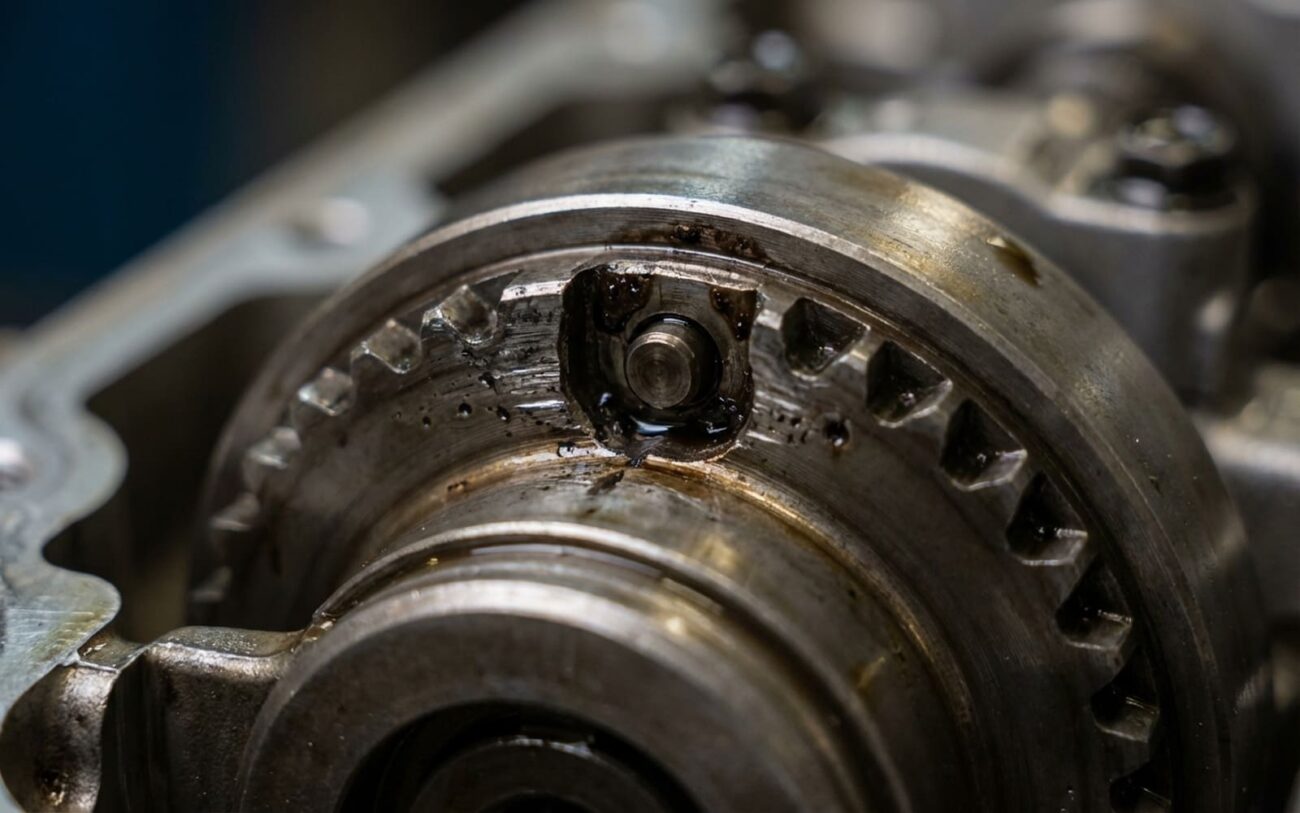
So, what exactly is happening inside? The VVT clutch is a precision hydraulic actuator mounted on the end of each camshaft. Its job is to rotate the cam ever so slightly, using pressurized oil, to adjust valve timing for better power, efficiency, and emissions. When internal components wear or that critical internal check valve leaks, the unit can’t hold oil pressure after shutdown. On restart, it clatters for 2–3 seconds until oil pressure builds and stabilizes the mechanism. That’s the rattle you’re hearing.
As the problem gets worse, you’ll notice more than just the cold rattle. You might start hearing a rhythmic ticking at idle, though I’ll warn you, that can be tricky to pin down – high-pressure fuel pumps or Valvetronic motors can make similar sounds. The real confirmation often comes with a check engine light. You’ll typically see codes like P0015 (Exhaust Camshaft Position Timing Over-Retarded) or P0012 (Intake Camshaft Position Timing Over-Retarded). These codes mean the engine’s computer (DME) is telling the cam to be at one position, but it’s lagging behind. That mismatch hits you in the wallet and the seat of your pants: reduced low-end torque, sluggish throttle, and you’ll be burning more fuel.
Diagnosing It Right: Don’t Just Guess
Alright, so you’ve got the rattle and maybe some codes. Now, how do we know it’s the VVT clutch and not something else? This is where I see a lot of shops, and even some DIYers, go wrong. They’ll swap out VANOS solenoids or sensors based on codes alone, only to have the rattle come right back. The root cause is often deeper.
You see, several things can mimic a bad VVT clutch: low oil pressure, clogged oil passages, a truly stuck solenoid, or even a stretched timing chain. That’s why a generic OBD2 scanner just won’t cut it here. You need a professional-grade tool – something capable of accessing BMW-specific live data and performing active tests. Without it, you’re just throwing expensive parts at the problem.
Here’s how I typically break it down in the shop to differentiate a failing VVT clutch from common mimics:
-
The Cold-Start Rattle (2–3 seconds)
This is the classic symptom, pointing to an internal check valve failure or wear in the rotor vanes, letting oil drain back. But don’t rule out a failing timing chain tensioner, a stuck VANOS solenoid, or even low oil pressure. To confirm, I use a BMW-compatible scan tool. I’ll command the VANOS solenoid duty cycle from 0% to 100% and watch the actual camshaft position response. If it’s sluggish or doesn’t hold, that’s a big clue. Sometimes, just swapping the solenoids (intake to exhaust, for example) can help isolate if the solenoid itself is the problem, but usually, it’s deeper.
-
Cam Timing Codes (P0015/P0012)
These codes mean the clutch can’t maintain oil pressure and position. But again, don’t jump to conclusions. Clogged oil feed passages, a faulty oil control valve (OCV), or a truly stretched timing chain can also throw these codes. My go-to here is to test the oil pressure right at the VANOS solenoid inlet. You need at least 5.0 bar (around 72 PSI) at hot idle. Then, I’ll perform a throttle snap test while graphing the target versus actual camshaft position. If the actual position lags or hunts, the VVT clutch is almost certainly failing.
Bottom line: These tools aren’t optional. You need a scanner that supports BMW ISTA or equivalent – think Autel MaxiCOM or a high-end Snap-on. Anything less, and you’re just going to waste time and money.
Why These Units Fail From the Inside Out
So, why do these VVT clutches give up the ghost? It’s a hydraulic rotor-vane mechanism, not an electrical part, and it relies entirely on oil pressure. Inside, helical splines and vanes move in a chamber, controlled by oil flow. Over tens of thousands of cycles, those internal surfaces just wear down. As clearances open up, oil leaks internally, and the unit can’t hold position anymore.
But just as common, in my experience, is the failure of that tiny internal check valve. Its job is to lock oil in the chamber when the engine shuts off, keeping the cam “preloaded” so it doesn’t clatter on restart. When that valve’s spring weakens, or its seat gets varnished with oil residue, the oil drains back. Result? That tell-tale rattle until pressure rebuilds.
BMW Service Insight:
BMW knows about this, by the way. While I can’t pull up a specific TSB number off the top of my head right now, I’ve seen documented service bulletins for N20/N55 models describing this exact 2-3 second cold-start rattle, and it points directly to that failing check valve in the VANOS unit. The biggest culprits? Oil quality and extended maintenance intervals. These engines absolutely demand BMW LL-01-approved oil. No exceptions.
Using generic or non-spec oil is a recipe for sludge and varnish in those super-tight oil passages. And those long oil change intervals BMW’s Condition Based Service system often suggests? They’ll accelerate wear on these units faster than you can say ‘VANOS.’ Just to be clear, this isn’t usually an electrical failure of the solenoid (that throws different codes), nor is it low oil pressure from a failing pump. Those are separate issues. This VVT clutch failure is almost always mechanical and internal, even if poor oil maintenance triggered it.
The Repair: No Easy Button
Once you’ve confirmed it’s the VVT clutch, let me tell you, there’s no magic bullet. This isn’t a rebuildable part; it’s a sealed, non-serviceable module. You’re replacing the entire clutch for the affected camshaft – intake, exhaust, or sometimes both. The part itself isn’t outrageously expensive, but the labor… that’s where it gets you. It sits behind the timing cover, so you’re looking at a pretty involved job. You’ll need to lock the crankshaft, pin the timing chain tensioner, and secure the camshafts properly to avoid any timing errors during disassembly. One mistake here, and you’re buying a new engine.
Critical Timing Procedure
And speaking of mistakes, pay close attention to the factory torque procedure (RA 11 31 050). You tighten the sprocket bolt to 40 Nm (30 ft-lb), then perform a final 90-degree turn. These bolts are torque-to-yield; they stretch during tightening and absolutely, positively, must never be reused. I’ve seen engines destroyed because someone tried to save a few bucks on bolts.
-
BMW VANOS holding tool set (e.g., 11 3 450)
-
Timing chain tensioner pin (e.g., 11 3 292)
-
Camshaft alignment bridge
-
Torque wrench with angle gauge
-
New VVT clutch unit(s)
-
New VANOS solenoid filters (always replace these, they get clogged)
-
Valve cover gasket set
-
New torque-to-yield camshaft sprocket bolts
After everything’s back together, don’t skimp on the oil. Refill with BMW LL-01-spec oil – 5W-30 or 0W-40, depending on your climate and model year. I see this overlooked way too often, and it just sets the repair up for premature failure down the road.
Now, about temporary fixes. I’ll be honest: there’s no reliable shortcut here. Some folks try a high-detergent engine flush (BMW’s own p/n 83 19 2 409 875 is one option) before an oil change, hoping to clean varnish from the check valve. In rare, very early-stage cases with minimal mechanical wear, this might temporarily quiet the rattle. But it’s a huge gamble. You risk dislodging debris that could block a critical oil passage, leading to sudden oil starvation. And if the internal splines are already worn, flushing does absolutely nothing. This isn’t a repair; it’s a delay tactic, maybe buying you a few weeks. It won’t stop mechanical wear, and it certainly won’t fix a worn check valve spring.
How to Know the Repair Was Done Right
So, you’ve done the repair or had a shop do it. How do you know it’s actually fixed? Don’t just assume because the engine runs. A proper repair has to pass three checks, in my book.
First, the cold-start rattle must be completely gone. Let that car sit overnight – a full cold soak – and start it up. Listen carefully. Any metallic ticking from the front of the engine means the issue persists, or you’ve got another problem.
Second, get that scan tool back out. Perform a functional test. Command camshaft adjustment (say, from 30% to 70% duty cycle) and watch the actual position. It should respond quickly and lock in place without any lag or oscillation. Repeat this during a throttle snap from 1500 to 3000 RPM. If the actual position drags or hunts, the clutch isn’t sealing properly. Could be a faulty new unit, incorrect installation, or even a bad solenoid that wasn’t replaced.
Third, check for leaks. Run the engine to full operating temperature, shut it off, and inspect the valve cover and timing cover area thoroughly. Repeat after cooling and restarting. Even a small seep can turn into a major leak later. A correct repair is silent, precise, and dry.
Weighing the Cost Against the Car’s Value
This repair isn’t cheap, and you absolutely need to figure out if it makes financial sense for your specific car. Here’s a realistic cost breakdown I give my customers:
For DIY, assuming you have the mechanical chops and specialty tools (either bought or rented), you’re looking at $400–$600 in parts. Take it to a reputable independent BMW specialist, and you’re probably in the $1500–$2200 range. The success rate is high – 95% – but that’s only if you stick to BMW’s torque and timing procedures to the letter. Get one step wrong, and you’re looking at immediate piston-to-valve contact, bent valves, and total engine failure. I’ve seen it happen.
The 40% Rule
Here’s my “40% Rule”: If the total repair cost is going to exceed 40% of your car’s current wholesale value, you really need to consider if this is a sound investment. And while you’re in there, especially with N20 engines, remember they’re also known for timing chain guide wear and high-pressure fuel pump failures. If you’re already tearing into the timing cover, it’s smart to inspect those components and replace them preventively. It’ll save you headaches later.
Keeping It From Happening Again
Prevention, in my book, comes down to one thing: oil discipline. You must use only BMW LL-01-approved engine oil. And change it every 7,500 miles or sooner. Period. Don’t listen to what the Condition Based Service (CBS) system suggests if it’s telling you to go longer. I’ve seen way too many VVT clutch failures directly tied to extended oil intervals and off-spec fluids. Those tight tolerances in the VANOS system simply don’t forgive poor oil maintenance.
Adopt Two Simple Habits
-
At every oil change, make a mental note of how long that cold-start rattle lasts – if you hear one. Even a half-second tick is worth monitoring. It’s an early warning.
-
If you have scan tool access, check the camshaft adaptation values in the DME. If those values start drifting beyond ±6.0 degrees, it means the system is struggling to maintain proper phasing. That’s a clear early warning sign the VVT clutch is on its way out.
