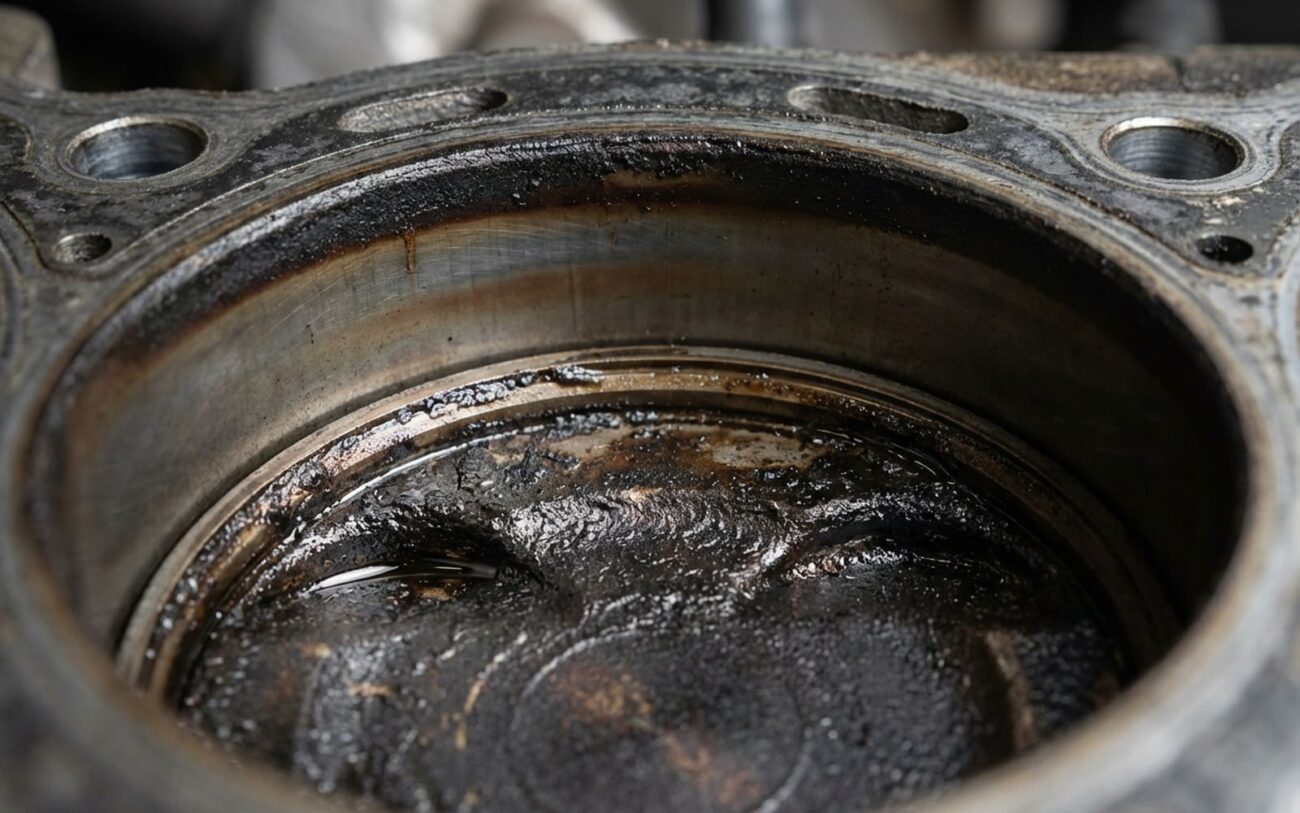
Alright, let’s talk about stuck piston rings. This isn’t one of those minor issues you can just ignore for a while. When rings seize up, your engine is essentially choking itself, burning oil, and losing power. I’ve seen too many folks try to put off this repair, only to end up with a much bigger bill down the road. So, if you suspect this is what’s going on, pay attention.
What You’ll See and Feel: The Red Flags
When piston rings decide to quit, your engine makes it pretty clear. The most common sign I see is blue or gray smoke puffing out of the exhaust, especially when you hit the gas. This isn’t that little wisp of white smoke on a cold morning; this is thick, persistent stuff that gets worse under load. That smoke is unburned oil getting past those stuck rings and into the combustion chamber. If you’re only seeing smoke at startup or when you let off the throttle, then you’re probably looking at worn valve stem seals instead. But if it’s there every time you accelerate, the rings are almost certainly the culprit.
Another big one is excessive crankcase pressure, what we call “blow-by.” Combustion gases are supposed to stay in the cylinders, but with stuck rings, they blow right past into the crankcase. You’ll often notice oil seeping from places it shouldn’t: the valve cover gasket, the rear main seal, or even the dipstick tube. I’ve had customers tell me their dipstick actually popped out while driving – that’s a sure sign of serious blow-by.
And of course, engine performance takes a dive. Your car will feel sluggish, throttle response will be dull, and acceleration will be noticeably weaker. It’s not just a little off; it’s a significant loss of power because the engine can’t build proper compression. Now, don’t confuse this with a simple misfire from a bad spark plug or coil – those are far more common. But if you’ve ruled out the usual suspects and the engine still feels gutless, it’s time to dig deeper into the rings.
My Diagnostic Checklist: Confirming Stuck Rings
Before you jump to conclusions, you need to confirm the rings are the problem. A lot of other issues can mimic these symptoms, so a methodical approach is key. Here’s how I typically run through it in the shop:
| What You’re Seeing | Why I Suspect Rings | Other Possibilities | The Definitive Test |
|---|---|---|---|
| Blue smoke on acceleration | Oil getting past compression rings into the combustion chamber. | Worn valve stem seals (often smoke on startup/decel), leaking turbocharger oil seals. |
Cylinder Leak-Down Test: Apply compressed air to each cylinder at TDC. If you hear significant air hissing out of the oil fill tube or dipstick, that’s blow-by, and your rings are failing to seal. |
| Oil leaks, dipstick popping out, high oil consumption | Excessive crankcase pressure (blow-by) due to poor ring seal. | Clogged PCV valve, blocked crankcase ventilation system. (Always check PCV first!) |
Crankcase Pressure Test (Manometer): Use a water manometer at the oil fill opening. Anything over 1.5 inches of water column indicates excessive blow-by. This is a direct measurement of what’s happening. |
| Poor power, sluggish acceleration, rough idle | Loss of cylinder compression across multiple cylinders. | Incorrect valve timing, blown head gasket, bent valves, clogged catalytic converter, fuel delivery issues. |
Wet Compression Test: Perform a standard compression test. Then, squirt a small amount of oil (about a teaspoon) into each cylinder and retest. If compression jumps by 15–20% or more, the oil temporarily sealed the rings, confirming they were the leak path. |
| Unexplained misfires, fuel trim issues | Combustion gases contaminating the crankcase. | Spark plugs, coils, injectors, vacuum leaks. |
Combustion Gas Analyzer (at oil fill): This tool detects exhaust gases (hydrocarbons) in the crankcase. If you find high levels, it’s a direct indicator that combustion is blowing past the rings. |
Why Rings Get Stuck: The Root Causes I See
Once you’ve confirmed the rings are the issue, understanding why they failed is crucial. You can’t just fix the symptom; you need to address the root cause, or you’ll be doing the job again. In my 25+ years, it almost always boils down to a few key things:
1. Carbon Buildup (The Big One): This is the most common culprit. Modern engines, especially direct-injection ones, are prone to carbon buildup. Short trips, frequent idling, or using cheap, low-detergent fuel lets sludge and varnish accumulate in the piston ring grooves. Over time, this carbon acts like glue, freezing the rings in place. They lose their spring action and can’t seal against the cylinder wall anymore. I’ve pulled engines apart where the rings were literally welded to the piston – no movement at all.
2. Mechanical Damage: Sometimes it’s more violent. Detonation – that metallic pinging sound under load – can fracture a ring or even crack the piston’s ring land. A serious overheating event can do the same. Once you have physical damage like that, no amount of chemical cleaning is going to fix it. It’s a hard part failure.
3. Cylinder Wall Issues: It’s not always the rings themselves. Improper engine break-in can glaze the cylinder walls, creating a super smooth, polished surface that the rings can’t properly seat against. On high-mileage engines, you’ll see bore wear, creating a taper or out-of-round condition that’s just beyond what the rings can compensate for. This leads to chronic blow-by and oil consumption, even if the rings themselves aren’t stuck.
It’s important to differentiate these ring issues from other problems that might seem similar. Oil leaks from a cracked block, worn valve guides, a failed PCV valve, or a leaking turbo seal aren’t ring failures – they just cause similar symptoms. A blown head gasket is also a separate concern, though repeated overheating from a head gasket failure can eventually damage rings.
Your Repair Options: From Mild to Major Surgery
The fix really depends on what we found during diagnosis. If it’s just carbon gumming things up, you might get away without tearing the engine down. But if there’s actual mechanical damage, you’re looking at a much bigger job.
Chemical Piston Ring Soak
Temporary Additives / High-Detergent Oils
Professional Mechanical Agitation Professional Only
When It’s Beyond Simple Cleaning: Mechanical Failure
If your rings are broken, the piston ring grooves are damaged, or the cylinder walls are scored, cracked, or excessively worn, there’s only one real solution: complete engine disassembly. No additive, solvent, or magic wand can fix actual mechanical failure. This is where the cost goes up significantly.
Complete Engine Disassembly (Overhaul or Replacement) Professional Only
How to Know If the Fix Actually Worked
You can’t just throw a chemical soak in there or do a repair and assume the problem is gone. You have to verify the results. After any cleaning, repair, or overhaul, retest everything you did during diagnosis:
- Compression Test: Your compression readings should now be within 10% of factory specifications and consistent across all cylinders. If you do a wet compression test afterward, you should see little to no improvement, because the rings should already be sealing properly.
- Crankcase Pressure Test: Recheck crankcase pressure with your manometer. A successful treatment should reduce pressure by more than half compared to your initial readings.
- Oil & Filter Change: This is crucial, especially after a chemical soak. Any residual cleaner or loosened carbon debris needs to be flushed out of the system.
- Monitor Oil Consumption: Drive the car for the next 1,000 miles and meticulously monitor your oil level. Normal consumption is generally less than a quart per 1,000 miles. If you’re still burning oil or seeing blue smoke under acceleration, the rings are still compromised.
- Leak-Down Test (The Gold Standard): This is the definitive way to know. A healthy engine should show less than 10–15% leakage per cylinder. Any higher, and those rings aren’t sealing like they should be. This test will tell you, without a doubt, if you’ve truly fixed the problem.
The Cost-Benefit Reality Check: Is It Worth It?
This is where I have to be brutally honest with customers. Repairing stuck piston rings can range from relatively cheap to “you could buy another car.” Here’s a breakdown of typical costs and my thoughts on the success rates:
| Repair Type | DIY Cost | Shop Cost | My Observed Success Rate | Secondary Risks I’ve Seen |
|---|---|---|---|---|
| Chemical Soak | $50–$150 (for chemicals) | $300–$600 | 40–70% (depends heavily on severity) | Hydraulic lock (DIY), dislodged carbon clogging oil pickup. |
| Mechanical Agitation | N/A | $500–$1,000 | 60–80% (if done by a skilled tech) | Cylinder wall scoring, permanent engine damage. |
| Engine Overhaul | $1,500–$3,000 (parts only, if you DIY) | $3,000–$7,000+ (depending on engine/vehicle) | 95%+ (if done correctly) | Improper assembly, break-in failure, finding other issues during disassembly. |
The decision often boils down to your vehicle’s value. My rule of thumb is this: if a full engine overhaul or replacement costs more than 50% of the car’s current market value (check Kelley Blue Book for “Fair” condition), it’s probably time to consider alternatives. Dropping $6,000 into an engine on a car only worth $4,000 rarely makes financial sense, especially when you factor in downtime and potential future issues. Sometimes, a good used or remanufactured engine swap is a more practical option, but even that can be costly. Be realistic about what you’re willing to spend versus what the car is actually worth.
Keeping Your Rings Healthy: My Prevention Tips
Look, prevention is always cheaper than repair, especially with something like piston rings. The goal is to minimize carbon buildup and keep those rings moving freely:
- Use Top Tier Detergent Gasoline: This isn’t just marketing hype. Top Tier fuels are formulated with higher levels of detergents to reduce deposits in the combustion chamber and on piston rings. It costs a few cents more per gallon, but it’s cheap insurance.
- Follow Severe Service Oil Change Intervals: If your driving consists mostly of short trips, heavy idling, or stop-and-go city traffic, you’re putting your engine under “severe service” conditions. This leads to more fuel dilution and sludge in the oil, which accelerates ring coking. Check your owner’s manual – the severe service interval is usually much shorter than the normal one. Don’t skip it.
- Proper Engine Break-In: For newer engines or any engine that’s had an overhaul, proper break-in is absolutely critical. The first 500–1,000 miles are when the rings seat against the cylinder walls. Skipping this, or driving too gently, can glaze the bores and prevent proper ring seal, leading to oil consumption issues down the road. Follow the manufacturer’s or builder’s break-in procedure precisely.
- Don’t Ignore Small Leaks: If you see oil seeping, get it checked. While not always ring-related, it can be an early sign of crankcase pressure issues.
