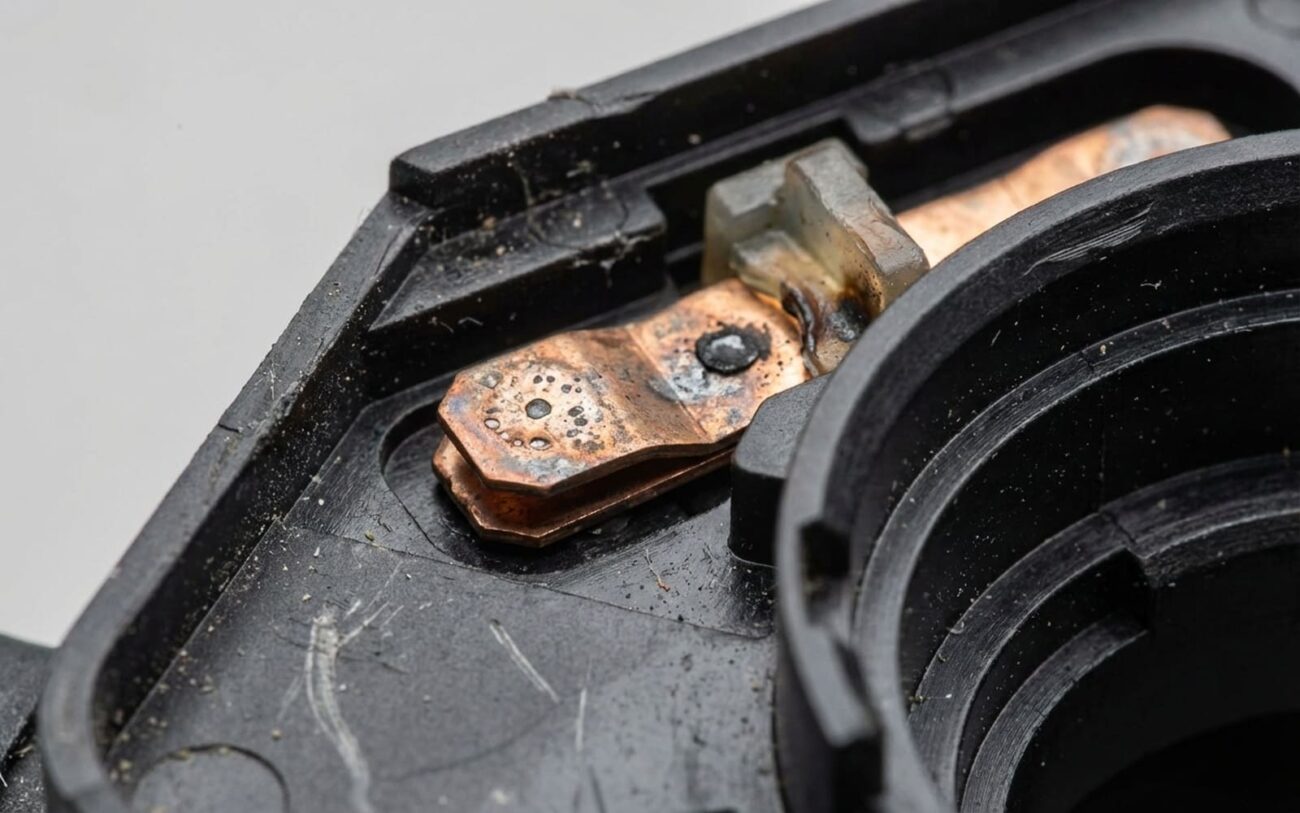
Turn signal switch failures are one of those “creeping” problems that start small and blow up fast. I’ve pulled more than a few apart in my shop over the last 25 years — from beat-up Civics to luxury SUVs — and the story’s always the same: worn contacts, brittle plastic, and moisture where it shouldn’t be. You don’t need to guess. There’s a method here, and once you know it, you can nail the diagnosis in under 15 minutes.
Symptoms That Point to the MFS — And Why They Matter
If your turn signal doesn’t click and the bulb doesn’t flash — especially on just one side — don’t jump to a bulb or fuse. First question: does wiggling the stalk change anything? If yes, that’s not a wiring issue. That’s the multifunction switch (MFS) failing internally. I see this weekly on 2010–2016 Camrys — the left signal dies, but only when the stalk’s in neutral. Push it slightly forward? It works. That’s classic contact wear.
Self-cancel failure is another red flag. You finish a turn, wheel centers, but the blinker keeps going. Now, it could be the cancel cam on the column, but more often than not, it’s the switch’s internal contact ring. On Fords from 2008–2013, the plastic ramp that rides the cam wears down — I’ve measured up to 0.030″ of wear with calipers. Once it’s that thin, it skips instead of tripping.
Then there’s the weird stuff: left turn signal triggers the right side. Or hitting the stalk turns on hazards. That’s not a crossed wire — that’s carbon tracking or conductive gunk inside the switch housing. I’ve cracked open units where moisture got in, dried, and left a conductive film across circuits. Electricity takes the path of least resistance — and suddenly, your high beam switch powers the brake lights. Sounds crazy, but I’ve seen it three times this year alone.
And if your headlights work fine from the dash switch but pulling the stalk for highs does nothing? That isolates the fault to the MFS. Same housing, different circuit. One works, one doesn’t? The problem isn’t the relay, the BCM, or the bulbs. It’s in the stalk.
How I Diagnose — Fast and Accurate
Start simple: bulbs, fuses, sockets. But don’t just look at the fuse — test it. I’ve seen fuses with hairline cracks that still looked fine. Use a test light or multimeter across the terminals. If it’s good, move on.
Now, listen. Turn the signal on. No click? That could be the flasher, but if it’s silent on both sides, check power to the MFS first. If there’s power in but no output when you wiggle the stalk, the switch is the issue. Intermittent click = intermittent contact.
For high-beam or self-cancel issues, you need a multimeter. Back-probe the MFS connector. On the high-beam circuit, you should see 12V when you pull the stalk. If input voltage is there but no output, the internal contact is dead. Same for turn signals — check for a pulsing 12V signal at the output pin. Wiggle the stalk. If the signal cuts in and out, that’s your confirmation.
On modern cars, a scan tool helps. If the BCM isn’t registering the stalk input, but the switch has power and ground, the fault is in the switch. No point chasing wiring.
| Symptom | Switch-Related Cause | External Mimics | Definitive Test |
|---|---|---|---|
| No left turn signal | Worn contact for left circuit in MFS | Bulb, socket, fuse, flasher | Back-probe MFS output pin — check for pulsing 12V while wiggling stalk |
| Signal doesn’t self-cancel | Worn cancel contact or ramp in MFS | Damaged cancel cam, misaligned wheel | Inspect cam visually; test continuity in cancel circuit while rotating wheel |
| No high beams via stalk | Failed high-beam contact in MFS | Dimmer relay, BCM fault, open wire | Check for 12V at MFS output when stalk pulled — if input good but no output, switch is bad |
Why These Switches Fail — And What’s Really Going On Inside
The MFS isn’t just a switch — it’s a mechanical maze with sliding contacts, springs, and plastic cams. Every time you flick the stalk, metal slides against metal. Over time, the silver or tin plating wears off. Once it’s gone, copper oxidizes fast — especially if moisture gets in.
And moisture does get in. I’ve seen it from cracked windshield seals, but also from drivers rinsing the interior with a hose. Humidity condenses inside the housing, and boom — corrosion on contacts that look clean to the eye but test at 200+ ohms. Chrysler had a TSB on this for 2012–2014 Town & Country vans. GM too, on some Silverados.
Springs weaken. The little ones that keep contact pressure drop off over time, especially in hot climates. Low pressure = high resistance = voltage drop. That’s why some signals work when cold but fail after driving.
Plastic wears. The cancel cam, detents, ramps — they’re molded, not machined. Slam the stalk into position every day? That accelerates wear. On a 2017 Explorer I tore down last month, the detent was cracked clean through. No wonder the signal wouldn’t stay engaged.
How I Fix It — And What I Tell My Customers
This Isn’t a “Maybe” Job — It’s High-Risk Zone
You’re working within inches of the airbag. One wrong move, and you’re looking at a $600 clockspring or a deployed airbag. I don’t cut corners here. Neither should you.
Replace the Whole Assembly DIY-FEASIBLE with mechanical aptitude
Cleaning Contacts TEMPORARY / LAST-RESORT for minor oxidation
After the Fix — Don’t Skip This
Test everything. Turn signals both sides, hazards, high beams, self-cancel. Take it for a short drive — make left and right turns to verify canceling. If it doesn’t cancel, the cam might be misaligned or the switch not fully seated.
On modern cars, clear any stored codes. Some BCMs log intermittent faults and may need a reset to stop throwing warnings.
| Repair Type | DIY Cost | Shop Cost | Success Rate | Risk if Failed |
|---|---|---|---|---|
| Full Switch Replacement | $75–$250 | $300–$600 | 98% (if diagnosed correctly) | Low — assuming proper reassembly |
| Contact Cleaning | $15 (cleaner, lube) | Not offered | 30% (only for oxidation) | High — switch often destroyed in disassembly |
On high-mileage econoboxes, a $600 shop repair might not pencil out. But on anything newer, it’s a no-brainer. I had a customer delay this on a 2020 Accord — ended up getting rear-ended because his signal didn’t activate. That’s not just a repair cost. That’s risk.
Final Word
There’s no maintenance schedule for the MFS. It’s a wear item. But you can catch it early. Test the stalk functions every time you do an oil change — flick the signals, pull for highs, make a slow turn to check canceling. Takes two minutes. Could save you a ticket, or worse.
And if you feel any slop in the stalk, or it doesn’t click crisply? Pay attention. That’s the first sign of internal wear. Don’t wait for complete failure.
