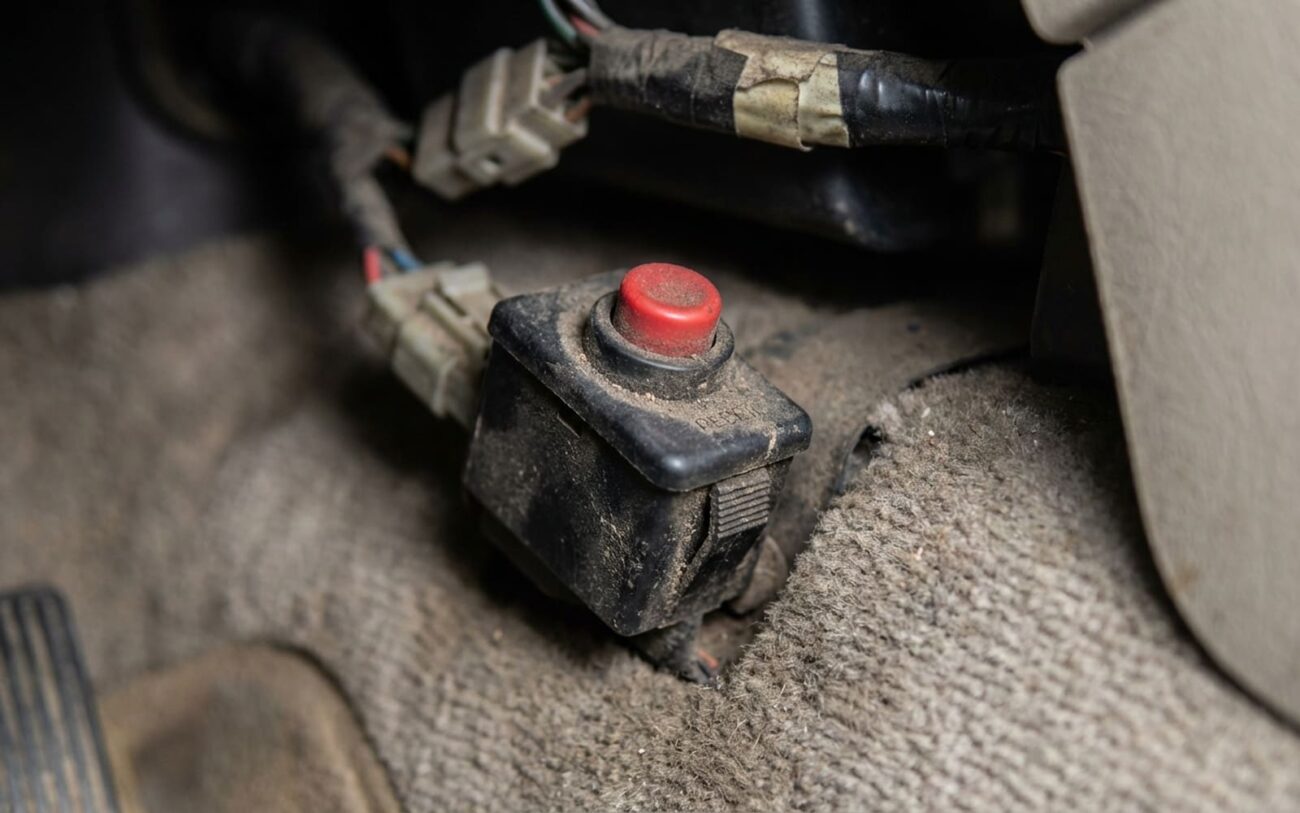
You get that call: “My car cranks, but won’t start after a fender bender.” First thing that pops into my head? The inertia fuel cut-off switch. I’ve seen this play out countless times over the past 25 years – a minor bump, maybe a curb strike, or even just hitting a really deep pothole, and suddenly the engine just spins. No life, no cough, nothing. It’s not a mystery, though; it’s a safety feature doing exactly what it was designed to do.
What It Is & Why It Matters
This little device, often called a fuel cut-off switch, fuel pump inertia switch, or just a fuel reset switch, is an electromechanical guardian. Its sole purpose is to kill power to your fuel pump the moment it detects a sudden impact. Think of it like a circuit breaker for your fuel system. It doesn’t break when it trips; it protects. If you’re in a crash and a fuel line ruptures, you absolutely do not want that pump still pushing gasoline everywhere. It’s smart engineering, but it means even a moderate jolt can leave you stranded with an engine that cranks but won’t start.
The Prime Suspect: No Fuel Pump Prime
The dead giveaway for a tripped inertia switch is simple: no fuel pump prime. When you turn the key to the “ON” position (before cranking the engine), you should hear a faint hum or whine from the back of the car for a second or two. That’s the fuel pump pressurizing the system. If you’ve had an impact and that sound is gone, but the engine still cranks strong and healthy, put the inertia switch at the very top of your suspect list.
Where to Find It & How to Reset It
Where is this thing? Well, it varies by vehicle, but on a lot of Ford, Lincoln, and Mercury models – where you see these switches most often – it’s typically in the trunk, usually behind a trim panel on the left side near the quarter panel. Sometimes it’s under the passenger-side kick panel, or even beneath the rear seat. Your owner’s manual is your best friend here; it’ll show you exactly where to look.
Resetting the Tripped Switch DIY-FEASIBLE
When Resetting Fails: Deeper Diagnosis
But what if it still doesn’t prime? Or what if the button won’t stay down? That’s when we need to dig a little deeper. A silent fuel pump doesn’t always mean the inertia switch is the problem, even after a crash. I’ve seen plenty of cases where wiring gets pinched, a fuse blows, or a relay goes bad due to the impact. And sometimes, the fuel pump itself just decides to quit, or the Fuel Pump Driver Module (FPDM) on some Ford trucks gives up the ghost. So, a methodical approach is key here.
My go-to diagnostic for the switch itself is electrical. Get your multimeter out:
- Check for power into the switch: With the ignition ON, you should have 12 volts on the input side of the switch’s connector.
- Check for power out of the switch: If you have 12 volts going in, but zero coming out, then the switch is definitely tripped, or it’s failed internally.
Other things can mimic a tripped switch. A blown fuel pump fuse is common, especially if the impact caused a short. A faulty fuel pump relay, or even damage to the Fuel Pump Driver Module (FPDM) on certain models, can give you the same no-prime symptom. If the car has an anti-theft system (like Ford’s PATS), a fault there can also prevent the fuel pump from running, even if the inertia switch is fine. So, if the simple reset doesn’t work, don’t just assume the switch is bad. Check fuses, swap relays if you have a known good one, and if you have a scan tool, look for codes, especially U-codes related to communication, or check the fuel pump relay command status.
You get that call: “My car cranks, but won’t start after a fender bender.” First thing that pops into my head? The inertia fuel cut-off switch. I’ve seen this play out countless times over the past 25 years – a minor bump, maybe a curb strike, or even just hitting a really deep pothole, and suddenly the engine just spins. No life, no cough, nothing. It’s not a mystery, though; it’s a safety feature doing exactly what it was designed to do.
What It Is & Why It Matters
This little device, often called a fuel cut-off switch, fuel pump inertia switch, or just a fuel reset switch, is an electromechanical guardian. Its sole purpose is to kill power to your fuel pump the moment it detects a sudden impact. Think of it like a circuit breaker for your fuel system. It doesn’t break when it trips; it protects. If you’re in a crash and a fuel line ruptures, you absolutely do not want that pump still pushing gasoline everywhere. It’s smart engineering, but it means even a moderate jolt can leave you stranded with an engine that cranks but won’t start.
The Prime Suspect: No Fuel Pump Prime
The dead giveaway for a tripped inertia switch is simple: no fuel pump prime. When you turn the key to the “ON” position (before cranking the engine), you should hear a faint hum or whine from the back of the car for a second or two. That’s the fuel pump pressurizing the system. If you’ve had an impact and that sound is gone, but the engine still cranks strong and healthy, put the inertia switch at the very top of your suspect list.
Where to Find It & How to Reset It
Where is this thing? Well, it varies by vehicle, but on a lot of Ford, Lincoln, and Mercury models – where you see these switches most often – it’s typically in the trunk, usually behind a trim panel on the left side near the quarter panel. Sometimes it’s under the passenger-side kick panel, or even beneath the rear seat. Your owner’s manual is your best friend here; it’ll show you exactly where to look.
Resetting the Tripped Switch DIY-FEASIBLE
When Resetting Fails: Deeper Diagnosis
But what if it still doesn’t prime? Or what if the button won’t stay down? That’s when we need to dig a little deeper. A silent fuel pump doesn’t always mean the inertia switch is the problem, even after a crash. I’ve seen plenty of cases where wiring gets pinched, a fuse blows, or a relay goes bad due to the impact. And sometimes, the fuel pump itself just decides to quit, or the Fuel Pump Driver Module (FPDM) on some Ford trucks gives up the ghost. So, a methodical approach is key here.
My go-to diagnostic for the switch itself is electrical. Get your multimeter out:
- Check for power into the switch: With the ignition ON, you should have 12 volts on the input side of the switch’s connector.
- Check for power out of the switch: If you have 12 volts going in, but zero coming out, then the switch is definitely tripped, or it’s failed internally.
Other things can mimic a tripped switch. A blown fuel pump fuse is common, especially if the impact caused a short. A faulty fuel pump relay, or even damage to the Fuel Pump Driver Module (FPDM) on certain models, can give you the same no-prime symptom. If the car has an anti-theft system (like Ford’s PATS), a fault there can also prevent the fuel pump from running, even if the inertia switch is fine. So, if the simple reset doesn’t work, don’t just assume the switch is bad. Check fuses, swap relays if you have a known good one, and if you have a scan tool, look for codes, especially U-codes related to communication, or check the fuel pump relay command status.
When the Switch Itself Has Failed
Most of the time, the inertia switch isn’t “broken” when it trips; it’s doing exactly what it was designed to do. The internal mechanism, usually a spring-loaded ball or pendulum, gets knocked out of place by sudden deceleration, opening the circuit. That’s a success story, not a failure.
But yes, they can actually fail. After years of service, I’ve seen moisture get into the housing, leading to corrosion on the contacts. This can prevent the switch from closing properly, even after you press the button. Sometimes the reset button mechanism itself just wears out and won’t latch. And of course, a severe impact can physically crack the plastic housing or bend the mounting bracket, which means it might not reset or stay reset.
Component Replacement DIY-FEASIBLE
- First, always disconnect the negative terminal of your battery. Safety first, always.
- Remove any trim panels necessary to access the switch.
- Unplug the electrical connector – usually a simple push-tab.
- Remove the mounting bolt or clip that holds the switch in place.
- Install the new switch, making sure it’s oriented correctly.
- Tighten the mounting bolt. For most of these, you’re looking at about 8–10 Nm (7–9 lb-ft) – don’t overtighten and crack the plastic.
- Reconnect the electrical harness.
- Reconnect the battery.
- Then, follow the post-repair validation steps.
Post-Repair Validation
Just because the car starts doesn’t mean you’re done. You need to validate the repair. First, turn the key to “ON” again and confirm you hear that 1-3 second hum from the fuel pump. That audible prime tells you the electrical circuit is good.
Second, for a complete check, attach a fuel pressure gauge to the Schrader valve on the fuel rail. Most older port-injected engines typically need 35–45 psi. Direct-injection systems run much higher – often 500–3,000 psi, depending on the engine. Always refer to your specific vehicle’s service manual for the exact values. If the pressure is low, you might have another issue, like a weak pump or a partially blocked line.
Cost & Prevention
| Repair Type | DIY Cost | Shop Cost | Success Rate |
|---|---|---|---|
| Reset tripped switch | $0 | $0.5–1.0 hr labor | Near 100% (if functional) |
| Replace inertia switch | $40–$120 | $150–$300 | Near 100% (if confirmed faulty) |
Costs for this are pretty low. If it’s just a reset, that’s free for DIY, or maybe half an hour of labor at a shop. A new inertia switch typically runs $40–$120 for the part. If you do it yourself, that’s your total. At a shop, you’re probably looking at $150–$300 total, including parts and labor. It’s a cheap fix for a big problem.
As for prevention, there’s no scheduled maintenance for these. They’re passive safety devices. But you can help prevent false trips or premature failure. Make sure the switch is securely mounted. A loose bracket can let it jiggle around under normal driving, potentially tripping it unnecessarily.
Proactive Tip
Keep the electrical connector clean and fully seated. Corrosion or moisture in the connector can interrupt power, mimicking a tripped switch. A quick visual inspection during routine maintenance can catch this early.
