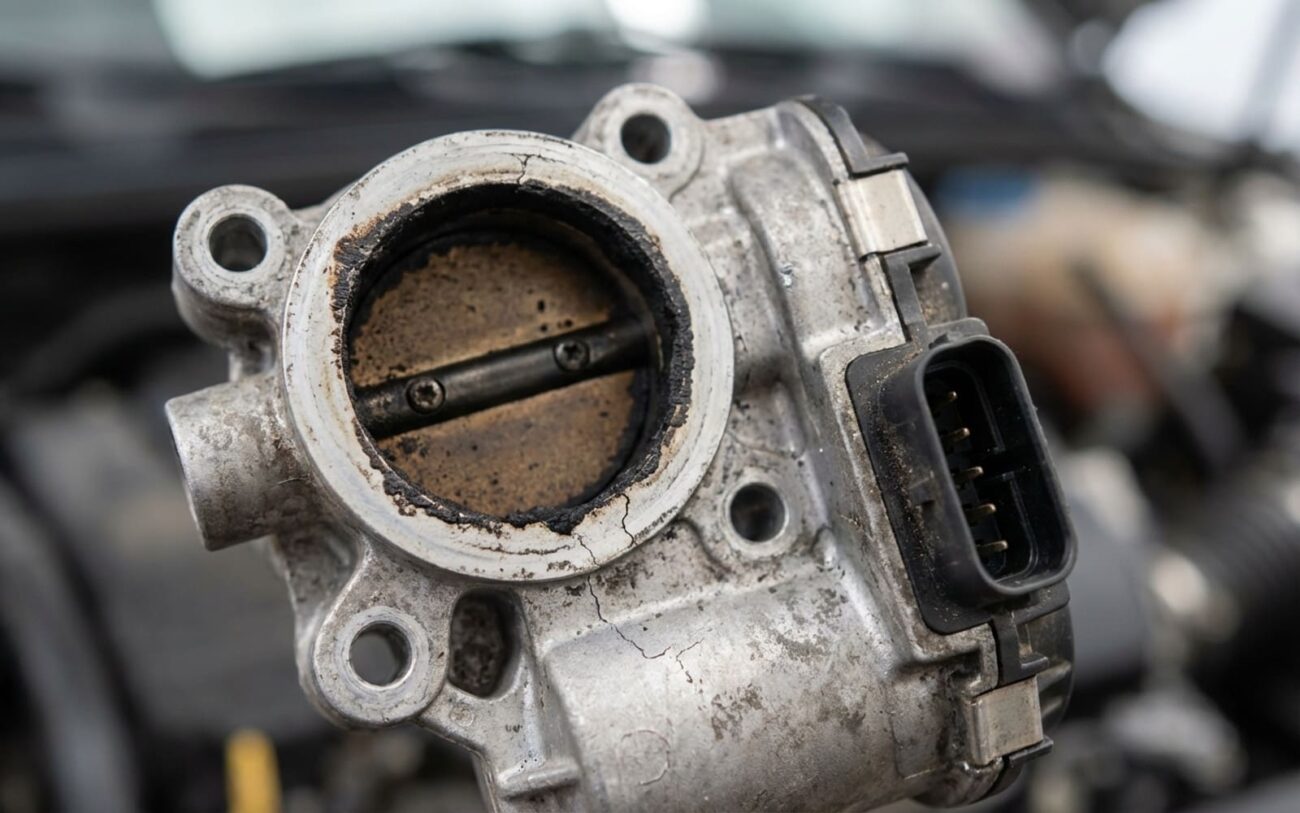
When a car rolls into my shop with a complaint of “no acceleration,” the first thing I do is listen to the customer, then the car. That vague phrase can mean a dozen different things, from a tired engine to a transmission that’s just spinning its wheels. The real trick is figuring out if the engine’s making power but not getting it to the ground, or if the engine itself is just plain weak.
Initial Diagnosis: Engine or Drivetrain?
This is the critical first split. You hit the gas, what happens to the engine RPM versus the vehicle speed? That tells you where to start looking.
Scenario 1: Engine Revs Freely, Car Doesn’t Respond
If you press the throttle hard and the engine RPMs shoot up, but the car just kind of… hesitates, or barely picks up speed, then your engine is doing its job. The problem is somewhere between the crankshaft and the tires. This is classic drivetrain slip.
- Manual Transmission: You’re looking at a slipping clutch. You’ll often get that distinct, acrid smell – like burnt toast and hot metal – especially after some stop-and-go traffic. I’ve seen folks try to nurse these for too long, and all that does is glaze the flywheel or even warp it, turning a clutch job into a bigger, more expensive headache.
- Automatic Transmission: With an automatic, it’s usually the torque converter or the internal clutch packs wearing out. The engine’s spinning, but the transmission isn’t grabbing. If it’s really bad, the car might not move at all in drive or reverse, even with the engine revving normally.
Scenario 2: Engine Feels Weak, Hesitates, or Stumbles
Now, if you press the pedal and the engine just feels gutless – it stumbles, hesitates, or just doesn’t build power – then the problem is in the engine’s ability to make that power. We’re talking fuel, air, or spark. The usual suspects? A dying fuel pump, a clogged fuel filter you forgot about, dirty injectors, a vacuum leak somewhere in the intake, a mass airflow sensor that’s gone wonky, or just plain worn-out spark plugs and ignition coils.
If the Check Engine Light starts flashing during this hesitation, that’s almost always a misfire. And a persistent misfire can dump raw fuel into your catalytic converter, cooking it alive. Trust me, a new cat is a lot more expensive than a set of plugs and coils.
Diving Deeper: Diagnostic Tools & Tests
Once we’ve got a general idea, it’s time to get specific. A good OBD2 scan tool is your best friend here. Even basic P-codes like P0300 (random misfire) or P0700 (transmission control system fault) can point you straight to the right system. Don’t ignore them. They’re telling you something.
For example, if I suspect a clogged catalytic converter – which can definitely make a car feel gutless – I’ll grab my infrared thermometer. A healthy cat should be 100-200 degrees Fahrenheit hotter at the outlet than the inlet. If it’s cooler or the same temp, it’s choked up. I’ve seen too many people chase engine problems when it was just a plugged exhaust.
And if the engine’s idling rough or I suspect an air leak, I’ve got a methodical way to find those. (We’ve covered that in another article, but it’s a critical step: How to Find an Air Leak in the Intake Manifold).
Here’s how I break down the likely causes and definitive tests in the shop:
| Symptom | Likely in Power Transmission System | Common External Mimics | Definitive Test to Confirm Source |
|---|---|---|---|
| Engine RPM rises but vehicle speed lags, with possible burning smell. | Slipping clutch (manual) or failing torque converter/transmission (automatic). | Severely restricted exhaust (collapsed catalytic converter). |
Manual: Load test in 3rd gear at 2000 RPM on incline. Automatic: Monitor torque converter slip RPM via scan tool. |
| Vehicle refuses to move in Drive or Reverse, engine RPM normal. | Internal transmission failure (hydraulic loss, broken input shaft, stripped final drive). | Severely damaged axle or CV joint. |
With vehicle on jack stands, observe output shafts in gear. If output turns but wheels don’t, it’s a broken axle. |
| Acceleration hesitation or bucking with flashing CEL and misfire codes. | Ignition coil, fuel injector, or sensor failure (e.g., TPS, camshaft sensor). | Internal mechanical engine fault (worn cam lobe, broken valve spring). |
Run a cylinder contribution test or perform a running compression test to isolate mechanical damage. |
Understanding the Failure: What Breaks & Why
Once we’ve narrowed it down to a specific system, the next step is figuring out what inside that system actually failed. It’s not always obvious.
Manual Transmission Clutch Assembly
For a manual clutch, everyone thinks “worn out disc,” and yeah, that’s often it – it’s a wear item, like brake pads. But don’t overlook the pressure plate. Its diaphragm spring can lose tension over time, reducing clamping force and causing slip even if the disc still has material. I’ve also seen broken torsion springs in the disc itself, leading to a nasty shudder during engagement, or worn hub splines causing engagement issues or noise. And sometimes, it’s not even the clutch itself, but a leaking clutch master or slave cylinder that prevents full disengagement, giving you grinding shifts. That’s a hydraulic problem, not a mechanical one.
Automatic Transmission Internal Components
Automatic transmissions are a whole different beast. Heat and old fluid are the killers. Seals – especially piston seals in clutch packs – dry out and crack, leading to pressure loss and slip. Friction material wears off the clutch packs, and the steel plates can warp from overheating. Bands wear or lose tension, and their apply servos can fail. But the valve body? That’s a common failure point. Bores wear, solenoids fail, and tiny passages get clogged with debris. I’ve seen a bunch of GM 8L45s and 8L90s – the newer 8-speeds – come in with light-throttle shudder that was traced right back to valve body wear. GM even has service bulletins on it. Just remember, low fluid from a leaky cooler line isn’t an internal failure, and a faulty speed sensor is an electrical problem, not a mechanical one.
Engine Block Structural Issues
If we’ve ruled out all the external stuff – fuel, air, spark, sensors – and it’s pointing to the engine block itself, then you’re in for some serious trouble. We’re talking structural damage. A crack in a cylinder wall, maybe from overheating or a casting defect, can let coolant or combustion gases get where they shouldn’t. You’d find this with a cooling system pressure test and a combustion leak test (those “block dye” kits work pretty well). Bubbles in the radiator or coolant in the oil are huge red flags. Now, a blown head gasket can cause similar symptoms, but that’s not a block failure. Worn piston rings are a piston issue. A cracked block? That’s the foundation of the engine compromised.
The Fix: Repair or Replace?
Alright, so you’ve pinpointed the problem. Now, what’s the game plan? A lot of these repairs are not for the faint of heart, or the ill-equipped.
Professional Territory Only
Many of these repairs involve high-torque fasteners, specialized alignment tools, and heavy component removal. Attempting internal transmission or block repairs without proper equipment can lead to permanent mechanical failure.
Manual Clutch Replacement PROFESSIONAL-ONLY for most drivers
Automatic Transmission Overhaul PROFESSIONAL-ONLY
Engine Block Repair NON-REPAIRABLE / RE-SLEEVING
The “Miracle” Fix Warning:
And before you even think about it, those “friction modifier” additives for slipping transmissions? They’re snake oil, plain and simple. Maybe, maybe they’ll buy you a few weeks in a really old transmission with slightly swollen seals, but they don’t fix worn clutches or broken bands. All they really do is contaminate your fluid and mask serious damage. I’ve seen more transmissions turn into expensive paperweights because someone poured in a bottle of “fix-a-slip” instead of getting it diagnosed properly.
Post-Repair Verification: Don’t Skip This!
You’ve done the work, or paid to have it done. But the job isn’t over until you’ve verified the fix. You can’t just button it up and hope for the best.
After a Manual Clutch Replacement
I always do a full-throttle acceleration test in 3rd or 4th gear, starting around 2000 RPM. You’re looking for no RPM flare, no burning smell, and smooth engagement from a stop. If it slips or chatters, something’s still wrong – maybe the flywheel wasn’t resurfaced correctly, or there’s still air in the hydraulic system.
After an Automatic Transmission Rebuild
For an automatic rebuild, a scan tool is essential on the road test. I’m watching for quick gear changes (under 1.5 seconds), minimal RPM flare (less than 50 RPM spike), and smooth torque converter clutch lock-up. And always keep an eye on the fluid temperature – it should rise steadily but stay within the normal operating range (usually 175-225°F). I’ll often hit the cooler lines with an infrared thermometer too, just to confirm good flow and cooling.
After an Engine Block Repair
If you’ve had a block repair, it’s all about sealing and integrity. Pressurize the cooling system to 15–18 psi and let it sit for 20 minutes – no pressure drop allowed. Then, after a few heat cycles, run a combustion gas test on the coolant reservoir. It needs to be negative for exhaust gases. And I always recommend an oil analysis a few thousand miles later, just to make sure no coolant contamination has returned. These steps are critical to ensure the repair holds up under real-world thermal cycling.
Making the Call: Cost, Risk & Economic Decision Framework
Let’s be real about the money. Sometimes, the best fix isn’t a repair at all. Here’s what you’re typically looking at:
| Repair Type | DIY Cost (Parts Only) | Shop Cost (Parts & Labor) | Success Rate | Secondary Risk |
|---|---|---|---|---|
| Clutch Kit Replacement | $300–$800 | $1,200–$2,500 | 98% | Flywheel damage; new clutch ruined if hydraulic system issues aren’t resolved. |
| Automatic Transmission Overhaul | N/A | $3,000–$6,000 | 90–95% | Catastrophic failure if internal debris or improper assembly leads to seizure. |
| Engine Block Replacement/Re-sleeving | N/A | $4,000–$8,000+ | 95% / 85% | Recurrent coolant/oil mixing if the crack propagates or seal fails. |
The 60% Rule
Here’s a rule I apply: if the repair cost is more than 60% of what the vehicle is currently worth on the private market, it’s time to seriously consider your options. That might mean a good used transmission, an engine swap from a reputable salvage yard, or even just cutting your losses and getting a different car. It’s not about giving up; it’s about making smart financial decisions. You can’t keep pouring money into a rapidly depreciating asset.
Keeping it Running: Prevention is Key
A lot of these major failures are avoidable. It really comes down to basic maintenance and paying attention.
Maintenance Checklist
-
For automatic transmissions, change that fluid on schedule, and use the exact OEM-specified type – whether it’s Toyota WS, Honda DW-1, or Mercon LV. Fluid breakdown is the number one killer of these transmissions.
-
With a manual, don’t “ride” the clutch pedal or use it as a footrest. Smooth engagement, quick shifts, and keeping your foot off the pedal when not shifting will make a clutch last a long, long time.
-
Stick to the recommended coolant type and replacement intervals. Mixing coolants or skipping changes can lead to corrosion and electrolysis, especially in aluminum blocks. I’ve seen engines ruined by the wrong coolant.
Beyond the schedule, keep an eye on things. Check your transmission fluid monthly – level, color, and smell. It should be bright red or pink, not dark brown or burnt. At the first hint of clutch slip – RPMs rising without the car accelerating – stop driving aggressively and get it checked. And always, always watch your coolant level. Unexplained loss could be a small leak, a head gasket, or something worse brewing in the block. Catching these problems early is how you save big money and avoid a total breakdown.
