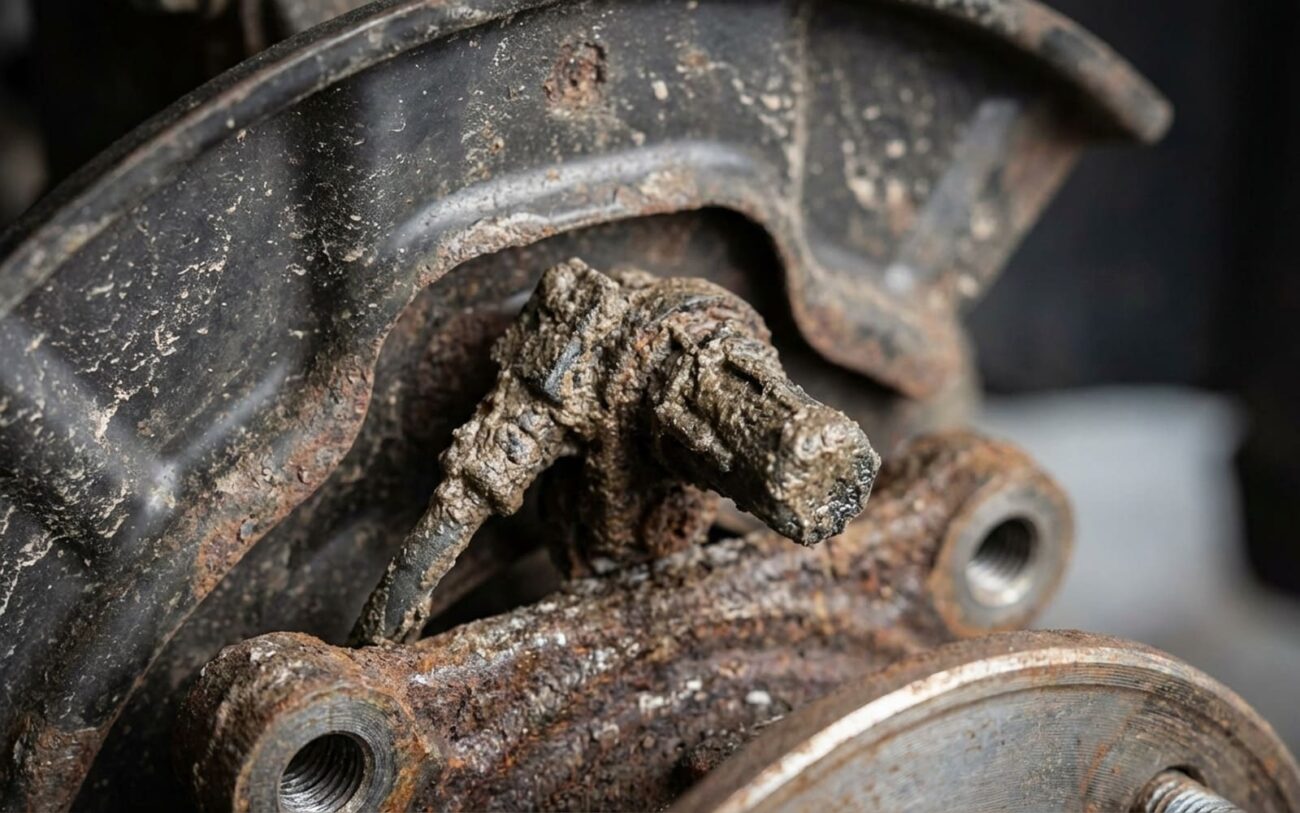
You’re driving down the highway, everything’s smooth—no noise, no shudder, no pulling—and suddenly the dash lights up like a Christmas tree: ABS, traction control, maybe even a forward collision warning. Car feels fine. That’s not a mechanical failure. That’s a sensor screaming because it can’t see.
When the Car Feels Fine But the Warnings Don’t Shut Up
I’ve seen this a thousand times: customer rolls in, says “ABS light came on in the snow, now it won’t go away.” I hook up the scan tool—only one wheel speed sensor reads zero. Others are tracking perfectly. Or worse: ADAS system says “Sensor Blocked” but the car drives straight as an arrow.
Here’s what you need to know—intermittent warnings after bad weather? That’s not a broken sensor. It’s contamination. Snow, ice, slush, mud—stuff gets in the way, the signal drops, the module freaks out. The second you dry out on the highway, the light goes off. That’s textbook.
Permanent failure? Light stays on. Period. No blinking, no disappearing act. If it comes and goes with the weather, you’re not dealing with a dead wire or fried circuit. You’re dealing with dirt.
Don’t Guess. Test.
Yeah, contamination is common—but don’t skip diagnostics. I’ve had guys bring in a car, wipe the bumper, and think they fixed it. Meanwhile, the real issue was a chafed wire behind the grille. So here’s how I narrow it down.
| Symptom | Contamination Likely | Could Be Something Else | How I Confirm |
|---|---|---|---|
| ABS/TC Light, One Wheel Speed Sensor Dead | Snow packed around hub, ice on reluctor ring (that toothed gear behind the brake rotor). | Corroded connector, broken tone ring, or wheel bearing wobble shifting the air gap. |
Pull the wheel. Look at the sensor tip and reluctor ring. If it’s caked, clean it. Then graph live data with a scan tool. Erratic spikes? That’s noise from debris. Flatline after cleaning? Now we’re talking hardware failure. |
| TPMS Light, “Low Pressure” Warning | Mud or slush sealed inside the wheel, covering the sensor. | Actual underinflation, dead battery in sensor, or no relearn after rotation. |
Check pressure with a gauge. If it’s normal, trigger each sensor with a TPMS tool. No response? That’s not dirt. That’s a dead unit. |
| “Sensor Blocked” or FCW Warning | Ice or road grime on the radar cover (radome) or camera lens. | Misalignment from minor impact, water inside the housing, or internal radar failure. |
Wipe it down, then scan. If it still says “Signal Quality Low” but no internal DTCs, it’s likely cleanable. If it throws alignment codes or won’t initialize? Now you’re into recalibration or replacement. |
Why Dirt Shuts Down the Whole System
It’s not overreaction. These sensors are precision instruments.
Optical cameras? They need a crystal-clear view. Even a thin film of oily road spray on the windshield near the mirror can scatter light, blur lane markings, or blind the system entirely. It’s like trying to read a street sign through a greasy window.
Radar units—usually behind the grille—emit 77GHz waves. When slush or ice builds up on the radome, it absorbs or reflects those signals. The radar thinks the road ahead is empty when it’s not. Or worse, it sees ghosts. So it shuts down. Safer to do nothing than act on bad data.
And wheel speed sensors? Magnetic. Tiny air gap—often just 0.5mm—between the sensor and the reluctor ring. Pack that with ice or ferrous brake dust, and the signal dies. I’ve seen this on Jeeps after off-roading, on Dodges after winter plowing. Chrysler even issued TSB 08-004-20 calling it out by name.
Clarify this:
This isn’t about failed wiring or broken connectors. That’s a different job. This is purely about the sensor’s face being blocked—snow, mud, grime. If the signal path is obstructed, it doesn’t matter how good the rest of the system is.
How I Fix It (And When to Walk Away)
Clean What You Can Reach
Wheel speed sensors? Usually behind the caliper. TPMS? Inside the wheel. Camera? Top center of the windshield. All accessible without tools. I use a soft brush (old toothbrush works), isopropyl alcohol, and a microfiber cloth. For optical surfaces, spray the cloth—not the lens. You don’t want fluid creeping into the housing.
For wheel sensors, gently pry packed mud away with a plastic trim tool. Don’t gouge the tip. Reinstall until it clicks. Most modern ones self-seat. No adjustment needed.
Integrated Sensors? Leave It to the Pros No DIY
Radar behind the bumper or grille emblem? Yeah, you can clean it—but you can’t skip recalibration. These systems need exact alignment. I’ve seen DIYers clean the radome, bolt it back, and wonder why ACC still cuts out. Misaligned by 2 degrees? That’s enough to miss a car in front.
Recalibration isn’t guesswork. You need factory procedures, targets, level ground, and OEM-grade tools. Torque specs matter. Bracket position matters. This isn’t a “good enough” job. It’s safety-critical.
Dead Sensor? Replace It
If you clean it, scan it, and it still throws internal faults—open circuit, implausible signal, memory error—it’s done. These units are sealed. No repair. Replacement only. And yes, recalibration still applies. Even if you’re just swapping parts.
Field Fix: Get Home, Not Fixed
Stuck in a snowstorm? Carefully clear packed snow from around the hub with a plastic scraper. Don’t use metal. Don’t blast it with steam. You might restore function for now, but moisture could get into the connector and cause corrosion later.
And don’t expect the light to go off immediately. The system may stay disabled until codes are cleared and a full drive cycle runs. This is triage, not a repair.
Did It Actually Work?
Cleaning isn’t the end. Validation is.
For wheel speed or TPMS: scan tool live data. All four wheels should match within 1–2 mph at steady speed. Clear codes. Drive 10–15 minutes—mixed city and highway. No comeback? You’re good.
For ADAS? You need real tools. Snap-on, Autel, OEM. Basic OBD2 scanners won’t cut it.
Validation Checklist
-
No “Lens Dirty” or “Sensor Blocked” messages
-
Normal signal strength and quality (radar)
-
No alignment fault codes
-
System passes self-test
What’s It Gonna Cost You?
| Repair Type | DIY Cost | Shop Cost | Success Rate | Risks |
|---|---|---|---|---|
| Clean Accessible Sensor | $0–$20 (alcohol, brush, cloth) | $50–$100 (labor) | ~95% if it’s just dirt | Negligible. Just don’t scratch the lens. |
| Clean + Calibrate Integrated Sensor | N/A | $150–$400 | ~90% (if calibrated right) | Bad calibration = false alerts or missed braking. Not worth cheaping out. |
| Replace + Calibrate | N/A | $500–$2,000+ | Near 100% when done right | Expensive. Might not make sense on a $5k car. |
Here’s how I decide: if it’s Forward Collision or AEB, I fix it. No debate. That’s not convenience—it’s survival. But if it’s Blind Spot Monitoring on a 12-year-old sedan? Maybe live without it. Not every system is worth the cost.
Keep It Clean, Stay Safe
I tell my customers: make this part of your routine. After a snowstorm, walk around the car. Wipe the camera lens. Clear the bumper intake. Check the wheel wells. Two minutes now saves you a tow later.
And don’t use high-pressure washes near sensors. I’ve seen water forced behind radomes, leading to condensation and long-term failure. Soft sponge, gentle cleaner, done.
On VWs and Audis? Moisture in the side radar is a known issue. If you’re seeing recurring faults even after cleaning, dig deeper. There’s a write-up here: Why do VW/Audi Side Assist radar sensors fail from moisture? It’s not just dirt—it’s design.
Final thought:
Sensors fail. Wiring breaks. But contamination? That’s the one you can actually prevent. And when it happens, you’ve got a fighting chance with a cloth and a little patience. Don’t ignore it. Don’t assume it’s broken. Check the obvious first—because most of the time, that’s all it is.
