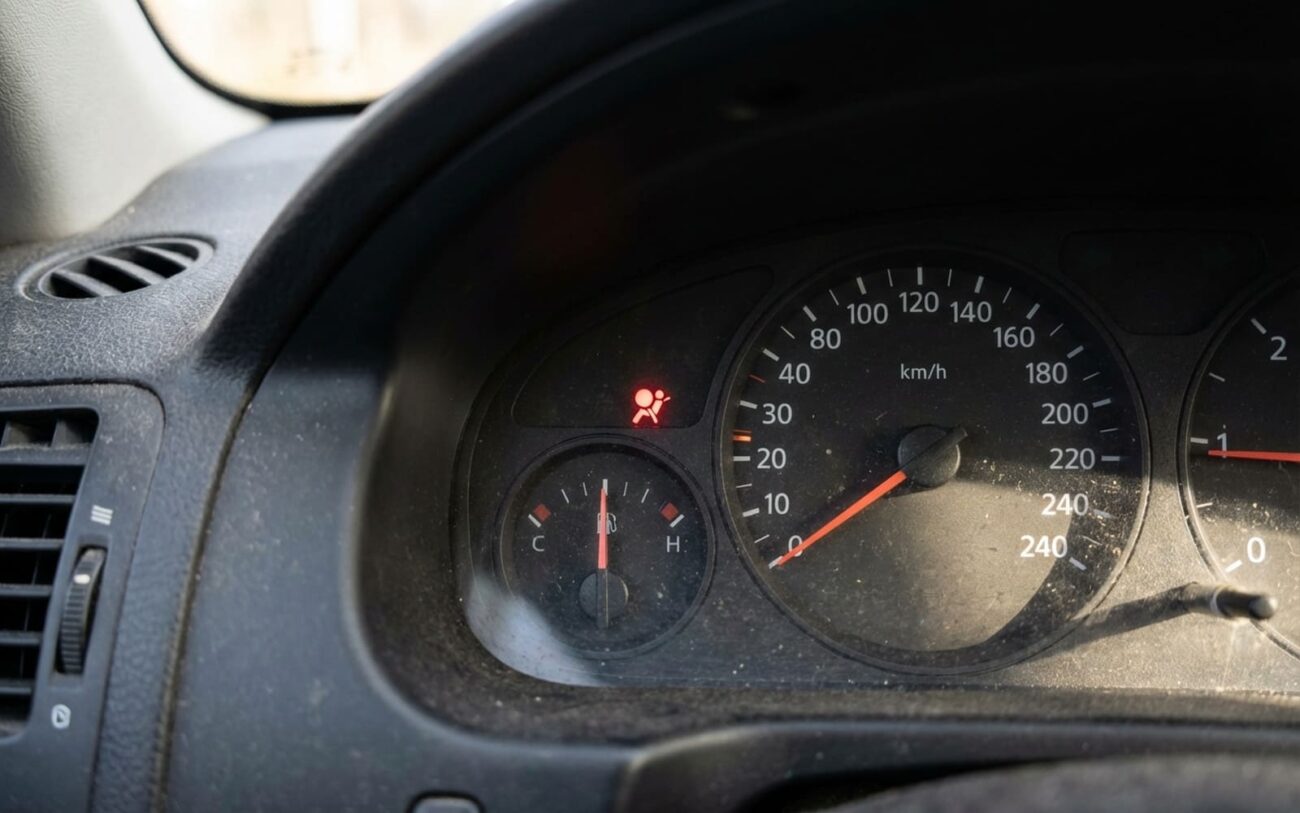
The SRS light comes on for a lot of reasons—but when moisture’s involved, most people miss the real culprit until it’s too late. I’ve pulled hundreds of these modules out of trucks, sedans, SUVs—mostly Fords, Toyotas, and Hondas—and more than half the time, the issue starts with a wet connector or a slow drip nobody noticed. You can’t ignore this. Not just because the light’s on, but because the system is offline. Period. No airbags. No pretensioners. Nothing.
First: Confirm It’s Not a Wiring Ghost
Before you touch the module, rule out the usual suspects. I’ve seen shops replace $1,200 modules when the real issue was a bent pin in the connector or a corroded clockspring. Start simple.
Pull the seat (driver’s side usually). Disconnect the battery negative. Wait 10 minutes—SRS capacitors hold a charge, and you don’t want to set one off cleaning a connector. I’ve seen it happen. Not pretty.
Now inspect the module connector. Look for white crust, green gunk, or moisture in the boot. If you see any, that’s your first clue. But don’t stop there. Use a digital multimeter and check resistance across the squib circuit—pins 3 and 5 on most Toyotas, 2 and 4 on Fords. You’re looking for 2.0 to 3.0 ohms. If it’s below 1.8 or above 3.5, something’s wrong.
Here’s what I do:
Clean the connector with non-residue electrical contact cleaner. No WD-40. No brake cleaner. Use a soft brush—old toothbrush works fine. Blow it dry with compressed air. Reconnect, clear codes, cycle the key three times. If the light stays off, you caught it early. If it comes back with the same DTC, the damage is inside.
When the Module Itself Is the Problem
If the connector’s clean and resistance is out of spec, the fault is internal. No way around it. I’ve cracked open dozens of these—mostly from 2014–2018 Accords and Camrys—and the pattern’s always the same: corrosion on the PCB, dendrites bridging traces, cracked solder joints near the power regulator.
Moisture gets in because the housing isn’t sealed like people think. On some models, the gasket degrades after 5–7 years. On others, condensation builds up from daily humidity cycles—especially if the car sits in a damp garage or near the coast. I had one last month from Jacksonville with salt residue on the board. Salt + voltage = corrosion city.
-
Electrolytic corrosion: Even a thin film of water with dissolved minerals creates a path. Over time, copper traces eat away. Resistance climbs. Eventually, open circuit.
-
Dendrite growth: Humidity + voltage = metal ions migrating. I’ve seen hair-thin filaments short adjacent pins. Intermittent codes. Drives techs nuts.
-
Thermal fatigue: Module heats up during operation, cools at night. Expansion/contraction. With moisture present, solder joints crack—especially on surface-mount components. Seen it on BMWs and Acuras with under-seat placement.
The Only Real Fix: Replacement
If the module’s compromised, replace it. No shortcuts. New OEM or certified remanufactured—your choice. But it must be programmed to your VIN. I don’t care what the parts guy says. Plug-and-play doesn’t exist here.
On most modern vehicles, you’ll need a factory-level scan tool—Snap-on VERDICT, Autel MaxiSYS, or OEM software. You can’t do this with a $30 OBD2 reader. The tool has to initialize the module, sync the VIN, and run the SRS self-test. Miss a step, and the light stays on.
External connector clean
DIY-FEASIBLE
Module replacement
Professional Only
“Quick fixes”
NOT RECOMMENDED
Validation: Did It Stick?
After any repair, don’t just start the car and walk away. You need proof.
-
No active DTCs after three key cycles
-
All components (driver, passenger, side, pretensioners) show “OK”
-
System completes self-test in 6–8 seconds, light goes out
If the light comes back, you didn’t fix the root cause. And at that point, you’re not saving money—you’re just delaying the inevitable.
Cost vs. Risk: The Real Decision
Let’s be real: $1,200 for a module hurts. But if your car’s worth $8,000, is it worth driving without airbags? I’ve had customers say yes. I don’t judge. But I’ll tell you this—on a 2016 Highlander with a known under-seat module, I’ve seen this exact failure three times in the past month. It’s not rare.
If the repair costs more than 40% of the car’s value, it’s a tough call. But remember—this isn’t a radio or a power window. It’s the last thing standing between you and a broken rib (or worse) in a 30 mph fender bender.
How to Keep It From Happening Again
Prevention’s cheap. Fixing it later? Not so much.
-
Check floor mats after rain. I’ve pulled up carpets soaked from a clogged sunroof drain—water pools right under the module.
-
Clean sunroof drains twice a year. Use a plastic straw or compressed air. Clogs are the #1 cause of under-seat flooding.
-
Skip the steam cleaner near seats. Moisture wicks into connectors. I’ve seen it ruin a brand-new module in three weeks.
-
If you live in a humid area, pull the seat every 18 months and inspect. Takes 20 minutes. Could save you $1,200.
