One Side Cold, One Side Hot? Let’s Fix This Right
I’ve seen this a hundred times: driver’s side freezing, passenger side toasty. Customer thinks the heater core’s shot. Or the whole HVAC box is done. Nope. On modern cars—especially dual-zone systems—it’s usually something simpler. But not always. The trick is knowing where to start, and more importantly, where not to waste money.
And before you go pulling dash panels or ordering a $400 PTC heater, let me tell you—half the time, it’s not the heater at all. I had a 2018 Acura MDX in last month with this exact issue. Owner was ready to replace the whole module. Turned out? A $58 blend door actuator on the driver’s side had seized. Pop in a new one, recalibrate with the scan tool, and boom—heat on both sides.
First: Confirm Coolant Flow
This is step one. No exceptions. If the heater core isn’t getting hot coolant, nothing downstream matters.
Get the engine fully warmed up—coolant temp at least 180°F. Set the climate control to max heat, fan on high. Then go under the hood and feel both heater hoses where they enter the firewall. Both should be too hot to hold. If one’s warm and the other’s cold? You’ve got a flow issue—maybe air trapped in the system, a clogged heater core, or a failed heater control valve (on some models).
But if both hoses are hot? Then coolant’s doing its job. The problem is in the air path. That’s where things get more interesting.
Now: Is It the PTC Heater or Something Else?
Here’s where most DIYers get tripped up. They see “no heat on one side” and assume it’s the electric heater. But on vehicles with dual-zone climate control—especially hybrids and EVs—there are three main suspects:
-
Stuck or failed blend door actuator
-
Collapsed or disconnected duct behind the dash
-
Failed PTC (Positive Temperature Coefficient) heater element
The symptom looks the same for all three. So you can’t guess. You’ve got to test.
And the best tool for this? A real scan tool—something that talks to the HVAC module, not just reads engine codes. I use a Bosch M4, but even a decent Autel or Snap-On will do. You need to be able to command the blend door actuator and watch live data.
Try this: command the driver’s side blend door from full cold to full hot. You should hear the motor moving. If it’s silent, or it buzzes but doesn’t travel, that’s your issue. If it moves, but no heat comes out? Then you’re looking at either a broken door (common on older Fords—plastic gears strip out) or the PTC heater.
And yes, a borescope helps here. Stick it in through the glove box opening or defrost vent, and you can actually see if the door’s moving or cracked. Saved me hours on a 2016 BMW X5 last winter.
Testing the PTC Heater
If the blend door checks out, it’s time to test the heater element itself.
First, pull the connector. On most cars, it’s a 2-pin plug, sometimes with a small 5mm bolt holding it in place. Don’t lose that bolt—torque spec is usually 2.2 Nm. Overtighten it, and you’ll strip the housing.
Set your multimeter to ohms. Measure across the two terminals on the heater side. A good PTC element should read between 0.5 and 5.0 ohms when cold. If it’s infinite (OL), it’s open—dead. If it’s way out of spec, it’s done.
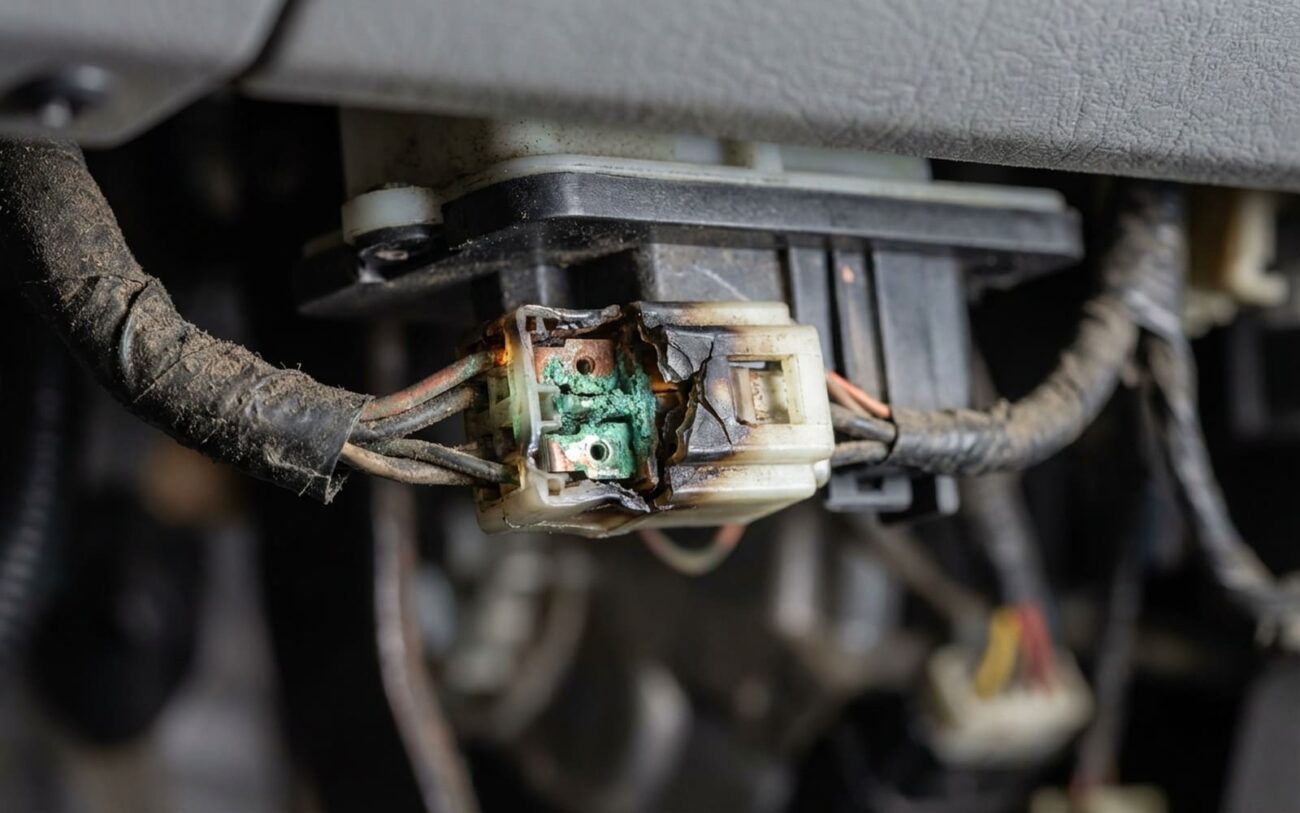
But—and this is important—don’t stop there. Check the connector for corrosion. I’ve seen green gunk from moisture intrusion kill the circuit without the heater itself failing. Clean it, retest. And check for power and ground at the connector when the system calls for heat. Use the scan tool to command the heater on, then verify you’ve got 12V and a solid ground.
And scan for codes. Look for anything like B10D3 or U0121—manufacturer-specific, but usually related to heater circuit faults. But don’t trust the code blindly. I’ve had a bad ground on a 2020 Toyota RAV4 Hybrid throw a “PTC heater open” code, but the heater was fine. Fixed the ground, cleared the code, done.
Replacing the PTC Heater
If it’s dead, you’re replacing it. No way around it. These are sealed units—no field repairs. And don’t try jumpering it or bypassing the control circuit. That’ll fry the HVAC module, and now you’re in for $1,200 instead of $400.
Access varies. On a Honda Pilot, it’s behind the glove box—remove four screws, drop the box, unplug, unbolt, swap. Takes about 45 minutes. On a Ford Explorer? You might need to pull the entire dash. No joke. Factory manual is your best friend here.
Use plastic trim tools. Metal will scratch. And label every connector. I use masking tape and a Sharpie—“Glove box light,” “AC pressure sensor,” etc. Saves headaches on reassembly.
When you install the new heater, torque that connector bolt to spec. And don’t overtighten the mounting screws. The housing is plastic—cracks easy.
Verify the Fix Before You Close It Up
Never reassemble the dash until you’ve tested.
First, measure the resistance of the new heater. Should match the old one—within spec. Then plug it in, command it on with the scan tool, and watch live data. You should see current draw—usually 8–15 amps depending on the model.
No current? Then you’ve got a wiring or control issue. Don’t close the dash yet.
Final test: start the car, set the zone to max heat, and check vent temp with an IR thermometer. Should climb steadily and match the other side within 5°F. If it does, you’re golden.
Why It Failed: What You Can Learn
PTC heaters don’t just die randomly. Most failures come from thermal fatigue—solder joints cracking after years of heat/cool cycles. It’s like bending a paperclip until it snaps. Common on high-mileage vehicles in cold climates.
Overcurrent is another killer. If the HVAC module sticks the relay closed, the heater stays on full blast even when not needed. Overheats, degrades fast. Some manufacturers—looking at you, BMW—had software bugs that caused this. Check for TSBs before replacing parts.
Moisture? Less common, but possible. If the car has a history of water leaks—clogged sunroof drains, bad windshield seal—the HVAC case can fill up. Corrodes terminals, shorts the heater. Seen it on a 2014 Lexus RX with a leaking cowl.
Cost and Real-World Repair Path
PTC Element Only
OEM or quality aftermarket. DIY-friendly on some models.
Labor (Shop)
Highly variable. Dash removal? That’s 6+ hours.
HVAC Assembly Replacement
Overkill for one heater, but sometimes unavoidable.
Smart Move
If you’re out of warranty, skip the dealer. I’ve worked with indie EV and luxury specialists who charge half for the same job. Just make sure they’ve got the right scan tool and experience. This isn’t a job for the guy who changes oil and calls it a day.
