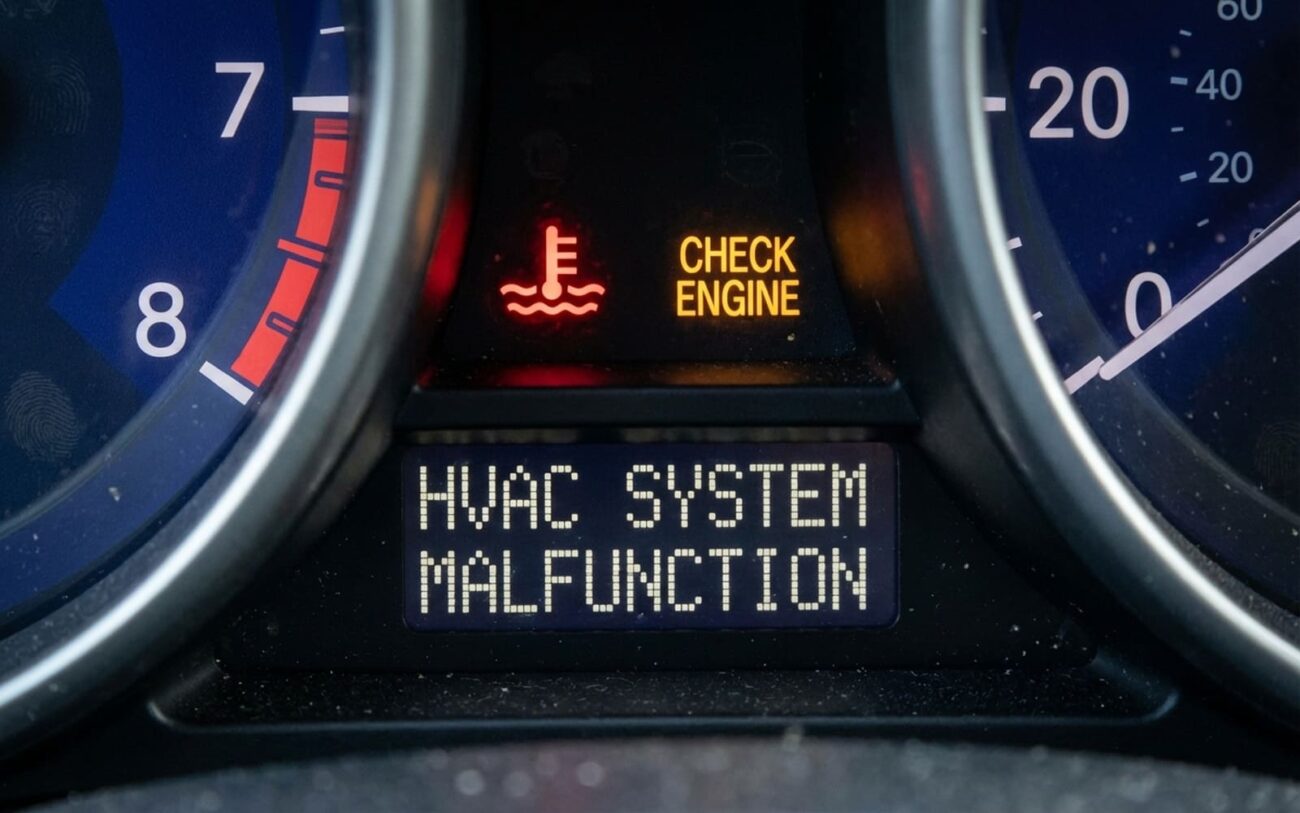
When your HVAC system goes dark—no fan, no A/C, no defrost—you’re not just uncomfortable. You’re unsafe. And yeah, the control module is often the culprit. But I’ve seen too many guys yank it out and throw a new one in without checking the basics. That’s how you end up $1,500 lighter with the same problem. Let me walk you through how I diagnose this in my shop, step by step, based on what I’ve actually seen across thousands of vehicles.
First: Is It Really the Module?
Let’s be honest—most people jump straight to “bad module” because the panel lights up but nothing happens. But here’s what I’ve found: the module is rarely the first thing to die. Fuses, grounds, power feeds—those fail way more often. And on some vehicles (looking at you, 2012–2016 GM trucks), a bad ground under the dash screws up the whole HVAC network.
So before you touch that module, check the power and ground at its connector. Use a wiring diagram—don’t guess. You need constant 12V, switched 12V, and a solid ground. If any of those are missing, stop. Fix that first. I’ve saved customers hundreds by just cleaning a corroded ground behind the glove box.
Symptom-Based Diagnosis: What I Actually Test
If power and ground are good but the system’s still dead, now we’re talking module territory. But even then, you’ve got to isolate the failure. Here’s how I break it down—based on the actual symptoms I see every week.
No Blower Motor at Any Speed
Start here: does the module send a signal to the blower? On modern vehicles, that’s usually a PWM (pulse-width modulated) signal on the control wire. Backprobe the wire at the module connector while adjusting fan speed. If the voltage doesn’t change, but the display updates, the module’s output stage is dead.
But—and this is critical—make sure the blower resistor and motor aren’t shorted first. A dead-short motor can take out the module’s internal transistor. I’ve seen it. Replace the module without fixing the motor? You’ll be doing it again in three weeks.
A/C Compressor Won’t Engage
Don’t assume it’s the module. First, check refrigerant pressure. Low charge = open pressure switch = no clutch. Simple.
If pressure’s good, use a scan tool to command the clutch ON in bidirectional mode. If it engages, the problem is upstream—likely the module isn’t sending the command. If it doesn’t, check for power and ground at the compressor clutch itself. No power? Could be a bad relay or fuse.
If the clutch is good and the command fails, check for a control signal at the module’s output. No signal? Module’s internal driver is toast.
Blend or Mode Doors Not Moving
These actuators are motor-driven and usually powered through the HVAC module or a separate amplifier. If none of them move, check power to one actuator connector. If it’s live, command a recalibration via scan tool.
No movement? Probe the control wires at the module during the command. If there’s no output, the module isn’t talking. But if one actuator works and others don’t, the issue is downstream—failed gear, stripped spline, or binding linkage.
Display On, Buttons Dead
This one’s tricky. Could be the module, could be a CAN bus issue. Use a scan tool to communicate with the HVAC module. If it won’t talk, check CAN high and low voltages—should be 2.5–3.5V each, with ~2.2V differential.
If communication fails, check for a shorted module elsewhere on the bus. I once had a dead radio killing HVAC comms on a Jeep. Swapped the radio, everything came back.
If the module communicates but button inputs don’t register in live data? That’s a failed input circuit—usually a cracked solder joint on the button matrix or a dead touch controller on touchscreens.
What Actually Dies Inside the Module
I’ve cracked open dozens of failed HVAC modules. Here’s what I see most:
Liquid damage—especially in trucks and SUVs where people put coffee in the cup holder and forget about it. Sugar residue conducts electricity, creates shorts, and corrodes traces. You’ll see white or green crust around solder joints. If the board looks like it’s been in a rainstorm, that’s your answer.
Thermal stress—dashboard temps can hit 80°C in summer. That expansion and contraction cracks solder joints, especially under big components like power transistors or the main connector. I check these with a magnifier. A hairline crack might work when cold but fail when hot. That’s why some systems die after 20 minutes of driving.
Failed regulators—the internal 5V or 3.3V supply dies from a voltage spike. Maybe the alternator’s going bad, or someone jumped it wrong. The module gets 12V at the connector, but the logic side has no power. No communication, no outputs. Dead.
And let’s be clear: a bad blower resistor, stripped actuator gear, or clogged heater core? That’s not a module failure. Replacing the module won’t fix it. I’ve seen shops do this. It’s embarrassing.
Repair Options: What Works, What Doesn’t
01. Connector Cleaning (DIY-Feasible)
Before you pull the module, check the harness. Corrosion, bent pins, loose terminals—these kill communication. Use a proper terminal release tool, de-pin each one, clean with contact cleaner and a fiberglass brush, then reassemble. Test continuity with a multimeter. I’ve fixed three vehicles this month just by cleaning connectors.
02. Board-Level Repair (Pro-Only)
If you’ve got a cracked solder joint under a power transistor or a swollen capacitor, you can fix it—but only if you know what you’re doing. You need a temperature-controlled iron, fine tip, flux, and ESD protection. Reflow the joint. Replace the MOSFET if it’s shorted (IRFZ44N is common for blower drivers). One slip and you lift a trace. Not worth it unless the module is rare or expensive.
03. Module Replacement (Most Reliable)
When the microcontroller’s dead or the board’s trashed, replacement is the only real fix. But it’s not plug-and-play. Most modern modules need programming—VIN write, security auth, actuator calibration. You need an OEM-level tool or J2534 pass-thru with proper software.
Used modules? Cheaper, but test them first. I’ve gotten good ones from LKQ with a 90-day warranty. But never assume it’s ready to go. Program it like it’s new.
04. Emergency Bypass (Last Resort)
If you’re stuck in the cold and need heat, you can power the blower motor directly with a fused jumper from the battery. For heat, manually open the heater valve if it’s electric. But listen: this bypasses fuses, relays, thermal protection. I’ve seen melted harnesses from this. It’s not a repair. It’s a Hail Mary.
Validation: Did It Really Work?
After any repair, test everything: all fan speeds, temp from full cold to full hot, every vent mode. Command A/C on and off. Clear DTCs and drive it. Monitor live data—if you press a button and the parameter doesn’t update instantly, something’s still wrong.
For board-level repairs, do a “wiggle and tap” test. With the system running, gently shake the module and tap the faceplate. If it glitches, you missed a cracked joint. Then run it for 30+ minutes to simulate heat soak. Monitor for intermittent failure.
Cost vs. Value: Don’t Blow the Budget
Here’s a rule I use: if a new OEM module costs more than 35% of the car’s value, don’t do it. Example: a $1,500 module for a $3,000 car? No. Go used, professionally programmed, with a warranty.
Typical costs:
- Connector cleaning: <$20 DIY, $100–$200 shop
- Board repair: $50–$150 parts/tools, $200–$500 labor
- Used module: $100–$300 + programming, $400–$800 shop
- New OEM: $500–$1,500 + programming, $800–$2,000 shop
Success rate is high with used modules—if they’re tested and programmed right. The real risk? Misdiagnosis. That’s why I always verify power, ground, and comms before pulling the trigger.
Prevention: Keep It From Happening Again
Stop putting drinks near the center console. I don’t care how good your cup holder is—spills happen. And sugar + electronics = corrosion city.
Keep your charging system healthy. A failing alternator with voltage spikes will kill sensitive regulators. Check charging voltage—should be 13.8–14.7V. If it’s bouncing around, fix it.
Run the HVAC self-test mode if your vehicle has it. It cycles all actuators and can catch a failing door motor before it strands you. On many GMs, it’s in the DIC menu. On Fords, you might need a scan tool.
And if there’s a firmware update for the HVAC or BCM module? Do it. I’ve seen updates fix random mode switching and fan speed drift on 2019+ Rams.
