Headlight Gremlins? It’s Probably the BCM — But Prove It.
I’ve seen this a hundred times: customer pulls in, says their headlights turn themselves on and off — sometimes while parked, sometimes mid-drive. No rhyme, no pattern. They think it’s ghosts. It’s not. It’s usually the Body Control Module (BCM), but you don’t replace it on suspicion. Not in my shop.
The BCM is the brain for a dozen body systems — lights, locks, wipers, interior lighting. It runs on the CAN bus, so when it starts glitching, things get weird. You might unlock the doors and the headlights flash. Or hit the wipers and one headlight dies. That’s not a switch problem. That’s cross-talk from a failing BCM.
But here’s the kicker: a lot of these symptoms look like BCM failure but aren’t. Bad ground? Failing ambient light sensor? Chafed wire near the firewall? All can mimic the same behavior. So before you spend $800 on a new module, you test.
Diagnosis: Rule Out the Simple Stuff First
Back in the day, headlight issues were simple — bad switch, blown fuse, dead relay. Now? The BCM sits in the middle of everything. But that doesn’t mean it’s the problem.
I start with the scan tool. Look for U-codes (CAN bus errors) or B-codes (lighting circuits). But codes don’t tell you the root cause — just where the system noticed something wrong. The BCM might be reporting a fault because a sensor is bad, not because the BCM is dead.
So I test live data. I monitor the “Headlight Command” PID while someone operates the switch. If the command signal cycles on and off without input — say, after shutting off the car — then the BCM is making bad decisions. But if the command is stable and the lights still flicker? Then the problem is downstream: relay, wiring, ground.
Here’s what I do next, in order:
-
Check the headlight fuse and relay. Swap the relay with a known-good one (like the horn). If the problem stops, it wasn’t the BCM.
-
Test the ambient light sensor. On some GMs and Fords, a failing sensor sends erratic signals that confuse the BCM. Unplug it — if the headlights stop cycling, you’ve found a suspect.
-
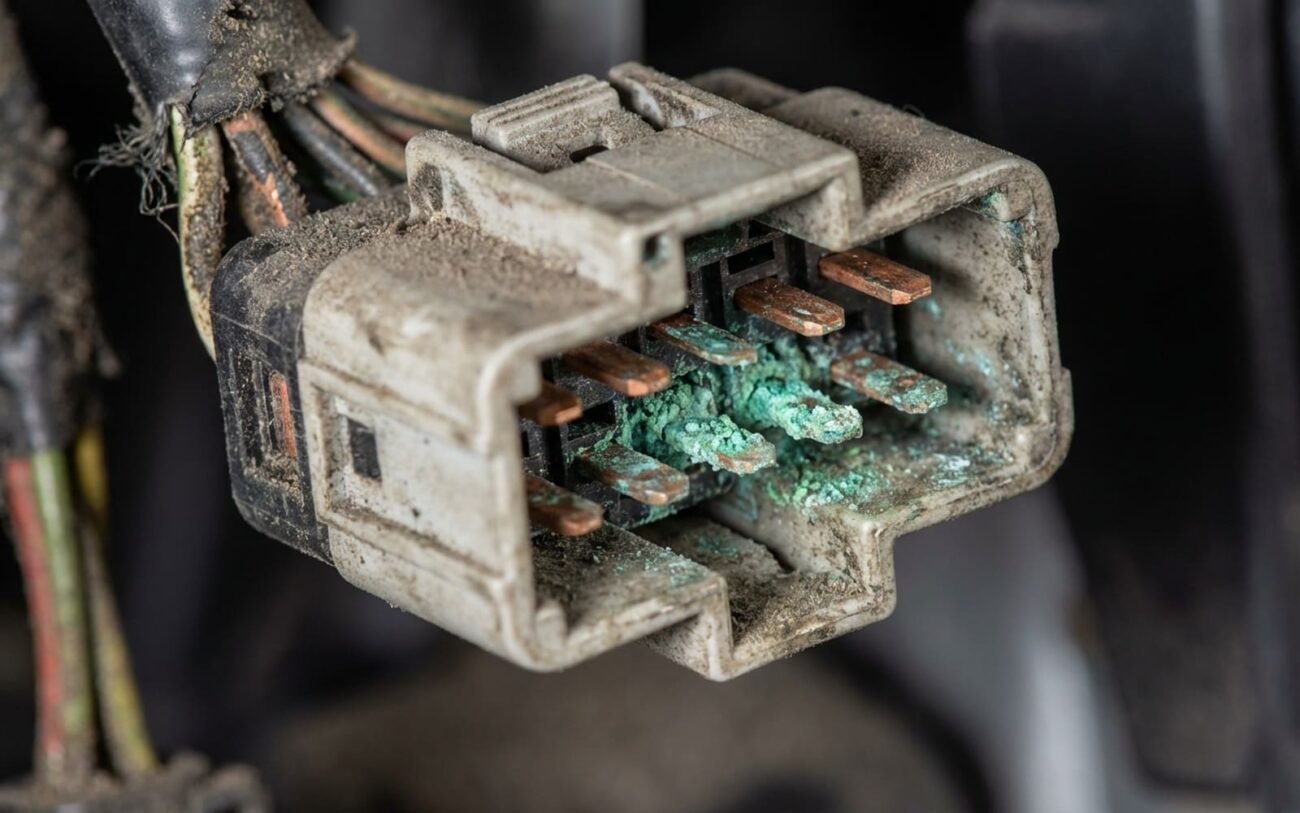
Inspect ground points. The headlight grounds are usually near the grille or inner fender. Corrosion there? Clean it. I’ve fixed more than one “BCM failure” with a wire brush.
-
Back-probe the BCM’s headlight output pin with a multimeter. Command the lights on. If you’ve got voltage at the BCM but not at the headlight, the fault is in the harness or relay — not the module.
When It’s Actually the BCM: What Fails Inside
Once you’ve ruled out the external stuff, it’s time to look inside the BCM. And no, I don’t mean cracking it open on every job — but if you’re dealing with a confirmed internal fault, here’s what’s going on.
The most common issue? Thermal fatigue. The BCM runs a high-current MOSFET to switch the headlights. Every time it turns on, that transistor heats up. Over years, the solder joints crack from expansion and contraction. I’ve seen a single hairline fracture on a driver chip cause random cycling. No code, no warning — just chaos.
The MOSFET itself can fail too. Open = no headlights. Shorted = headlights stuck on, overheating the circuit. I had a 2016 Silverado come in with melted headlight connectors — traced it to a shorted driver in the BCM. The module was sending 12V nonstop.
Moisture is another killer. If the BCM’s seal is compromised — common on modules mounted under the dash or in fender wells — humidity gets in. Corrosion builds on the board, creating stray conductive paths. I once pulled a BCM out of a Jeep that had road splash up the fender — the circuit traces were green with corrosion.
And yes, software glitches happen. On some GMs, a TSB exists for erratic lighting due to corrupted BCM calibration. A reflash fixes it. But don’t jump to that first — I’ve seen shops reflash a BCM, only to have the same issue return because the real problem was a bad ground.
Fixing It: Your Options (And Their Real-World Trade-Offs)
This Isn’t a DIY Zone
You’re dealing with high-value electronics, CAN bus networks, and safety-critical systems. One wrong move — a voltage spike during reprogramming, a misrouted wire — and you could brick a module or create a fire hazard. This is professional territory.
Moisture Repair Professional Only
Board-Level Repair Specialist Repair
External Relay Bypass Temporary / Last-Resort
BCM Reprogramming Professional Only
Did It Work? Test Like You Mean It
Don’t hand the keys back after a BCM repair and say “should be good.” Prove it.
If you repaired or replaced the BCM, clear all codes and cycle the headlights ten times — manual, auto, high beam. Watch the “Headlight Command” PID on the scan tool. No glitches, no delays, no false signals.
After a reflash, verify the calibration ID matches the vehicle spec. Then test every BCM-controlled function: wipers, locks, interior lights. A bad flash can knock out unrelated systems.
If you used a relay bypass, check for parasitic draw. Set your multimeter in series with the negative terminal — anything over 50mA and you’ll kill the battery overnight. Also confirm the lights shut off with the ignition and no warning lights pop up.
Cost vs. Value: When to Walk Away
Let’s talk money. A new OEM BCM with programming can run $1,500. Labor, parts, scan tool time — it adds up.
| Repair Type | DIY Cost | Shop Cost | Success Rate | Secondary Risk |
|---|---|---|---|---|
| BCM Reprogramming | $0 if you own the tool; else $500+ for J2534. | $100–$200 | High (>90%) if software is the issue. | Bricking if power drops; wrong calibration can break other functions. |
| Board-Level Repair | Not recommended — high risk of damage. | $300–$600 | Moderate (60–80%), depends on skill. | Latent damage; repair may fail under heat. |
| New OEM BCM | $300–$800 + programming. | $500–$1,500 | Very High (>98%) if done right. | Wrong VIN match or security setup can disable systems. |
Rule of thumb: if the repair costs more than 40% of the car’s value, it’s time to rethink. A quality remanufactured BCM from a trusted supplier can save money — but it still needs programming. And never, ever install a used BCM without reprogramming it. It won’t work. I don’t care what the parts guy says.
Prevention: Keep the BCM Alive Longer
You can’t stop aging, but you can slow it down. The BCM hates voltage spikes and deep discharges. A failing alternator sending AC ripple? That stresses the internal regulators. I’ve seen more than one BCM fail because of a bad ground or a rectifier issue.
If you store the car, use a battery maintainer. Letting the voltage drop below 12V for weeks can corrupt module memory — and yes, that includes the BCM.
And pay attention to early signs. Flickering dome light? Radio resetting? Window slow to respond? These aren’t random. They’re red flags.
Prevention Tips
-
During oil changes, take 30 seconds to check the BCM’s location. Look for moisture, loose connectors, corrosion. On Fords, it’s often under the dash — a common spot for water leaks.
-
If you’ve had headlight issues before, consider upgrading the headlight relay or adding a standalone harness. Takes the load off the BCM’s internal driver.
