Alright, let’s talk steer-by-wire. If you’re driving something like a Tesla Model S Plaid or a Lucid Air and that system decides to throw a real fit, you’re not going to be guessing. Trust me, this isn’t some vague little shimmy or a soft spot in the steering. This is direct, and it’s alarming. I’ve seen it firsthand, and it gets your attention.
What It Feels Like When Steer-By-Wire Fails
The first thing you’ll notice is a complete, persistent loss of steering assist. It’s usually accompanied by a blaring warning on your central display, something like “Steering Assist Reduced” or “Steering Fault.” And when I say stiff, I mean stiff. Trying to turn the wheel, especially at low speeds or when you’re parking, feels like you’re wrestling a bear. Unlike a temporary glitch caused by a weak 12V battery – which often clears up after a restart or a good charge – this kind of failure just doesn’t go away on its own. It’s there to stay until a proper repair is done.
But the real kicker, the one that makes your heart jump, is a sense of total disconnection between the steering wheel and the front wheels. You turn that yoke, or wheel, and the car just doesn’t respond immediately. There might be a noticeable delay, followed by a sudden, almost jarring, correction. Some folks describe it as “digital” or “notchy,” completely lacking the smooth, predictable feedback you get from a mechanical system. In some cases, the vehicle might enter a fail-safe mode, which could engage a mechanical backup clutch – but even then, the steering effort goes through the roof. I’ve seen this happen during low-speed maneuvers, like pulling into a tight spot, which is exactly when you need precise control.
The danger here isn’t just the loss of assist; it’s the sheer unpredictability. If the system decides to disengage or glitch out while you’re in the middle of a turn, you could absolutely lose control. That’s why I always tell my customers: continuing to drive with an active steer-by-wire fault code is incredibly risky, and I strongly advise against it. Get it towed, don’t try to limp it home.
Lag: 14.2°
How I Figure Out If It’s Really the Steer-By-Wire System
When a car comes in with steering complaints, my first rule is: don’t jump to conclusions. Steer-by-wire issues can mimic a lot of simpler, more common problems. You can’t just assume “the actuator is bad” right off the bat. The key here, and I can’t stress this enough, is using the right tools. Your everyday OBD2 scanner? It won’t get you anywhere near the steering domain controllers on these advanced systems. You need OEM-level diagnostics – think Tesla Toolbox or the Lucid service platform. These are the only tools that let you read the specific fault codes, monitor live data streams, and actually test the system components directly.
Here’s how I go about differentiating a genuine steer-by-wire fault from something that just looks like it:
Symptom: Complete Loss of Steering Assist
This is the most common complaint. It feels like the power steering just died completely. Now, this could be a primary steering actuator motor or inverter failure, or even a Vehicle Dynamic Controller fault within the steer-by-wire system. But hold on – it could also be something as simple as a dead 12V battery, a blown EPS fuse, or a conventional Electric Power Steering (EPS) rack fault if the car has a mechanical backup.
How I confirm it: First, I hook up the OEM scan tool and pull every fault code. Then, I monitor the CAN bus communication. Steer-by-wire actuators report their status and commands very differently than a traditional EPS system, so I’m looking for specific data packets or a complete lack thereof from the steering modules.
Symptom: Handwheel-to-Road Wheel Decoupling
This is that weird, disconnected feeling – you turn the wheel, but the road wheels don’t respond immediately or in sync. This usually points to a handwheel actuator torque sensor failure or a logic fault in the safety controller. But don’t forget, a sheared mechanical backup clutch (if equipped) or a failed column universal joint could feel similar.
How I confirm it: This is a cool test. With the OEM scan tool, I’ll command a specific road wheel angle change while the car is on a lift. If the road wheels move exactly as commanded, but the steering wheel itself stays put or doesn’t track properly, then I know the fault is definitely in the handwheel actuator or its associated sensors. It tells you the road wheel side is working, but the input side isn’t communicating right.
Symptom: Erratic Steering Response
This is when the steering feels “digital,” notchy, or just plain unpredictable. It could be signal corruption from a steering angle sensor or a software glitch in the control loop. However, I’ve seen plenty of loose tie-rod ends, worn rack bushings, or even conventional rack sensor issues cause similar vague, erratic steering.
How I confirm it: I’ll use an oscilloscope to check for any signal dropouts or noise in the steering angle sensor data. If the signals are clean, I’ll then perform a full steering calibration using the OEM tool. Sometimes, a simple recalibration can resolve minor discrepancies that cause this erratic feel.
Look, mechanical wear – like those loose tie-rods or worn bushings – will always make steering feel vague, and that’s not exclusive to steer-by-wire cars. The real telltale signs of a true electronic fault are that complete loss of direct feedback, the digital lag, or an outright decoupling. Those are the symptoms that scream “sensor, actuator, or control system failure” to me.
What Actually Breaks Inside These Systems
Once the diagnosis confirms it’s a steer-by-wire-specific failure, it usually boils down to one of a few key components. These systems are built with redundancy and precision in mind, so the failures tend to be electronic or software-based, not typically mechanical in the way you’d think of a traditional steering rack breaking.
The Electronic Control Units (ECUs) – both the primary steering controller and that critical redundant safety controller – are often prone to thermal stress. They’re managing high-current signals and are often tucked away in tight engine bays where heat builds up. Over time, that constant thermal cycling can degrade solder joints or even the semiconductor components themselves, leading to intermittent or complete failure. I’ve seen it happen.
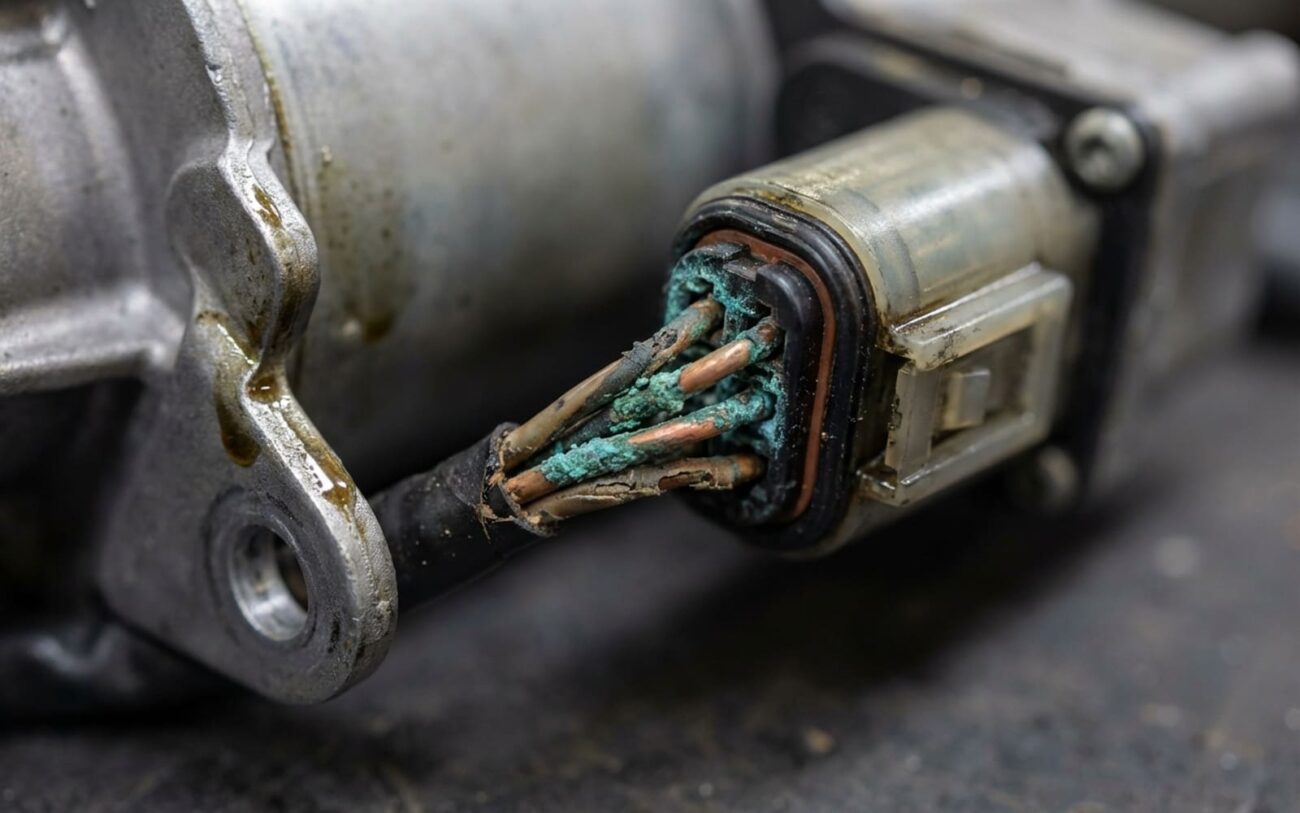
Sensors are another common weak point. These systems rely on non-contact Hall-effect steering angle sensors to precisely measure both handwheel and road wheel position. These can fail due to electromagnetic interference (EMI), moisture getting where it shouldn’t, or just age-related drift. A corrupted signal from one of these angle sensors can completely confuse the control system, resulting in erratic behavior or even a full shutdown.
Software issues are surprisingly common:
A mismatch in firmware between different controllers can completely disrupt communication, leading to frustrating faults like “STEER_001.” I’ve personally dealt with Tesla Model S Plaid vehicles that had documented software-related steering faults, and they were only resolved with a coordinated re-flashing of multiple domain controllers. These aren’t hardware failures in the traditional sense, but they’ll disable your steering system just the same.
And then there are the actuators themselves. Specifically, the Permanent Magnet Synchronous Motor (PMSM) in the Primary Steering Actuator can develop insulation breakdown in its windings. This usually happens from moisture ingress or sustained overheating, especially if the car’s been driven aggressively. I’ve seen cases where the motor still technically runs, but it draws way too much current, triggering overheat protection and shutting the whole system down.
How These Repairs Actually Get Done (And Why It’s Not For DIY)
Safety Critical: This Is Professional Territory, Period.
Let me be absolutely clear: repairing a steer-by-wire system is NOT a DIY job. This isn’t just “mechanic’s work;” this is safety-critical hardware tied directly into the vehicle’s high-voltage network and its active driving systems. One wrong move, one missed step, and you could disable the car or, worse, create a dangerous driving condition on the road. Don’t even think about it.
Software & Communication Faults Professional Only
Sensor Replacement Professional Only
Primary Steering Actuator Replacement
Proving the Repair Actually Worked
Look, just because the warning light is off doesn’t mean it’s fixed. Validation is just as important as the repair itself. The system has to go through a full diagnostic cycle. After any controller or sensor repair, the steering system absolutely must complete a successful initialization and calibration sequence through the OEM scan tool. There shouldn’t be any fault codes left, and all the live data has to show sensors reporting within their normal ranges. For example, the handwheel angle should track smoothly from lock to lock, with no jumps or dropouts in the data stream.
If you’ve replaced the Primary Steering Actuator, the verification process is even more involved. Once it’s calibrated, you need to confirm that the road wheels respond precisely to handwheel input. I’ll use the scan tool to command small steering angles and verify the actual road wheel angle matches within ±1.0 degree. I do this across the full range while the car is safely on a lift. Then, I perform manual lock-to-lock turns, feeling for any binding, listening for noise, or detecting any hesitation. Finally, and this is crucial, the car goes straight onto an alignment rack. The calibration process can shift toe settings slightly, so a post-repair alignment isn’t optional – it ensures proper handling and prevents premature tire wear.
What You’re Looking At for Cost and Tough Decisions
Let’s be upfront: repairs on steer-by-wire systems are expensive. The costs can vary quite a bit depending on the specific vehicle, your location, and the shop’s labor rates. But here’s a realistic breakdown of what I usually see:
Controller Re-flash
Success Rate: >95%. If the fault persists, you’re likely looking at a full ECU replacement.
Angle Sensor
Success Rate: >90%. Improper calibration after replacement can lead to unsafe steering response.
Primary Actuator
Success Rate: >95%. Incorrect installation risks catastrophic failure of the steering system.
How to Try and Avoid This Headache
Supporting System Health
-
Keep that 12V battery in top shape. I can’t tell you how many “steering faults” I’ve traced back to low system voltage. It stresses out all the controllers and can trigger false warnings.
-
Stick to manufacturer-approved software updates. A botched or interrupted flash can leave controllers out of sync, and that’s a real mess to fix.
-
Avoid third-party tuning tools or modifications. Anything that claims to modify steering behavior can corrupt sensor signals or controller logic, and that’s a recipe for disaster.
Proactive Maintenance is Key
Pay attention to early warnings. If the steering starts to feel even slightly heavier, a little notchy, or there’s a subtle delay – don’t just dismiss it. Catching a failing sensor or a software mismatch early can often prevent a much more expensive actuator replacement down the road. Believe me, early intervention is always the best way to avoid a major repair.
