Alright, listen up. You just dropped a new traction battery into a hybrid or EV, buttoned everything back up, and now… nothing. No “Ready” light, no drive mode, maybe a nasty “Check Hybrid System” or “Battery Not Detected” warning glaring at you from the dash. The state of charge gauge is dead, frozen, or flashing like a disco ball. From the driver’s seat, it looks like that brand-new, expensive battery isn’t even there. But here’s the real deal: the car knows the battery is present, it’s just flat-out refusing to talk to it.
What’s Happening & Why the Car Won’t Start
In almost every case I’ve seen over the years, a diagnostic scan will pull up codes related to the Battery Management System (BMS). We’re talking P0A80 (“Replace Hybrid Battery Pack”) or some manufacturer-specific communication or authentication failure. These aren’t just random glitches; this is the car’s main control units enforcing a critical safety protocol. The vehicle either isn’t getting data from the battery, can’t authenticate it, or it’s detected a fault that makes operation unsafe. And believe me, there’s a good reason for this lockout.
Without proper BMS communication, the car can’t monitor individual cell voltages, manage the state of charge, balance cells, or react to overheating. Running under those conditions is a recipe for catastrophic battery damage, including thermal runaway — and that’s a fire nobody wants. So, the system locks out high-voltage operation completely. Don’t keep cranking it or cycling the key. Stop. Scan. Diagnose. This isn’t the car being difficult; it’s protecting itself, the new battery, and most importantly, you.
Diagnosis: Is It the New Battery or Something Else?
When the car won’t recognize that shiny new pack, the first thing you need to figure out is whether the fault is inside the battery itself or somewhere in the vehicle’s interface. A lot of shops jump straight to blaming the new pack, but honestly, more often than not, the issue is external. Here’s how I break it down and confirm the source:
BMS Communication Faults
If you’re getting codes like “BMS Communication Fault,” it could be an internal battery monitoring unit failure, a damaged harness inside the pack, or corrupted memory in the pack’s control module. But don’t just assume it’s the pack. I’ve seen these symptoms caused by a faulty Battery Energy Control Module (BECM), damaged CAN bus wiring between the pack and the BECM, or even just the service disconnect not being fully engaged. The definitive test here is to use a factory-level scan tool to try and communicate directly with the battery’s internal controller. If you get no response, then you need to check those CAN lines and make absolutely sure that service plug is seated and locked in properly. If the BECM can’t even see the pack, you’re dead in the water.
Battery Pack Identification or Authentication Faults
This is a common one, especially with aftermarket or remanufactured packs. You’ll see codes about “Battery Pack Identification” or “Authentication Failure.” This usually means there’s a missing or corrupted VIN/serial number in the pack’s memory, or the calibration data is mismatched. However, the vehicle side can mimic this if the BECM hasn’t been reprogrammed for the new pack, if the car’s software is outdated, or if the wrong calibration file was loaded during installation. To confirm, use your OEM scan tool to compare the serial number the pack is reporting with what the BECM expects. Then, run the manufacturer’s specific “module learn” or “battery initialization” routine. This tells the car, “Hey, this is my new battery, get to know it.”
High-Voltage Isolation Faults Post-Installation
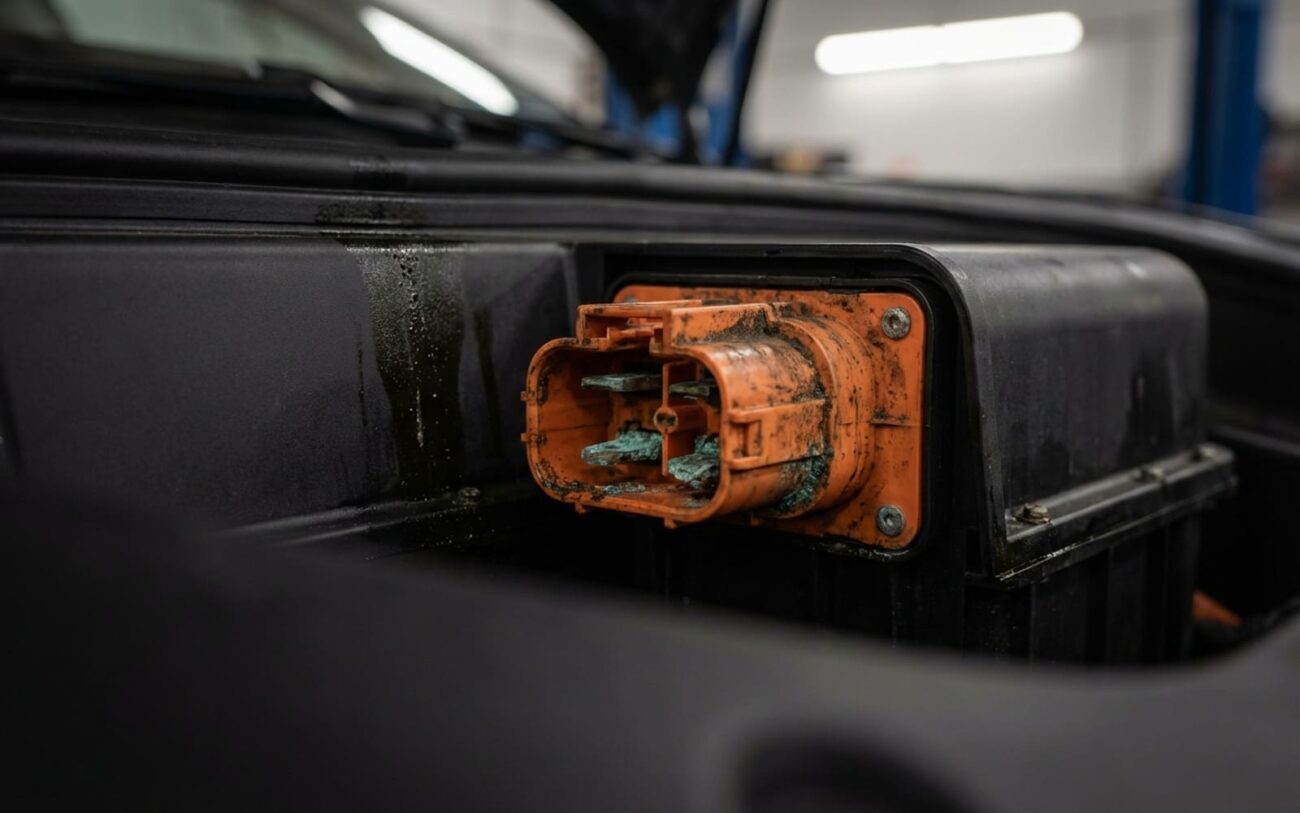
If you get an isolation fault after installation, it’s a serious safety concern. This could point to internal busbar damage, a cracked casing, or moisture getting into the pack during manufacturing or shipping. But don’t overlook external factors: damaged HV cables, contaminated connectors, or moisture at the vehicle-to-pack interface can all cause this. You must perform an isolation resistance test using a certified megohmmeter. For most systems, you’re looking for greater than 500 ohms per volt. So, on a 400V system, you need to see above 200,000 ohms. Anything less, and you’ve got a leak somewhere. This test is non-negotiable for safety.
Individual Cell Voltage or Imbalance Faults
Sometimes, the car recognizes the pack but immediately throws codes about specific cell voltages or imbalances. This could be defective cell groups, broken sense wires, or a failed cell monitoring board inside the pack. On the vehicle side, I’ve tracked this down to a loose or corroded sense harness connector, damaged wiring leading to the BECM, or even a faulty BECM input circuit. The best way to confirm is to compare the cell voltages reported by your scan tool with direct multimeter measurements at the pack’s sense pins (if accessible and safe to do so). If the scan tool shows a problem with a specific cell group, and your multimeter confirms it, then the problem is likely internal to the pack. If the scan tool is showing crazy readings but the multimeter is fine, you’ve got a wiring or BECM issue.
Root Cause: When the New Pack Itself Is the Problem
When your testing definitively points to an internal fault within the new traction battery, you’re usually dealing with one of three core failure types. And let me be clear: none of these are user-serviceable. You don’t open these packs in the field.
First, you might have a data integrity failure. Every modern high-voltage battery pack has a non-volatile memory chip that stores its unique serial number, VIN match, capacity rating, and critical calibration data. If that data is missing, corrupted, or was programmed incorrectly at the factory, the BECM will reject the pack outright. This isn’t something the car “learns” its way out of; it’s a defective identity. I’ve seen remanufactured packs, especially from some third-party suppliers, arrive with blank or mismatched IDs. It’s frustrating, but it happens.
Second, there could be an internal communication network failure. The pack’s BMS isn’t a single chip; it’s a distributed system. You’ve got multiple cell monitoring boards (CMBs) daisy-chained together via an internal CAN or LIN bus, all talking to a master control module inside the pack. If just one of those CMBs fails, or if a connection breaks during shipping or handling, the entire network goes dark. The BECM sees no data and throws a communication timeout. These internal harnesses can be surprisingly fragile, and rough handling can easily cause an open or a short.
Third, we sometimes see a firmware or physical integrity failure. Some OEMs, like GM with certain Bolt EV models, have issued service bulletins because replacement packs needed a specific software update to their internal controller to resolve recognition issues. That’s essentially a firmware defect baked into the pack itself. On the hardware side, I’ve found cracked busbars, loose high-voltage terminals, or compromised insulation that creates isolation faults or open circuits. These are manufacturing or handling defects, not field wear and tear. And yes, I see this misdiagnosed a lot — shops blaming the BECM when the pack itself arrived damaged.
Your Repair Options: What to Do Next
The fix, as always, depends entirely on where you found the fault. Don’t guess — test first, then act. This isn’t the place for throwing parts at a problem.
External Connection Issues DIY-FEASIBLE
Internal Data or Software Defects Professional Only
Confirmed Internal Hardware Defects Non-Repairable
Post-Repair Validation: Don’t Skip This Step
After any repair, you absolutely must validate the fix under real conditions. A cleared code isn’t enough. The system has to demonstrate full functionality, and I mean full functionality.
If the issue was software or data-related, here’s my checklist: All BMS-related DTCs must clear and stay clear after at least three full key cycles (meaning, turning the car completely off and on). Your scan tool needs to show stable communication with the battery pack, displaying the correct serial number and state of charge. And the dash SOC gauge? It needs to respond accurately during both charging and discharging. If it’s still acting flaky, you’re not done.
If your repair involved a connector or a physical interface, you need two critical checks. First, that high-voltage isolation test again, using a calibrated megohmmeter. Remember, >500 Ω/V. A 400V system needs to read above 200,000 ohms. Second, a proper drive cycle under load. Accelerate hard, decelerate, use regen braking — really work the system. While you’re doing this, monitor the BMS data in real-time with an OEM-level scan tool. If that connection is flaky, it’ll show up as communication dropouts or voltage instability. I’ve seen too many comebacks because techs skipped this. Don’t hand the car back without it.
The Money Talk: Cost, Risk, and Knowing When to Fold
This isn’t just a technical problem; it’s a financial one. Here’s what you’re realistically up against:
| Repair Type | DIY Cost | Shop Cost | Success Rate | Secondary Risk if Failed |
|---|---|---|---|---|
| Connector Re-seat/Clean | < $50 (cleaner, grease) | $150 – $300 | High | None, if HV system is properly disabled before work. |
| OEM Software/Programming | Not Feasible | $200 – $500 (1–2 hrs labor) | Very High | Bricking BECM or pack controller with incorrect flash or power loss during update. |
| Full Pack Replacement (if defective) | Not Feasible | $5,000 – $25,000+ | 100% (assuming the new pack is good) | Financial total loss if repair cost exceeds vehicle value. |
The Hard Truth:
If that new pack you just installed turns out to be internally faulty and needs replacement, you’re facing the full cost again. That’s why I always tell my customers: if the price of a replacement traction battery exceeds 60% of your vehicle’s current market value, it’s time to seriously reconsider whether repair makes economic sense. I’ve seen more than one otherwise solid hybrid get totaled because the battery cost more than the car was worth. Know your numbers before you commit.
Prevention: Don’t Make It Harder Than It Has To Be
Most “battery not recognized” cases are preventable. The biggest culprit? Skipping basic prep work. Always, and I mean always, start by testing the 12V auxiliary battery. A weak or failing 12V battery can cause voltage sag during BMS programming, leading to failed flashes or corrupted data. It’s a $150 fix that prevents a $5,000 headache. (For more on why 12V batteries fail even with a good alternator, check out this article.)
Before you even install a new or remanufactured pack, verify the serial number and part number match your vehicle and the repair order. If possible, perform a pre-installation isolation test and a thorough visual inspection for any shipping damage. And never, ever assume it’s “plug-and-play.” Every OEM has a specific BMS reset or battery initialization procedure — often a guided routine in their factory scan tool. That process handles authentication, calibration, and contactor testing. Skip it, and the car might boot once but fail later. Follow it, and you’ll save yourself a tow and a second labor bill. Trust me on this one.
