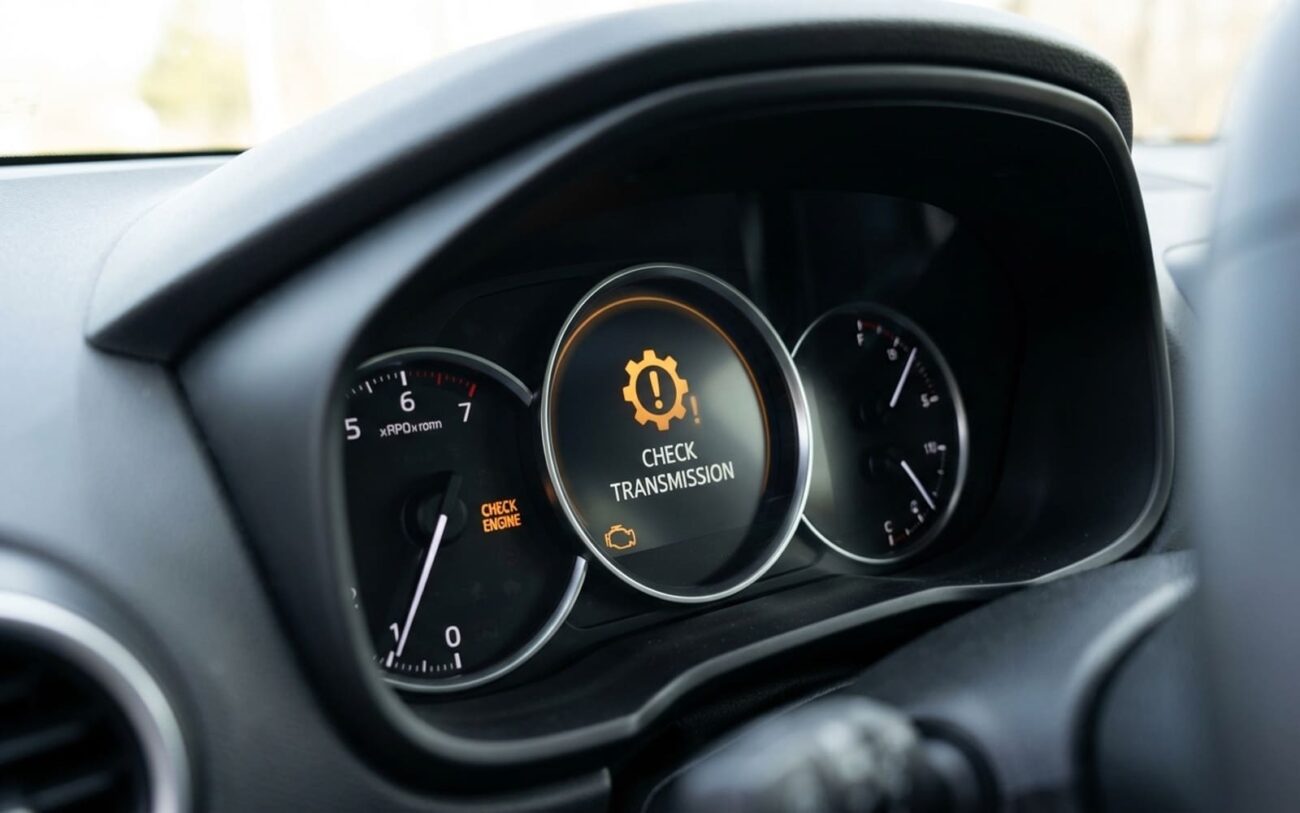
Alright, let’s talk about one of those head-scratchers I see in the shop all the time. You just swapped out a dead battery, or maybe jump-started the car, and now your transmission feels like it’s got a mind of its own – slamming into gear, shifting rough, just generally unhappy. If that’s your situation, don’t panic. Nine times out of ten, you haven’t broken anything. What you’re dealing with is a confused computer, specifically your Transmission Control Module (TCM), and it’s a common issue in most vehicles built from about 2005 onwards.
The Symptoms I See
What does this “confusion” feel like? Well, I hear a few common complaints. Often, folks tell me they get a loud clunk or a noticeable delay when they shift from Park to Drive, or even into Reverse. Then, on the road, those first few miles can be pretty rough: firm, erratic shifts, sometimes even a hesitation before it finally decides to engage the next gear. If you’ve got a dual-clutch transmission (DCT) – like a VW DSG or Ford Powershift – you might feel a distinct shudder, especially at lower speeds or when taking off from a stop. It’s like the transmission forgot how to feather the clutch.
Why Your Transmission “Forgot” How To Shift
Here’s the deal: modern transmissions aren’t just mechanical boxes. They’re controlled by that Transmission Control Module, the TCM. This little computer is constantly learning and adapting. It’s like it’s taking notes on your driving style, how much wear your clutches have, how you use the throttle, even the fluid temperature. It fine-tunes everything – clutch engagement pressures, shift points, how long it takes to ‘fill’ a clutch pack with fluid – to give you that smooth, seamless driving experience.
All that learned data, that ‘muscle memory,’ lives in what we call volatile memory. And volatile memory, by its nature, needs constant power to hold onto that information. So, when you disconnect the battery, even for a minute, or if the battery dies completely, that memory gets wiped clean. It’s like the TCM suddenly has amnesia. It reverts back to its factory default settings.
Think of it like a musician losing their sheet music. They still know how to play the song, but they’re going to miss a few notes and feel a bit clunky until they practice it a few times. Those factory defaults are designed to be safe for a brand-new transmission, meaning they’re often overly conservative – higher shift pressures, longer fill times. But your transmission isn’t new, is it? So, these ‘safe’ settings feel harsh and unrefined in a worn-in transmission. I see this play out constantly in my bay – after battery swaps, jump-starts, even cars that have been sitting for a long time.
Don’t Just Live With It
Now, it might seem like a temporary annoyance, but don’t just ignore these symptoms. Driving around with a transmission that hasn’t adapted can actually cause real damage. Those harsh shifts and incorrect pressures put extra stress on everything – the clutch packs, the solenoids in the valve body, the hydraulic circuits. That means more heat, and heat is the enemy of any transmission. Over time, you’re looking at accelerated wear and tear, which can lead to much bigger, more expensive problems down the road.
How I Diagnose It: Adaptation vs. Real Problem
Okay, so you’ve got the symptoms. How do you know it’s just adaptation and not something more serious? This is where a good diagnostic approach comes in.
First, I always ask: “When did this start?” If it immediately followed a battery change, a jump, or the car sitting for weeks, that’s a huge red flag for adaptation loss. Next, I’ll hook up my scan tool. A basic OBD2 reader usually won’t cut it here; you need something with bidirectional control – like an Autel MX808, a Launch CRP129, or the factory-level systems like GM GDS2 or Ford IDS. I’m looking for any stored trouble codes. If there are no transmission-specific codes (like P0700 series codes indicating sensor issues or internal problems), that points even more strongly to adaptation.
The real test, what I call the “acid test,” is to perform a TCM reset and then drive the vehicle. If the harshness, clunking, or shudder significantly improves over the next 10-15 miles, you’ve confirmed it was adaptation. If it doesn’t improve, or if new codes pop up, then we’re digging deeper.
When to suspect something more than just adaptation:
- If you have harsh engagement from Park or Neutral into Drive or Reverse, and a TCM reset doesn’t help, I’d start looking at failed engine or transmission mounts, low fluid levels, or even an internal leak.
- For erratic shift timing and quality that doesn’t clear up, I’m checking sensors like the Throttle Position Sensor (TPS), Mass Air Flow (MAF), or wheel speed sensors. Sometimes, it’s sticking solenoids in the valve body. Checking for codes here is critical.
- If you have a DCT with low-speed shudder, and a clutch adaptation procedure doesn’t fix it, then I’m thinking about contaminated fluid, a worn flywheel, or actual mechanical clutch wear. This is where you might start comparing symptoms to known issues like torque converter failures in some Nissan models.
The Fix: Teaching It To Drive Again
So, how do we fix a confused TCM? We teach it to drive again. This isn’t something you can usually do by just pulling a fuse or disconnecting the battery again – that just makes it forget more. You’re going to need a proper bidirectional scan tool. We’re talking about tools like an Autel MX808, a Launch CRP129, or the factory-level systems like GM GDS2 or Ford IDS. A cheap code reader won’t have the functionality.
Once you’ve got the right tool, the process generally involves:
Software Relearn Procedure
You’ll navigate through the scan tool’s menus to find the transmission control module, then look for a specific function to “reset adaptive values” or “clear learned memory.” Hit that button.
Then comes the crucial part: performing a relearn drive cycle. The TCM needs to re-learn how to shift by actually shifting. The exact procedure varies by manufacturer, but generally, it involves a mix of gentle acceleration, steady cruising, and some harder acceleration/deceleration. For example:
- For ZF 8-speeds (common in BMWs, Audis, Chryslers), I typically recommend a drive cycle that includes smooth acceleration up to about 60 mph, letting it shift through all gears, and then some gentle deceleration. You might need to repeat this a few times.
- For VW/Audi DSGs, these often require a “Basic Settings” procedure to be run with the transmission fluid at operating temperature. It calibrates the clutch ‘kiss points’ and engagement.
- For many Asian models (Hyundai/Kia 8-speeds, some Toyota/Honda), some will automatically start relearning after a reset, but others have a formal “Transmission Learning Procedure” that needs to be initiated through the scan tool.
- GM 6T40 units also benefit greatly from a specific relearn procedure after a battery disconnect.
This drive cycle isn’t just a suggestion; it’s part of the fix. The TCM needs to experience various loads and speeds to build up its new adaptive data.
Professional Diagnostics (If Relearn Fails)
If you’ve gone through the reset and the drive cycle, and the symptoms haven’t improved, or if new codes start popping up (like P0740 for torque converter clutch issues, or P0780 for shift errors), then you’re likely looking at a mechanical or electrical problem beyond just adaptation. At that point, it’s time for a professional technician to dig deeper.
They’ll use their scan tool to monitor live data during shifts, looking for solenoid function, clutch slip, and pressure errors. They might even need to verify line pressure with a test kit or check for internal leaks in the valve body or transmission case. This rules out things like a failing valve body, worn clutch packs, or a bad torque converter.
Knowing It’s Fixed
How do you know you’ve actually fixed it?
- The Scan Tool Says So: After the procedure, your scan tool should confirm that the adaptation reset was completed successfully, and often, you can even see “Adaptations Learned” or similar status in the live data.
- The “Butt Dyno” Test: More importantly, you should feel a significant improvement in shift quality – I’d say at least 80% better. The clunks should be gone, shifts should be smoother, and any low-speed shudder should be minimal or gone entirely.
- No New Codes: And, of course, no new transmission-related trouble codes should appear after driving it.
If the tool won’t initiate the procedure, or if the drive cycle doesn’t help, or if new codes show up, then you haven’t fixed the root problem, and it’s time to investigate further.
Cost, Risk, and My #1 Tip to Avoid This Entire Mess
Let’s talk brass tacks.
| Repair Type | DIY Cost | Shop Cost | Success Rate |
|---|---|---|---|
| Software Adaptation Reset | $50–$500 (Tool) | $80–$150 | >95% |
| Mechanical Diagnosis | Not Recommended | $150–$500 | Variable |
The good news is, if it is just adaptation loss, the success rate for a proper reset and relearn is very high – I’d say over 95% in my experience.
Preventative Tip: Use a Memory Saver
Here’s a simple trick I tell all my customers: use a memory saver. These little devices plug into your OBD-II port and provide a small 12V current to keep the TCM, ECU, and all the other modules alive when you disconnect the main battery. They’re cheap, usually $20-$50, and they save you a huge headache. It’s cheap insurance against a grumpy transmission.
