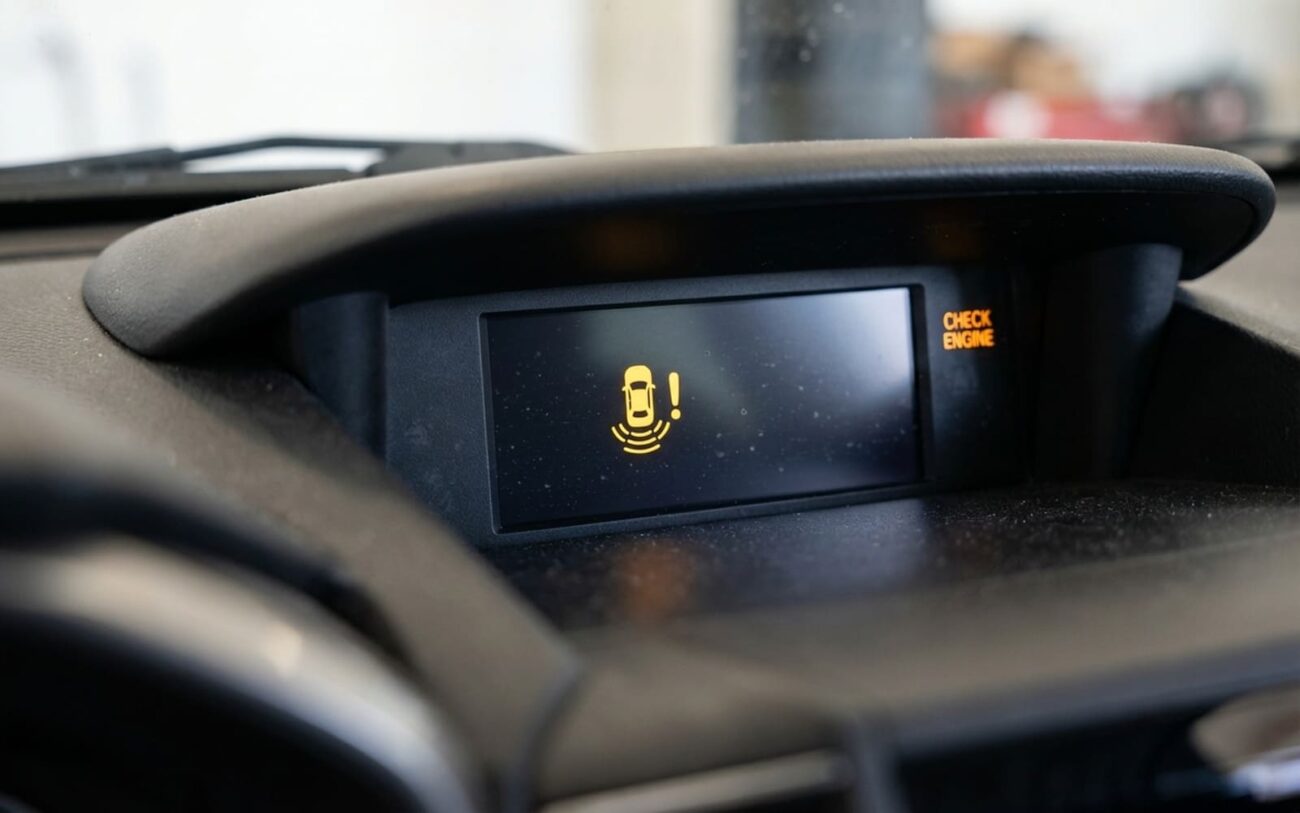
When your car’s ADAS freezes, it’s not like a mechanical failure. You won’t feel a shudder or hear a clunk. It’s quieter than that. One second, adaptive cruise is holding your lane and distance like a pro. The next? Nothing. No warning chime, no flashing icon—just silence. The car drives fine, but you’ve lost the co-pilot. That’s the first thing I tell customers: if the engine runs and the steering turns, you’re not stranded. But now you’re flying blind on safety systems you probably didn’t even realize were active until they vanished.
What a Freeze Actually Feels Like
I’ve seen this on everything from Toyotas to Teslas. The pattern is always the same: multiple ADAS features die at once. Lane keep assist, forward collision warning, adaptive cruise—they all go dark in a single event. That’s not a sensor issue. A dirty camera might knock out lane keeping, but it won’t kill blind spot monitoring. When you lose several unrelated systems simultaneously, it’s not hardware. It’s software—specifically, a hung ECU or a comms breakdown on the CAN network.
And here’s the tell: the warning lights come up before you even start driving. Turn the key to “on,” and bam—“Front Camera Unavailable,” “ACC Not Ready,” “Calibration Required.” Those aren’t dynamic faults. They’re boot-up failures. The system tried to initialize and crashed during self-check. That’s not a bad sensor. That’s a software lockup.
I had a 2021 Honda CR-V in last month with this exact issue. Customer thought the radar was damaged in a car wash. Nope. Cleared the codes, turned the key back—same warnings, instantly. No driving needed. That’s not hardware. That’s a frozen module.
Software Freeze vs. Hardware Failure: How to Tell the Difference
Before you spend $1,200 on a new radar unit, rule out the simple stuff. I’ve seen shops quote full module replacements when all it took was a battery reset. Start here:
| Symptom | Points to Software | Hardware Mimics | How to Confirm |
|---|---|---|---|
| Multiple ADAS features fail at once | Frozen ADAS ECU or CAN comms hang | Blown fuse, damaged wiring, power interruption |
Scan tool shows module online but sending stale data? That’s frozen. First, check power and ground at the module. No point reflashing a unit that’s not getting 12V. |
| Codes return instantly after clearing | Software fault blocking reset | Confirmed hardware fault (misaligned radar, failed camera) |
Clear codes, cycle the key. If they come back before engine start, try a battery disconnect. If they return immediately after, suspect corrupted firmware. If they only return after driving? That’s likely a sensor or calibration issue. |
| Fault appears at ignition-on | Software crash during boot | Shorted sensor circuit, physical damage |
Some OEM tools can send a “module reset” command. If that clears the fault temporarily, it’s software. Otherwise, check sensor wiring and connectors. Water intrusion? Common after car washes or heavy rain—especially on rear radar units. |
Why It Happens: The Real Causes
It’s not “ghost in the machine.” There’s always a reason. After 25 years, I’ve narrowed it down to three root causes:
-
Software state corruption: Happens when the ECU tries to write data during a voltage dip—like when the alternator’s failing or the battery’s on its last leg. The module boots, but the configuration is toast. It’s like a corrupted save file in a video game. System runs, but nothing works right.
-
Software bugs: Even factory code has edge cases. I had a Subaru where dappled sunlight through trees would confuse the camera, trigger an invalid state, and lock up the entire ADAS stack. Took me three visits to replicate it. Rare? Yes. Real? Absolutely.
-
Wrong calibration or region: Some modules are coded for specific markets. Put a European-spec radar on a U.S. car, and it’ll throw faults. Happens more than you’d think—especially with aftermarket replacements.
And yes, manufacturers do fix these. There’s a TSB for certain 2019–2020 Ram trucks where the front camera module would freeze due to a logic error—fixed with a reflash. But—and this is critical—don’t confuse that with physical damage. A cracked windshield? That’s not software. A dented radar housing? That’s not a reboot fix. You can’t software your way out of a bent part.
How to Fix It: From Garage to Shop
Start simple. Always.
Soft Reset (DIY)
Turn the car off. Open and close the driver’s door—this forces the network into sleep mode. Lock it with the fob, walk away, and let it sit for 15 minutes. That’s it. I’ve cleared “Camera Blocked” warnings on Accords and Camrys with this trick. Free, safe, and takes no tools. (Yes, this matters.)
Hard Reset (DIY, with caution)
If soft reset fails, go nuclear. Use a memory saver on the OBD-II port—keeps your radio and ECU settings. Disconnect the negative battery terminal. Wait 15 minutes (lets capacitors drain). Reconnect, torque to 5–8 Nm (44–71 in-lbs), then start and idle for 5–10 minutes. Some systems reinitialize during that time. But don’t fool yourself: if the problem comes back in a week, you’ve got deeper corruption.
Software Reflash or ECU Replacement (Shop Only)
If it keeps freezing, you need a reflash. This isn’t a DIY job unless you’ve got OEM-level tools and a stable internet connection. I use a J2534 pass-through with factory software. Steps:
-
Connect a stable power supply—voltage drop during flash can brick the module.
-
Follow OEM procedure to the letter. One wrong step, and you’re buying a new ECU.
-
Verify the flash with a checksum. If it doesn’t match, do it again.
If the ECU’s memory is physically damaged (rare), you’ll need a replacement. And no, it’s not plug-and-play. It has to be programmed, paired, and calibrated. Mess this up, and you’ll have communication errors across multiple systems.
Did It Really Work? Here’s How to Test
Clearing the code isn’t the fix. The real test comes on the road. Take it out for 20 minutes. Get on the highway. Engage adaptive cruise. Let lane keep assist activate. Check for forward collision warnings. They should respond normally.
Then scan again. No DTCs should return. For reflashes, confirm the programming event logged correctly. But here’s the part most shops skip: calibration. Many systems—especially camera and radar—need a post-update drive cycle or static calibration with targets. Without it, the system may seem fine but fail under real conditions. I’ve seen lane keep assist drift into oncoming traffic because someone skipped calibration. That’s not a repair. That’s a liability.
What It’ll Cost You
| Repair Type | DIY Cost | Shop Cost | Success Rate | Risk if Failed |
|---|---|---|---|---|
| Soft/Hard Reset | $0 | $0 (if included in diag time) | 40–60% | Negligible |
| Software Reflash | $0–$500 (with tools) | $150–$400 | >95% for known bugs | Brick ECU if power fails mid-update |
| ECU Replacement | $500–$2,500 (part) + programming | $1,000–$3,000+ | Near 100% | Comms or drivability issues if programmed wrong |
Pro tip: Independent shops now offer ADAS recalibration and ECU reflashes at 30–50% below dealership pricing. But verify their tools and training. This isn’t a job for a guy with a $200 scan tool from Amazon. If you’re out of warranty, a qualified indie can save you serious money—just don’t cheap out on the tech.
Prevention: It’s All About the Battery
Most ADAS glitches I see trace back to one thing: a weak 12V battery. Low voltage during startup or operation corrupts data writes, causes modules to reset, and creates phantom faults. I test every customer’s battery before diving into ADAS diagnostics. And I recommend:
-
Test the battery yearly—especially before winter.
-
Keep terminals clean and tight. Corrosion kills voltage.
-
Replace the battery before it fails. Don’t wait for the jump start.
And pay attention to patterns. If ADAS drops out in extreme heat or cold, it could be a marginal component—or software that can’t handle thermal stress. Some vehicles even have hidden diagnostic menus in the infotainment system. Check your manual. You might catch a pending fault before it becomes a warning light.
