EV Gearbox Fluid: The “Lifetime” Myth, Busted
Let’s be blunt: “lifetime fluid” is a marketing term, not an engineering one. After 25 years in this business, I can tell you that nothing mechanical lasts forever without proper care. Sure, electric vehicles cut out a lot of traditional maintenance—no oil changes, no spark plugs, no timing belts. That’s great. But it doesn’t mean “zero maintenance.”
Every EV has a reduction gear unit in its drive assembly. It’s what takes the high RPMs from the electric motor and reduces them to a usable speed for your wheels. And guess what? That unit is full of fluid. Like any fluid under stress, it breaks down. Manufacturers might call it “sealed for life,” but in my shop, “life” usually translates to “the length of the warranty period.”
I’ve seen too many EVs come in with avoidable, expensive damage because owners trusted that “lifetime” label. If you’re planning to keep your EV past 100,000 miles, or if you drive it hard in hot climates or hilly country, assuming that gearbox fluid will last indefinitely is a gamble you’ll almost certainly lose.
Why EV Gearbox Fluid Degrades So Fast
It’s a common misconception that electric drivetrains are “gentler” on components. In reality, the reduction gearbox operates under some seriously extreme conditions. Electric motors deliver full torque instantly, and they spin at incredibly high RPMs—we’re talking 15,000 RPMs or more in vehicles like a Tesla Model 3 or a Porsche Taycan.
This constant, high-torque, high-speed shearing action just tears apart the viscosity modifiers and depletes the anti-wear additives in the fluid over time. Every hard acceleration or aggressive regenerative braking event generates significant heat. This leads to thermal cycling and oxidation, which in turn causes varnish buildup, sludge formation, and increased fluid viscosity. All of that reduces lubrication efficiency, and that’s when things start to go wrong.
And don’t forget the microscopic metal particles. Normal gear and bearing wear releases tiny bits of metal into the oil. These particles act like abrasives, accelerating wear and making the fluid break down even faster. It’s a vicious cycle.
Spotting Trouble: What Your EV Is Trying to Tell You
Unlike traditional automatics, most EVs don’t have a dipstick for easy fluid checks. That doesn’t mean the system is silent when it’s failing. The symptoms are subtle, but they’re consistent. The first clue I usually hear is auditory: a change in that characteristic electric motor whine. Listen for a new, higher-pitched gear whine or a faint metallic rattle that tracks with motor RPM, not vehicle speed. If it changes with RPM, that’s your gearbox talking.
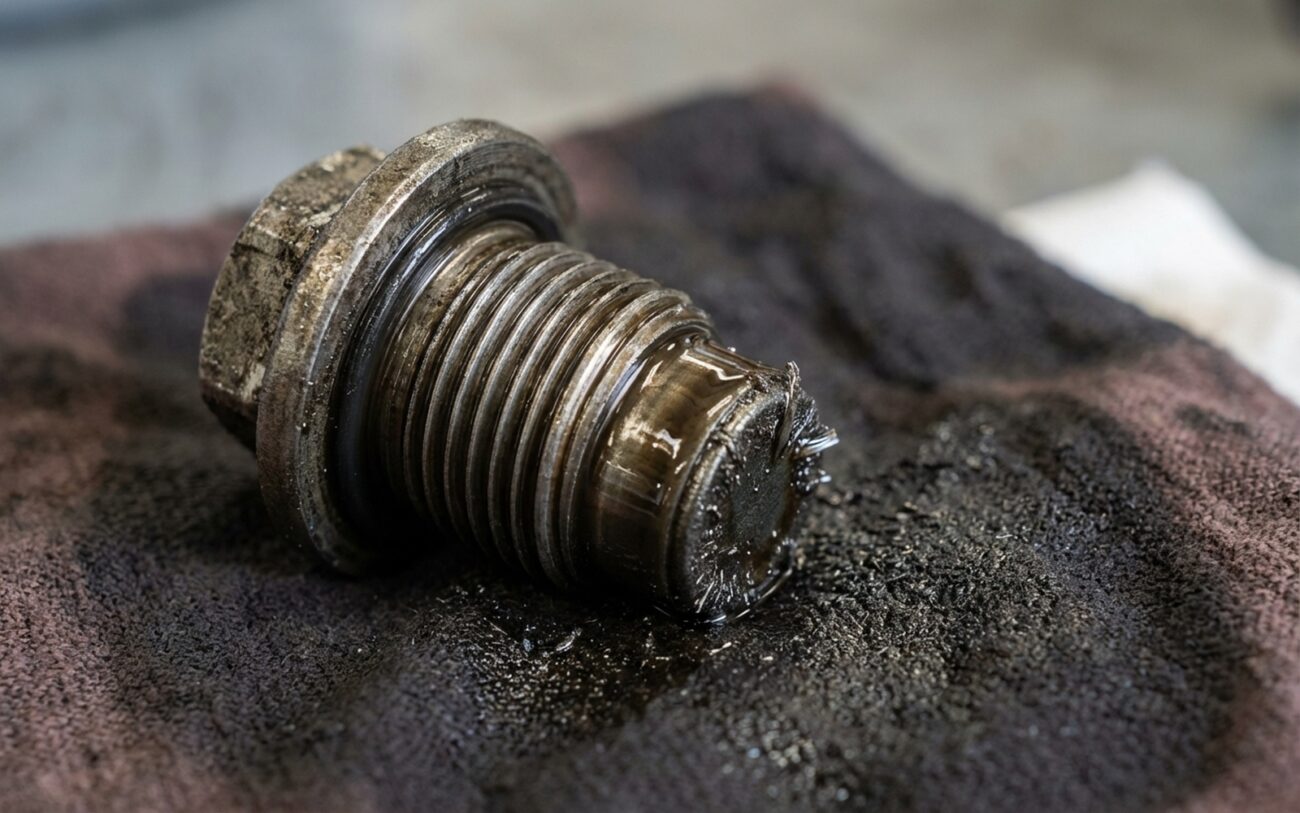
The most definitive check? Inspect the fluid yourself. If you can access the fill plug, use a clean zip-tie or a dedicated inspection tool to pull a sample. Fresh EV gear oil is typically clear and amber. If it’s dark brown and smells burnt, that’s thermal degradation screaming at you. Milky appearance? That suggests coolant contamination. And if you find metallic particles on the magnetic drain plug, you’re already dealing with internal wear. Letting this go unchecked just accelerates the damage, eventually leading to a full drive unit failure.
Diagnosis: Is It Really the Gearbox?
Before you panic and blame the transmission, you’ve got to rule out other common issues that can mimic gearbox problems. A new noise or a drop in efficiency isn’t automatic confirmation of bad fluid or mechanical failure. Other components in the EV drivetrain can produce similar symptoms.
For example, a high-pitched whine could come from motor bearings, or even the inverter’s coolant pump. Reduced efficiency might stem from a dragging brake caliper or a failing wheel bearing. Coolant in the oil could be from an external oil cooler leak, not a cracked gearbox housing. Proper diagnosis means being methodical—don’t assume the worst, or the easiest, cause. I’ve seen too many people throw parts at a problem they didn’t properly diagnose.
| Symptom | Likely Gearbox/Fluid Cause | Common External Mimics | My Definitive Test to Confirm |
|---|---|---|---|
| Whine or rattle from drive unit | Fluid viscosity breakdown, low fluid level, or bearing wear due to poor lubrication. | Failing motor rotor bearing, inverter cooling pump noise, or resonance from power electronics. |
Use a mechanic’s stethoscope directly on the gearbox housing. Then, drain and inspect the fluid for metal content. Refill with the correct specification fluid. If the noise persists, you’re likely looking at internal damage. |
| Increased energy consumption (kWh/100mi) | Oxidized fluid leading to increased churning losses and internal friction. | Low tire pressure, a dragging brake caliper, failing wheel bearing, or alignment issues. |
Perform a coast-down test on a level road to check for drag. Use a thermal camera to check all brake rotors for residual heat after driving—it’ll tell you if a caliper is sticking. |
| Milky or foamy fluid | Rarely, an internal crack in the gearbox housing allowing coolant intrusion. | A leaking external oil cooler or a compromised seal at the motor-to-gearbox coolant interface. |
Pressure test the coolant circuit. Then, use a glycol test strip on the oil sample to confirm coolant contamination. This will tell you if it’s coolant or just aeration. |
The Fix: From Preventive Maintenance to Major Surgery
Once you’ve diagnosed the problem, here’s what your options look like. The course of action depends entirely on the severity of what you find.
Preventive Fluid Change DIY-FEASIBLE
Corrective Service with Contamination PROFESSIONAL-RECOMMENDED
Internal Mechanical Failure NON-REPAIRABLE IN-FIELD
Seal Leak Mitigation TEMPORARY / LAST-RESORT
Verifying the Repair: How to Know You’re Good to Go
You’ve done the work, but the job isn’t done until you verify it. After any fluid change or flush, a thorough validation is essential. Take the vehicle through a real-world drive cycle: full acceleration, highway cruising, and strong regenerative braking. Listen carefully—the cabin should remain quiet, with no new or worsening whines. And always, always recheck the drain and fill plugs within 24 hours for any leaks.
Over the next 100 miles, keep an eye on your energy consumption. A slight improvement in efficiency is actually common as fresh fluid reduces internal friction. If you addressed contamination, further verification is critical. For coolant, pull a fresh sample after about 50 miles and test it with a glycol detection strip—results should be negative. For metal debris, install a clean magnetic drain plug, drive 500 miles, and then inspect it again. A light dusting of fine particles is normal wear. But if you see chunks, flakes, or thick sludge, that indicates ongoing damage and likely impending failure.
EV Gearbox Fluid Service Costs: The Economic Reality
The cost difference between preventive maintenance and a full drive unit replacement is staggering. This is the key point I want you to take away. Here’s a realistic breakdown of what you can expect:
| Service Type | DIY Cost (Parts Only) | Shop Cost (Labor + Parts) | Success Rate | Secondary Risk I See |
|---|---|---|---|---|
| Preventive Fluid Change (Drain and Fill) | $50–$150 | $200–$400 | Near 100% | Stripped threads from over-torquing plugs, or leaks from under-torquing. |
| Corrective Flush (Metal or Coolant Contamination) | $150–$300 | $400–$800 | ~80% | Improper flushing leaving contaminants behind; wrong fluid causing additive conflict or seal damage. |
| Drive Unit Replacement or Remanufacture | N/A | $5,000–$15,000+ | 100% | Incorrect software calibration or mismatched firmware causing drivability issues after installation. |
The Bottom Line
The economic reality is crystal clear: a $300 fluid service can easily prevent a $10,000+ repair. If your repair quote for a drive unit exceeds half the vehicle’s market value, insurers often deem it a total loss. Don’t let avoidable wear turn your EV into a paperweight. This service is the most cost-effective insurance policy you can buy for your electric drivetrain.
Prevention: My Top Tips for a Long-Lasting EV Gearbox
Prevention is always, always better than repair. To keep your reduction gear unit in peak condition and avoid those big repair bills, follow these steps I recommend to all my customers:
-
Use the correct fluid, no exceptions: This isn’t a place to cheap out or guess. Use the exact OEM-specified fluid from your owner’s manual (e.g., Honda HCF-2, Toyota WS ATF, or Tesla ATF 9). Generic gear oils simply lack the necessary formulation for high-RPM shear stability and specific additive packages.
-
Follow a proactive maintenance schedule: I recommend a drain-and-fill every 60,000 to 100,000 miles. Don’t wait for a problem. This is especially true for high-mileage drivers or those in extreme climates.
-
Perform regular condition checks: Every 20,000 miles or two years, pull that fill plug and use a clean zip-tie as an improvised dipstick. Look at the color, smell, and feel of the fluid.
-
Monitor your energy logs: Get familiar with your vehicle’s long-term energy consumption data. A steady upward trend in kWh/100mi that isn’t explained by other factors could be an early warning sign of increased internal friction.
-
Listen to your car: You drive it every day. Get familiar with its normal sound profile. A new tonal quality during acceleration or regenerative braking is often the very first indicator of trouble brewing.
