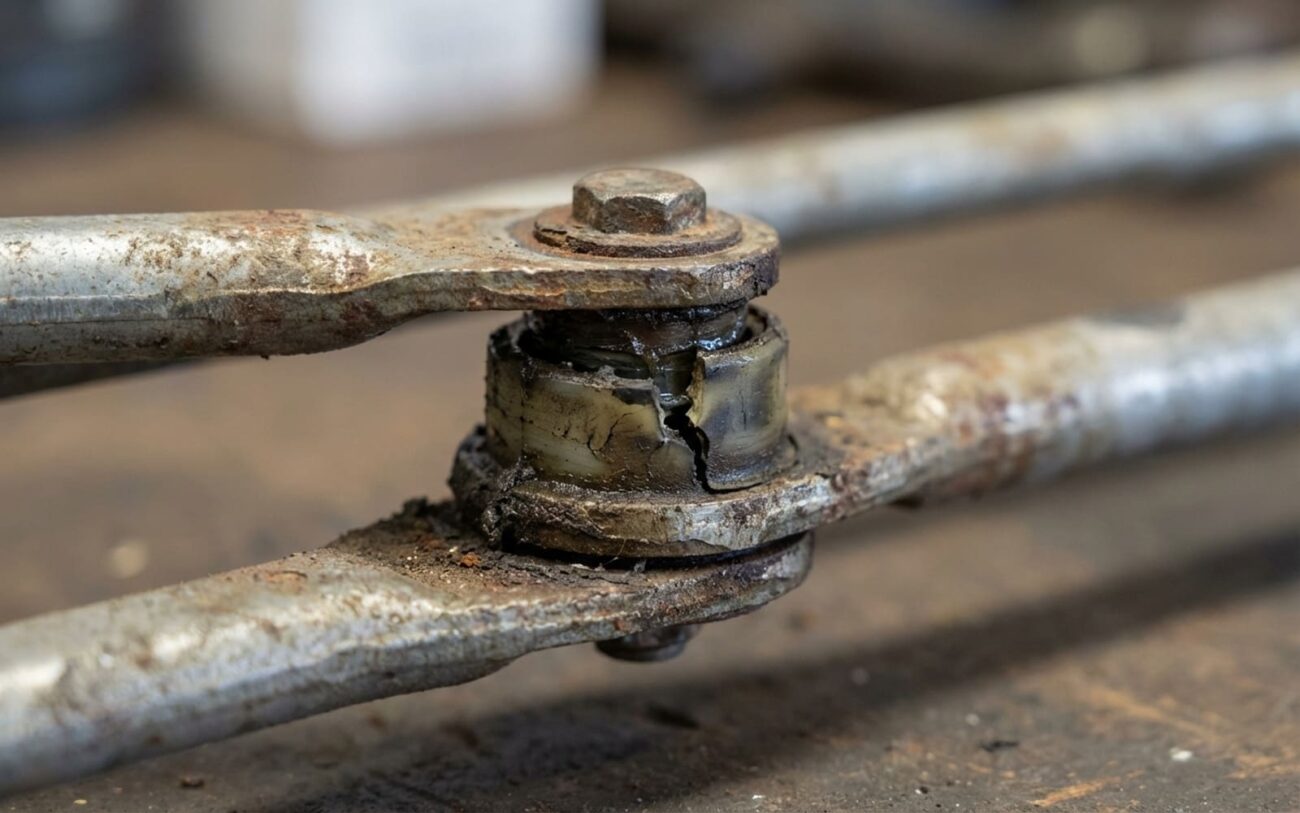
Wipers jerking? Stuttering across the glass like they’re drunk? That’s not an electrical gremlin. Not a fuse, not a switch, not some magic module. In 25 years, I’ve seen this a thousand times—usually it’s mechanical. Either the linkage is shot, or the motor’s dying. And if you don’t figure out which one, you’ll throw parts at it until something sticks. That’s not fixing. That’s gambling.
First: Listen. Then Watch.
If you hear a clunk or pop every time the wipers reverse—especially at the start or end of the sweep—your linkage is likely worn out. The sound comes from slack in the joints, usually the plastic ball sockets. They wear out over time, and once they’re loose, the whole system jerks. I’ve seen it on Hondas, Toyotas, Fords—you name it. Salt, moisture, debris sneaking under the cowl… it all adds up.
But if the wipers slow down in heavy rain, hesitate mid-sweep, or stall on high speed? That’s the motor. Specifically, worn brushes or a stripped plastic gear inside. And here’s the kicker: a bad linkage can kill a good motor. The motor strains against resistance, the gear slips, and boom—now you need both replaced. Seen that too many times.
And don’t assume it’s electrical just because the wipers act up. I’ve had guys come in convinced it’s the switch, the relay, the BCM. Sometimes it is. But more often than not, it’s mechanical. So don’t start swapping parts. Start testing.
How I Diagnose It (Fast)
Two critical tests. That’s all you need.
Test 1: The Manual Linkage Check
Remove both wiper arms. Then disconnect the linkage at the motor or transmission pivot. Now, move it by hand through the full range. If it binds, grinds, or has excessive play—especially at the ball joints—it’s linkage failure. If it moves smooth? Then the problem’s elsewhere—maybe the arms are misaligned, or the blades are seized.
On some models—like the 2013–2017 Accord—the ball joints wear out by 80k miles. Honda even issued a TSB for the popping noise. Don’t waste time rebuilding one joint. Replace the whole linkage. The labor’s the same, and the other joints are on borrowed time.
Test 2: Voltage Drop + Unloaded Motor Test
If the wipers are slow or stalling, check the power and ground circuits first. Use a digital multimeter. Run the wipers and measure voltage drop across the ground and power feed. Anything over 0.5V means there’s resistance—probably corrosion at the ground point (often labeled G102 near the firewall). Clean it. Re-test.
If voltage is solid, disconnect the linkage and run the motor unloaded. If it runs smooth, the motor’s fine. If it hesitates or stalls, the motor’s done. Brushes are worn, gear is stripped, or bearings are shot. No way around it.
Why It Failed (And How to Stop It Happening Again)
Linkage: The ball sockets are plastic. They wear. Period. Every cycle adds micro-movement. Over time, that slop turns into jerking. Road salt speeds it up. Water and debris get in through the cowl—especially if the drains are clogged. I’ve pulled linkages that looked like they’d been through a car wash with sandpaper.
And don’t assume the linkage is the root cause just because it’s broken. On a few trucks I’ve seen—F-150s, mostly—a bent cowl panel from snow load or minor impact misaligns the whole system. The linkage binds, wears out fast. Fix the alignment first.
Motor: Brushes wear down. That’s normal. But if the wipers are fighting resistance—bad blades, seized pivots, corroded joints—the motor works harder. Brushes burn out faster. The plastic gear strips. Heat builds up. And once the gear’s gone, you’re buying a new motor.
Water ingress? Rare, but it happens. Clogged cowl drains pool water right over the motor. Seal fails, corrosion sets in, bearings seize. Seen it on a 2016 Camry—motor shorted out after a week of heavy rain. Drains were packed with pine needles.
How I Fix It
Linkage Replacement:
I don’t bother with repair kits. Sure, you can buy a new ball socket for $30. But removing the cowl, disassembling the linkage, pressing in a new joint—it’s a 2-hour job. And the other joints are worn too. So I replace the whole assembly. Takes the same time, lasts longer.
Use a wiper arm puller. Don’t pry on the arms. You’ll chip the glass. And torque the nuts to spec—18–25 Nm. Over-tighten, and you’ll crush the splines. Then the arms slip. Then you’re back at square one.
Motor Replacement:
If the motor’s dead, replace it. Rebuild kits exist, but reassembling the gearbox and resealing it? Not worth it. Spend the extra $20 on a Bosch or Valeo unit. OEM-grade, sealed right.
But—and this is critical—inspect the linkage first. If it’s binding, fix that before installing the new motor. Otherwise, you’re just setting up the next failure.
Did It Work? Test Like You Mean It.
Don’t just turn the wipers on and call it good.
Run them on low, high, and intermittent. Watch the reversal points. Any hesitation at the bottom or top? That’s binding. Any uneven motion between arms? That’s misalignment or a joint still stuck.
And if you replaced the motor, measure current draw with a clamp meter. On high speed, it should pull 3–6 amps. Over 7? Something’s binding. Under 2? Either the arms aren’t connected, or the motor’s defective. I check this on every motor job now—saves comebacks.
Is It Worth Fixing?
| Repair Type | DIY Cost (Parts) | Shop Cost | Success Rate | Secondary Risk |
|---|---|---|---|---|
| Complete Linkage Replacement | $50–$150 | $300–$500 | 95%+ | Minimal if done right. Misalignment causes noise. |
| Wiper Motor Replacement | $100–$250 | $400–$700 | 95%+ | Motor fails again if linkage binds. |
| Linkage Repair Kit | $20–$40 | N/A | ~50% | Often fails in months. Leads to full replacement anyway. |
Rule of thumb in my shop: if the repair cost hits 60% of the car’s KBB value, think hard. Is the engine solid? Transmission smooth? No rust? Then fix it. Wipers are safety equipment. But if the car’s on its last legs—burning oil, frame rot, transmission slipping—maybe skip the full repair. Temporary fix, live with it, or sell it as-is.
Keep It From Happening Again
Every time you change the cabin air filter—every 12k to 15k miles—pull the cowl panel. Five extra minutes. Look at the linkage. Clean off leaves, dirt, slush. Check for rust. Hit the metal pivots with a dab of white lithium grease. Not silicone. Not WD-40. Lithium.
And clear the cowl drains. They’re tiny, easy to clog. When they’re blocked, water sits right on top of the motor and linkage. Corrosion starts. I’ve seen motors fail in two years on cars in snowy states—just because the drains were packed.
Replace wiper blades every 6–
