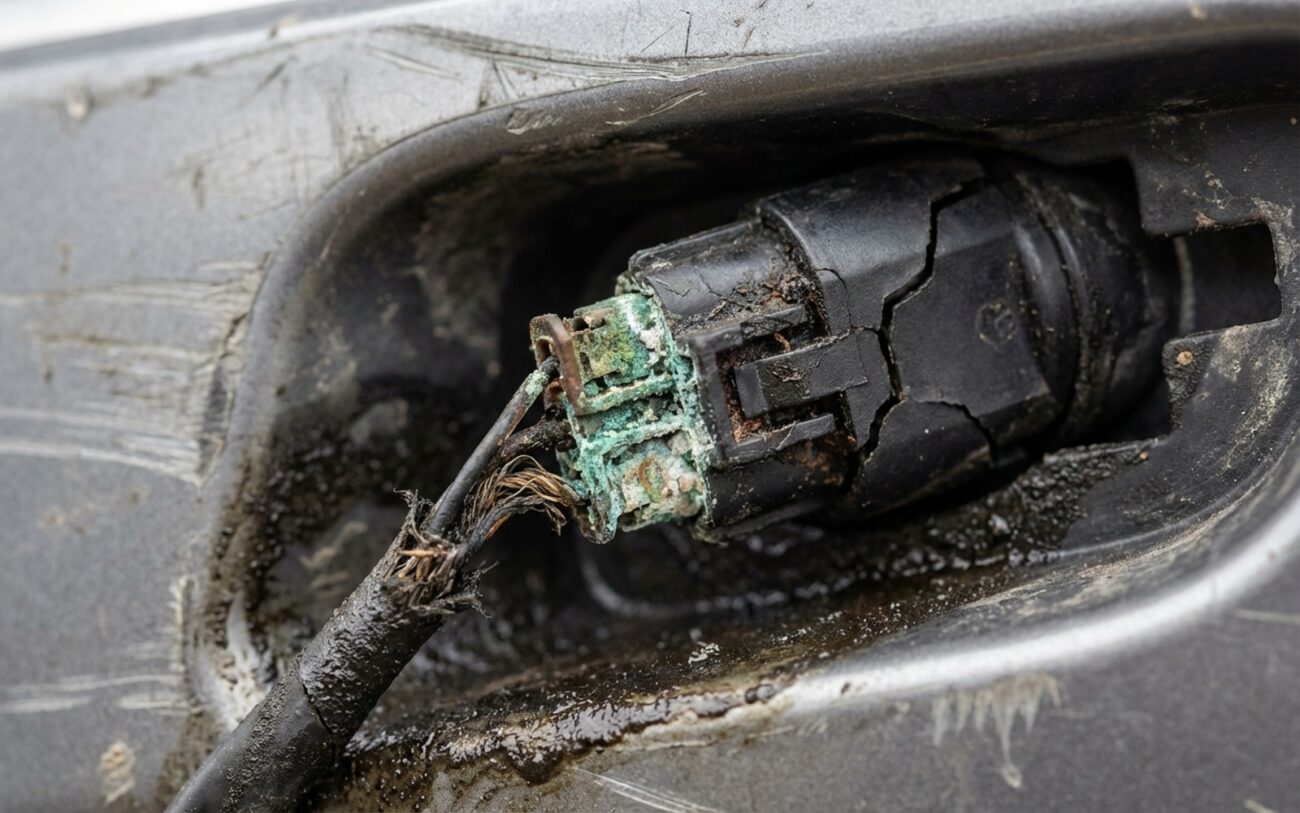
Automatic parking assist systems? They’re not magic. They’re fragile stacks of sensors, software, and assumptions—most of which fall apart after a few years of real-world use. I’ve been fixing these since they first showed up on German luxury cars, and let me tell you: when they fail, they don’t go quietly. They lurch, freeze, or steer you straight into a curb. And if you don’t know how the system actually works, you’ll throw parts at it until the wallet’s empty.
What’s Actually Breaking?
Most drivers think “parking assist” is one thing. It’s not. It’s a network: ultrasonic sensors, steering angle input, wheel speed data, brake and throttle control—all talking through the APA module. When one piece lies, the whole system shuts down. Or worse, it acts on bad data.
I break failures into three buckets:
No space detection
Car won’t find a spot, even in an empty lot. Classic sign of dead or blocked ultrasonic sensors. But here’s what most people miss: it’s rarely the sensor itself. On a 2018–2022 Toyota Camry, I’ve pulled 12 sensors that tested fine—problem was ice packed behind the bumper liner, dampening the signal. Same with thick vinyl wrap or overspray from undercoating. The sensor’s working, but it’s muffled.
And don’t assume it’s the front or rear sensors. Lateral parking uses side-mounted ones—usually in the front fender or rocker panel. If you scraped a curb and didn’t check those, you’re flying blind.
Maneuver starts, then aborts
Beeps go off, steering takes over, then—“Parking Assist Unavailable.” This one’s usually EPS or calibration related. The APA module expects the steering angle to match what the EPS reports. If there’s a mismatch beyond 5 degrees, it kills the function. Could be a bad steering angle sensor, but just as often it’s a shop that did an alignment and didn’t recalibrate. I see it weekly.
Also check tire pressure. Low psi changes the effective wheelbase. The system thinks the car’s shorter or longer than it is. Sounds minor—until you’re halfway into a spot and it bails.
Erratic movement during parking
Car jerks forward, brakes hard, or accelerates when it shouldn’t. This is where I get cautious. It’s usually not a sensor—it’s a breakdown in longitudinal control logic. The APA module is telling the engine or brake system to do something, and either the command isn’t getting through, or the response is wrong.
On a 2020 Honda CR-V I worked last month, the issue was a failing wheel speed sensor feeding garbage data. The APA thought the car was moving at 3 mph when it was stopped. Result? It applied throttle to “correct” the non-existent roll. Scary. And dangerous.
Diagnosis: Cut the Guesswork
Don’t start swapping sensors. Start with data. These systems leave traces—DTCs, live values, calibration flags. You need a factory-level scan tool. Generic OBD2 readers? Useless here.
| Symptom | Likely Cause | External Mimics | Definitive Test |
|---|---|---|---|
| No space detection | Failed ultrasonic sensor or signal processing error in APA module | Dirt, ice, thick paint, vinyl wrap |
Run “Active Sensor Test” with OEM scan tool. Look for “Open Circuit,” “Short,” or erratic distance values. Also inspect sensor face—no cracks, no blockage. |
| Maneuver aborts mid-process | Steering angle correlation failure or EPS safety limit breach | Low tire pressure, EPS overheating, no recalibration after alignment |
Monitor steering wheel angle vs. calculated road wheel angle during slow turn. Should match within ±5°. Check for EPS DTCs. Perform OEM recalibration procedure. |
| Wrong throttle/brake input | APA longitudinal control fault or corrupted speed data | Intermittent wheel speed sensor, low brake fluid, vacuum leak |
Graph all four wheel speed signals during test drive. Must be synchronized. Monitor APA’s requested vs. actual acceleration in real time. |
Real Root Causes (Not Just Symptoms)
Once you rule out dirt and misalignment, you’re dealing with hardware or software decay.
Ultrasonic sensors wear out
The piezoelectric element inside degrades over time. Signal weakens, noise increases. On humid days, the system starts “seeing” obstacles that aren’t there. Rain doesn’t cause this—it exposes it. I’ve tested sensors that work fine in the shop but fail under real conditions.
APA module memory corruption
This module stores your car’s dimensions: wheelbase, track width, sensor offsets. If the non-volatile memory gets scrambled—say, from a bad jump-start or voltage spike—the whole spatial model is off. I’ve had cars come in where the APA lost calibration every time the key was turned off. Root cause? Loose ground at the module. Fixed with a $2 star washer.
Heat kills modules
Many APA controllers are under the seat or in the trunk—places that bake in summer. Prolonged heat causes processor drift. The system works when cold but drops out after 20 minutes of city driving. Not a full failure, but enough to disable the function. Ventilation helps, but if the module’s already damaged, it’s done.
Check for service bulletins.
Manufacturers don’t always issue recalls for software bugs. But they do release TSBs. For example, some 2019–2021 Fords had a known issue where the APA would abort after ignition cycle due to a failed steering recal routine. Fix? A 15-minute reflash. Free if caught early.
Repairs: From Simple to Serious
Clean the Sensors
Isopropyl alcohol, soft cloth. No pressure washers. No abrasives. I’ve revived dozens of “failed” sensors this way. After cleaning, drive in a known-good area—like a quiet lot with standard parking lines—and verify detection.
Replace a Sensor
Yes, it’s a job. Bumper cover usually comes off. Use OEM parts—aftermarket ones often have different frequency response. Torque to 8 Nm. Then, critical step: use factory scan tool to run “Sensor Teach-In” and “End-of-Line Diagnostic.” Without this, the system ignores the new sensor.
Reprogram the Module
J2534 pass-thru tool, stable power (13.5V minimum), internet connection. Voltage drop during flash? You’ve bricked it. Seen it happen. Always use a battery maintainer. Follow OEM procedure to the letter—no shortcuts.
Replace APA Domain Controller
Last resort. New module must be programmed with vehicle-specific data: wheelbase, steering ratio, sensor layout. May need to disable “component protection” first. This isn’t plug-and-play. If you’re not using a factory scan tool with SVM and parameterization, don’t bother.
Diagnostic Workaround
Some dealer tools let you mask a single faulty sensor to isolate the problem. But it leaves a blind spot. Resets after ignition cycle. Never a permanent fix—just a diagnostic crutch.
Did It Actually Work?
Clearing codes isn’t a fix. You have to prove it works.
After sensor work: three successful parking maneuvers—parallel and perpendicular—in a controlled test area. All sensors must show stable readings on the scan tool. No spikes, no dropouts.
After reprogramming: confirm software version matches latest OEM release. Run full self-test. Then a drive cycle—highway, city, stops. Recheck for DTCs. If they come back, the root cause is still there.
After controller replacement: verify all vehicle parameters are written correctly. Then full functional test. Without factory tools, you can’t validate this. Don’t skip it.
What You’re Paying For
| Repair | DIY (Parts) | Shop Cost | Success Rate | Risk if Failed |
|---|---|---|---|---|
| Single Sensor Replacement | $80–$150 | $350–$500 | 95% (with calibration) | Curb contact if alignment’s off |
| Module Reprogramming | Not feasible | $150–$300 | 80% | Bricked module if power drops |
| Domain Controller Replacement | $800–$1,500 | $2,000–$3,500 | 99% (if programmed right) | High cost, network issues may persist |
If the repair cost hits over 20% of your car’s market value, consider disabling the system. Pull the APA fuse or use a scan tool to turn it off in a hidden menu. You lose convenience, but you stop throwing money into a system that’ll likely fail again. Sometimes the best fix is knowing when not to fix.
Keeping It Alive
Wash the sensors. Seriously. A quick wipe with a damp cloth in winter prevents ice and grime buildup. Don’t blast them with a pressure washer—can force water past the seal.
After any bumper work—even a minor scrape—get the APA recalibrated. Bumper doesn’t have to be cracked. A 5mm shift can misalign the sensors. And don’t let body shops paint over them. Thick paint kills the signal.
And if the system starts taking multiple passes to find a spot? That’s not “thinking.” That’s degradation. Get it checked before it fails completely.
Final Notes
-
After any suspension, steering, or alignment work—recalibrate the steering angle sensor. The APA needs that data. Skip it, and you’ll get aborted maneuvers or wrong steering inputs. It takes 10 minutes. Don’t skip it.
-
If your car has camera-based ADAS (like lane keep or auto park), remember: a dead battery or windshield replacement can knock the camera out of calibration. Look for “Camera Calibration Required” on startup. Fix it right—don’t drive it half-blind.
