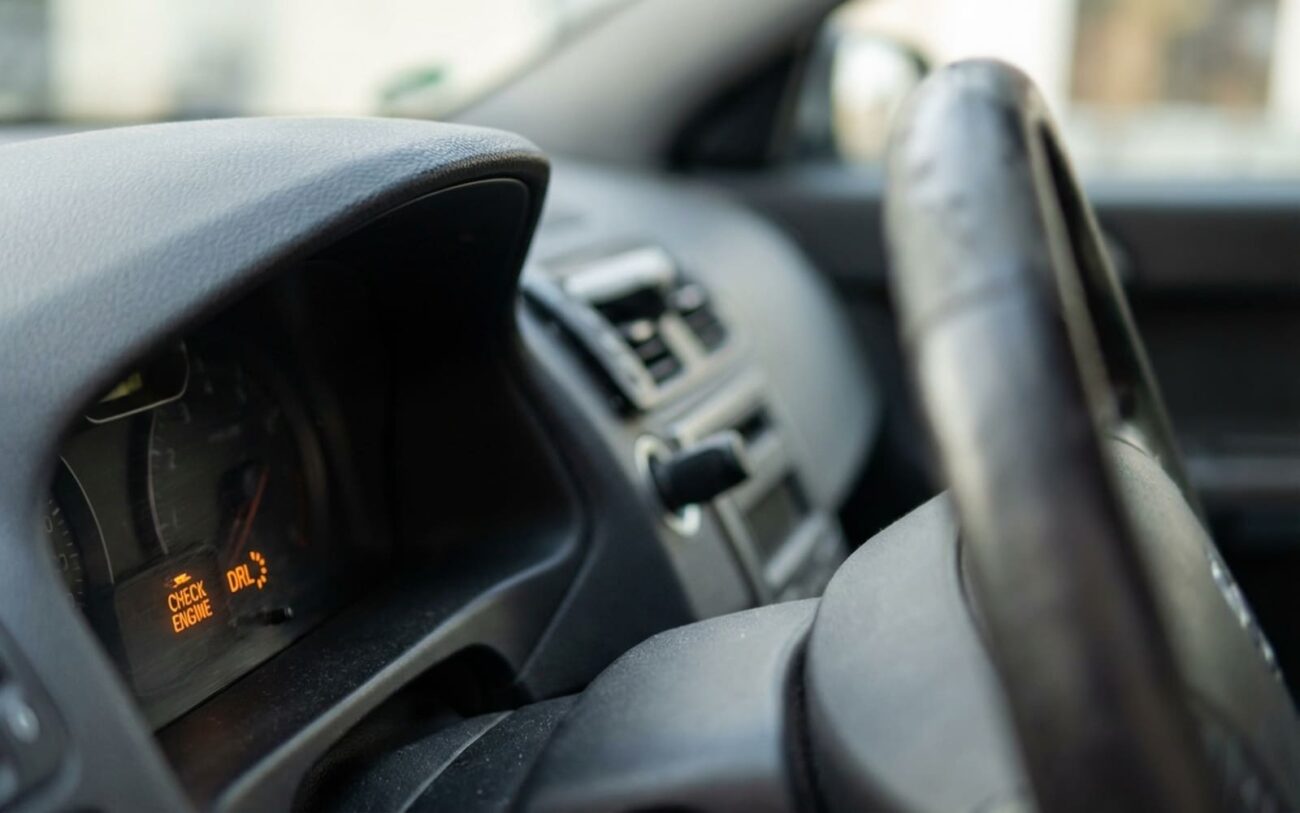
Daytime Running Lights Won’t Shut Off? Let’s Fix This Right.
I’ve seen this a hundred times: customer walks away from their car, turns back, and sees the DRLs still burning bright. Ignition’s off, key’s in the pocket — but the lights are on like the car’s still alive. This isn’t just a “weird quirk.” It’s a parasitic drain waiting to kill your battery. And if you leave it, you’ll come back to a no-start, a tow, and possibly a ruined battery from deep discharge. I’ve pulled too many AGM batteries out of European cars that were cooked by exactly this.
On modern vehicles — especially anything built to ECE Regulation 48 — the Body Control Module (BCM) controls the DRLs. It’s programmed to shut them off 30 to 60 seconds after ignition off. When they stay on? Either the BCM isn’t getting the “off” signal, or it’s getting it — and ignoring it.
Diagnosis: Stop Guessing, Start Testing
You don’t replace a BCM on a hunch. I’ve seen shops do it, charge the customer $1,200, and the lights stay on because it was a short in the harness. Diagnose properly — or you’ll waste time and money.
Here’s my method, step by step:
Step 1: Scan Tool Check — Is the BCM Getting the Signal?
Hook up a capable scan tool — not a cheap OBD2 reader. You need access to BCM live data. Look for “Ignition Status,” “Key Position,” or “Vehicle State.” With the key out, it should read “OFF.” If it still says “ON,” the BCM doesn’t know the car is off. That means the fault is upstream — likely a failing ignition switch or a stuck relay in the ignition circuit. I see this often on older Fords and Jeeps where the ignition switch wears out and floats between positions.
Step 2: Bidirectional Control — Can You Force the DRLs Off?
If the ignition status is correct (“OFF”), go to bidirectional controls and command the DRLs OFF. If they shut off immediately, the BCM’s logic and output driver are working. That means the problem isn’t the BCM — it’s external. Look for a short-to-power in the harness, or backfeed from an aftermarket device like a dash cam or LED light bar wired into the DRL circuit. I’ve found more than a few “security” cameras that were feeding 12V right into the lighting circuit.
Step 3: Multimeter Test — Is the Harness Shorted?
If the DRLs stay on even after the bidirectional command, it’s time to isolate the BCM. Pull the connector, find the DRL output wire (check the wiring diagram — don’t guess), and test that pin in the harness — not the BCM side — with a multimeter.
If you read 12V with the BCM disconnected, you’ve got a short-to-power in the harness. Could be chafed insulation, a pinched wire, or moisture in a connector. If there’s no voltage, the fault is internal to the BCM — the solid-state switch is failed closed.
| Symptom | Likely in BCM | Common External Mimics | Definitive Test to Confirm Source |
|---|---|---|---|
| DRLs on with ignition OFF | Internal solid-state relay failure, software corruption, or failed output driver on BCM circuit board | Faulty ignition switch signal, short-to-power in DRL wiring, backfeed from aftermarket accessories |
1. Check BCM “Ignition Status” in live data 2. Command DRLs OFF via bidirectional control 3. Test DRL output wire at BCM connector (disconnected) with DMM |
What Actually Breaks Inside the BCM?
When the BCM is at fault, it’s usually one of three things — and knowing which helps you decide how to fix it.
1. Failed MOSFET or Solid-State Relay
The DRL circuit is switched by a MOSFET transistor on the PCB. These switch high current, generate heat, and go through thermal cycles every day. Over time, solder joints crack, or the semiconductor fails shorted. When that happens, it’s like leaving a switch stuck in the “on” position. I’ve seen this on GM trucks from 2010–2015 — common failure point.
2. Software or Memory Corruption
The BCM stores its logic in flash memory. A voltage spike — say, during a jump start or from a failing alternator — can corrupt that data. I’ve had modules that wouldn’t shut off lights because the shutdown routine was corrupted. Some manufacturers issued TSBs for this (like FCA on certain Ram models), and a reflash fixed it. But if you don’t have stable power during the flash? You can brick the module.
3. Internal PCB Damage
Moisture, vibration, or a failed voltage regulator can damage the board. I once had a BCM from a Jeep that had dendritic growth between traces — basically a tiny conductive bridge — caused by humidity in the cabin air intake. It created a phantom power path. Not common, but it happens.
Here’s the key:
A blown fuse doesn’t mean the BCM failed — it means there was overcurrent. A separate DRL relay (if used) is external. The BCM might be fine. The real question is: is it receiving the right signal, and is it acting on it? That’s what testing tells you.
Repair Options: What Actually Works
BCM Reflash (Software Fix) Professional Only
Specialist PCB Repair Professional Only
BCM Replacement
Need a temporary fix? Pull the DRL fuse. Check the owner’s manual or fuse box diagram — usually labeled “DRL” or “daytime lights.” But don’t drive like that long-term. DRLs are required by law in many places. No DRLs = failed inspection, possible ticket, and insurance issues if you’re in an accident.
Did It Actually Work? Test This.
Don’t just assume it’s fixed because the lights went off. I’ve had customers come back two days later with the same problem because we didn’t validate properly.
After a reflash: do five ignition cycles. DRLs should come on with ignition, shut off within 30–60 seconds after shutdown. Scan for codes — especially B126F or similar. Clear codes, drive, recheck.
After a BCM replacement or repair: test everything. Door locks, windows, interior lights, wipers, auto headlights. Make sure the immobilizer works — try starting with both keys. And do a parasitic draw test: disconnect negative battery terminal, meter in series, wait 15–20 minutes for modules to sleep. Draw should be under 50 mA. If it’s higher, you’ve still got a drain.
Cost vs. Value: Is It Worth It?
Software Reprogramming
DIY Cost: N/A
Success Rate: >95%
Secondary Risk: Module failure if power is interrupted during flash
Specialist PCB Repair
DIY Cost: N/A
Success Rate: 70–85%
Secondary Risk: Unrepairable damage requiring full replacement
BCM Replacement (New)
DIY Cost: Part: $400–$1200
Success Rate: ~100%
Secondary Risk: Improper programming causing immobilizer lockout or feature loss
Here’s my rule: if the repair cost is over 40% of the car’s market value, and it’s got other aging parts — transmission, suspension, rust — think hard. I’ve seen people drop $1,200 into a 12-year-old VW only to have the turbo fail a month later. Sometimes, it’s not about fixing the car — it’s about not throwing good money after bad.
Prevention: Save Yourself the Headache
You can’t prevent all BCM failures, but you can reduce the risk.
Keep your charging system healthy. Alternator output should be 13.5–14.8 volts. Overvoltage kills electronics. And when you replace the battery? Use a memory saver. Plug it into the OBD2 port or 12V socket. Maintains power to modules, prevents low-voltage resets that can corrupt software. I’ve saved dozens of modules just by doing this.
Cost-Saving Tip
Get in the habit of checking your lights after parking. Turn, look back — do they shut off? If not, investigate. For long-term parking, use a battery monitor. A small, constant drain is often the first sign of a failing module. Catch it early, and you save the battery, the tow, and the headache.
