You’re Not Blind—But Your Car Thinks You Are
I get this call all the time: “My Super Cruise won’t turn on,” or “Why does it keep telling me to keep my hands on the wheel when I’m looking right at the road?”
More often than not, it’s not the driver. It’s the camera.
And no, the system didn’t fail. It’s just blocked—usually by the most innocent-looking part in the cabin: the sun visor.
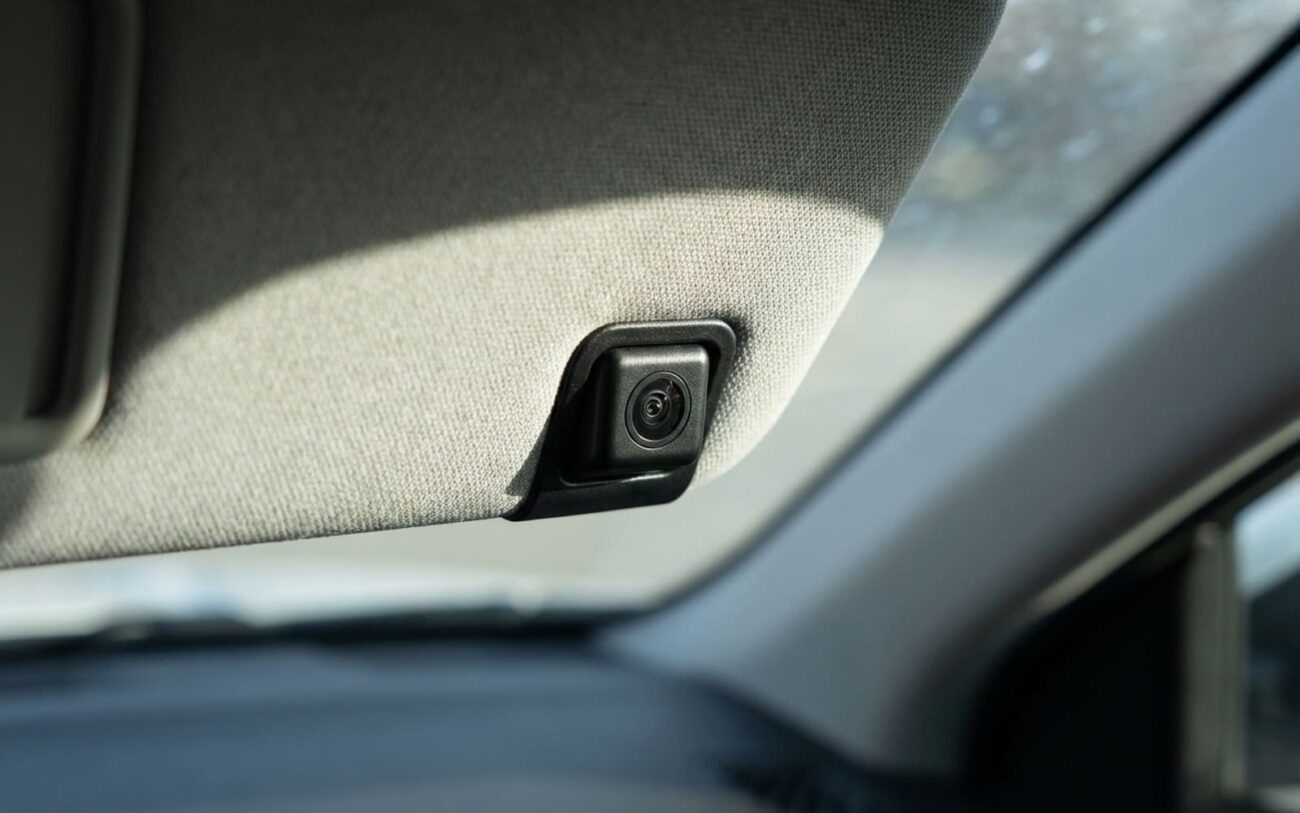
The DMS (Driver Monitoring System) uses an infrared camera—usually tucked near the top of the dash or in the overhead console—to track your eyes and head position. It’s not just for show. If that camera can’t see you, features like hands-free driving, lane centering, and even some forms of automatic braking get disabled.
But here’s what throws people: the warning might say “Camera Blocked,” or it might not say anything at all. You could just get random disengagements or false alerts. I’ve seen drivers pull over thinking they need a software update when all they needed was to flip the visor back into place.
And before you start pulling trim or calling the dealership, check this first: is the visor swung over toward the side window? On models like the 2021+ Mustang Mach-E or the Silverado with Super Cruise, that single motion can cut straight through the camera’s line of sight.
It’s not user error. It’s physics. And it’s fixable.
—
Don’t Guess—Test It Like I Do
I’ve wasted enough hours chasing ghosts in electrical systems to know: rule out the mechanical before you dive into the electronic.
Here’s how I diagnose DMS issues in under five minutes.
First, I grab my phone. Seriously. The front-facing camera can see infrared light—just like the DMS sensor. I prop it up where the camera lives (check the owner’s manual if you’re not sure), point it at the driver’s seat, and take a video.
I start with the visor stowed. Then I swing it out to the side—full extension. If I see a shadow or a hard edge cutting across the upper third of the frame, that’s your culprit.
That test has saved me from unnecessary scan tool time more than once.
But if the view looks clear and the system still glitches? Then I go deeper.
I plug in a capable scan tool—something like a Tech2, Autel MaxiCOM, or GM MDI—and pull live data from the DMS module. I’m not just looking for codes. I want to see the status: is it reporting “View Obstructed,” “Monitoring,” or “Sensor Fault”?
– “View Obstructed”? Physical blockage.
– “Sensor Fault” or “No Signal”? Now we’re talking hardware or calibration.
– Intermittent “Invalid Face Detected”? Could be lighting, but also check for a bent visor casting shifting shadows.
And yes, I’ve seen cases where a dirty windshield tint strip—just that narrow band at the top—blocked the IR signal. Same with a dashcam mounted too high. But 70% of the time? It’s the visor.
—
Why It’s Happening: Three Real Causes
Once I confirm the visor is interfering, I dig into the root cause. And no, “driver error” isn’t one of them. These are mechanical issues—some by design, some by wear.
1. Design Flaw – It’s Not You, It’s the Engineering
On certain GM and Ford models (looking at you, 2020–2022 Escalade and F-150 with BlueCruise), the visor’s swing arc cuts directly through the DMS field of view. The bracket geometry is just off.
There’s a TSB for this. Always check for active bulletins before tearing anything apart. The fix? A revised mounting bracket that changes the pivot angle by a few degrees. It’s a known issue—and it’s covered under warranty if applicable.
2. Bent or Warped Visor – A Millimeter Matters
I’ve pulled visors off rental trucks that looked fine stowed—but weren’t flush. A bent hinge or overstressed arm can leave the visor sitting 3–4mm proud of the headliner. That’s all it takes.
And it’s not always obvious. You have to run your finger along the edge. If it’s not perfectly flat, it’s in the way.
3. Aftermarket Junk – That $10 Extender Costs You $300 in Diagnostics
Clip-on visor extenders, oversized vanity mirrors, sticky phone holders—anything that thickens the profile can intrude into the camera cone.
I had a customer last month who swore his system failed after a car wash. Turned out, he’d added a magnetic organizer to the visor and forgot about it. Removed it—problem gone.
The DMS doesn’t need much space. But it needs all of it.
Clarification:
A dirty lens or failed DMS module is a different repair. We’re talking physical intrusion only. Don’t confuse the two.
—
How to Fix It—And What to Avoid
Here’s the hierarchy of fixes, ranked by effectiveness and safety.
This Is Not a DIY Job
If your vehicle has a known design flaw with a TSB, let the dealer handle it. They’ve got the updated bracket, the trim tools, and the torque specs. You’re not saving money by cracking open the A-pillar cover with a butter knife.
TSB Bracket Replacement Professional Only
Full Visor Replacement Professional Only
Aftermarket Add-on Removal
—
Did It Work? Here’s How to Know
Don’t assume the warning cleared means it’s fixed. Validate it.
Validation Steps
-
Visual Check: Stow the visor. Cycle it down, up, and side-to-side. No warning should appear.
-
Scan Tool: Confirm DMS status is “Active” or “Monitoring.” If it says “Blocked,” something’s still in the way.
-
Smartphone Test: Repeat the camera check. Make sure the entire face is visible in all visor positions.
-
Test Drive: Drive in daylight. Deploy and stow the visor while moving. System should stay active. If it drops out, the fix didn’t hold.
—
Cost vs. Risk: What’s It Worth to Fix It Right?
Let’s be real: time and money matter.
TSB Bracket Replacement
DIY: $20–$50 for the bracket. Shop: $150–$300 with labor. High success rate if TSB applies. Warranty-covered on some models.
Full Visor Replacement
OEM visor: $100–$250. Shop labor adds $200–$250. Aftermarket? Risk warping or poor stowage. I don’t recommend it.
DIY Add-on Removal
Free. Immediate. And often all you need. If you added it, remove it. That’s the fastest win.
Ignoring the issue costs you more than money. Glare fatigue, reduced reaction time, and lost ADAS functionality add up. That’s not in the invoice—but it’s real.
—
Keep It Fixed: My Prevention Routine
In my shop, I tell every customer the same thing: treat DMS warnings like oil lights. Don’t ignore them.
Here’s what I do on my own truck and recommend to others:
– Never mount anything near the top center of the windshield without checking the camera view first. Use the phone test.
– If you use visor extenders or organizers, check monthly that they haven’t shifted.
– After any interior work (sunroof repair, headliner replacement), verify the visor stows flush.
– When the warning pops up, glance up. Is the visor fully stowed? Angled weird? That’s your first diagnostic step.
And if you’ve had the bracket replaced or visor swapped, give it a week of real-world use. Drive into the sun. Use the visor. Make sure the system holds.
Because at the end of the day, DMS isn’t just a gadget. It’s part of the safety net. And so is that little flap of plastic and fabric blocking the sun.
They both need to work. Together.
