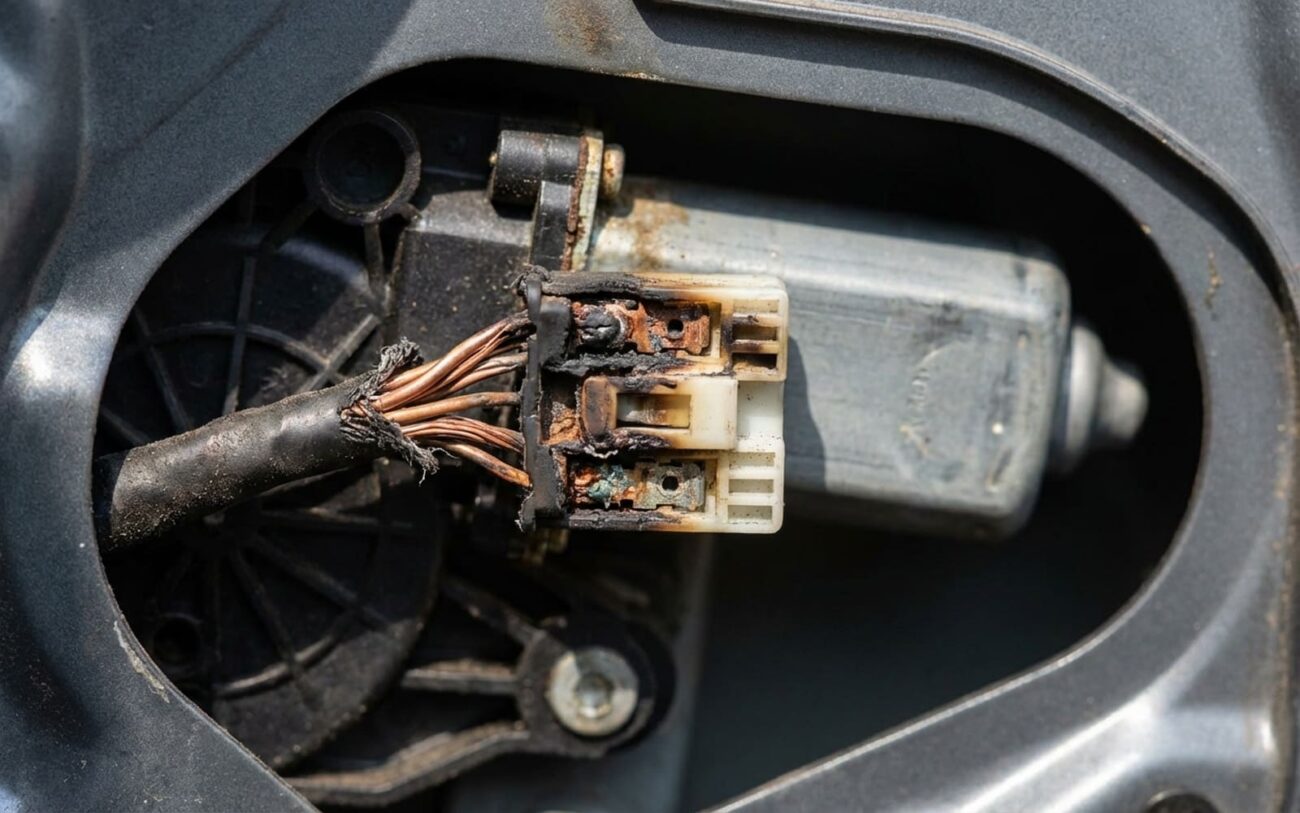
When every window, lock, and mirror on a car dies at once, it’s not bad luck. It’s electricity doing exactly what it should—shutting down when something’s wrong. I’ve torn into hundreds of these cases over the last 25 years, from beat-up Civics to luxury SUVs. And let me tell you: the root cause is almost always the same. A single blown fuse protecting a shared circuit. But the real story—the one that keeps you from replacing fuses all day—is why it blew in the first place.
It’s Not Magic—It’s a Shared Circuit
Modern cars don’t run individual power wires to every switch in the door. That’d be a nightmare. Instead, there’s one main power feed—usually 12V from a single fuse—and a common ground. That powers all the door modules, window motors, locks, even mirror controls. So when that fuse blows? Everything goes dark. All at once.
I’ll say this once: if all your door electronics die together, don’t start swapping switches or motors. Check the fuse first. It’s on the cover of the fuse box—look for “Power Windows,” “Door Modules,” or sometimes “Accessories.” If it’s blown, you’ve got a short. But replacing the fuse without finding the short? That’s just throwing parts at the problem. And trust me, I’ve seen guys burn up BCMs doing that, especially on GMs and Fords. Those modules don’t like overcurrent.
And here’s what most people miss: the warning signs. If one window started acting up—slow to move, groaning, hesitating—that wasn’t a fluke. That was the motor failing. Internally. And when a motor fails like that, it can short to ground. Hit the switch? You get a massive current surge. Fuse blows. Done.
How to Find the Real Culprit
Blown fuse means excess current. But where’s the short? Could be the motor, the wiring in the door boot, a switch, or even the BCM. You can’t guess. You test.
Start here: pull the fuse. Use a multimeter to check resistance between the load side of the fuse holder and ground. If you see less than 1 ohm? That’s a dead short. Something’s dumping current straight to ground. Now the hunt begins.
The fastest way to isolate it? Disconnect the motor on the door that was acting up. Not the switch. The motor. You’ll need to pop the door panel, but it’s worth it. Find the connector at the door jamb—the rubber boot where wires flex every time you open the door. Unplug it. Now reinstall the fuse.
If the other windows and locks come back? The fault is downstream. In that door. Most likely the motor. If they’re still dead? The short’s upstream—possibly in the body harness, a shared ground, or the BCM output. That’s a whole different job.
Now go back to the disconnected motor. Test it: set your multimeter to ohms, touch one probe to the motor’s power terminal (at the connector), the other to chassis ground. Less than 1 ohm? Motor’s shorted. Replace it.
Why Motors Fail (And It’s Not Just Age)
Window motors don’t just die from old age. When they short out, there’s usually a reason. I’ve pulled apart dozens. Here’s what I find.
Moisture. Water gets in through cracked seals, clogged drain holes, or torn vapor barriers. Once it’s inside the door, it pools at the bottom. The motor’s sitting right there. Over time, water creeps into the housing. The enamel on the armature windings corrodes. Insulation breaks down. Windings touch the case. Boom—short to ground. The motor looks fine on the outside. But inside? Rust everywhere.
Brush debris. Carbon brushes wear down. They shed dust. In a sealed motor, that conductive gunk builds up on the commutator or bridges the rotor and housing. If it bridges the gap? Short circuit. Especially when there’s moisture. You won’t see this until you crack the motor open.
Seizure from binding. This one’s preventable. If the window regulator binds—worn rollers, bent track, no lubrication—the motor stalls. A stalled motor draws 3 to 5 times normal current. That heat cooks the winding insulation in seconds. Do it enough, and the insulation fails. Short follows. I see this all the time on older Toyotas and GMs. The regulator wears out first, kills the motor, then takes out the fuse. There are TSBs on this for certain Ecotec and LS engines. Check your model.
How to Fix It—Right
If the short’s in the wiring pigtail—the few inches between the door jamb and motor—you can splice it. Cut out the bad section, use crimp connectors, seal with heat shrink. Add dielectric grease. Route it like factory. But only if the damage is obvious. If you’re guessing? Replace the whole harness.
More likely, the motor itself is shot. Replace it. You can buy just the motor, or a full regulator assembly. I usually go with the full kit on older cars—regulators wear out too, and you’re already in there.
Door panel comes off first. Use a trim tool. Don’t pry with a screwdriver. You’ll break clips. Then disconnect the glass from the regulator—most require lowering it slightly, removing two bolts. If you don’t follow the procedure, the window shifts, comes off track. Then you’ve got a real mess.
Reinstall bolts to 8–12 Nm. Over-tighten and you’ll strip the regulator mounts. I’ve seen it. Torque matters.
And if you’re in a bind? Unplug the bad motor at the door jamb, tape the ends, seal with dielectric grease. That’ll restore power to the rest of the system. But that window’s dead. And open connectors invite corrosion. Plus, some states won’t pass inspection if a window doesn’t work. So it’s a band-aid. Not a fix.
Did It Really Work? Test Like a Pro
Don’t just roll the windows up and call it good. Test it.
Check all door functions—locks, mirrors, windows. The repaired one should move smooth. No grinding. No hesitation.
For wiring repairs: measure voltage drop. With the window running, check voltage at both ends of your splice. More than 0.5V difference? You’ve got resistance. Bad connection. Fix it.
Best tool for this? A clamp-on ammeter. Measure current draw on the motor’s power wire. Normal is 5–15 amps. If it’s pulling over 20? Something’s binding. Maybe the regulator’s misaligned. Maybe the track’s dirty. Either way, fix it now. Because that motor will overheat. And we’re back to square one.
