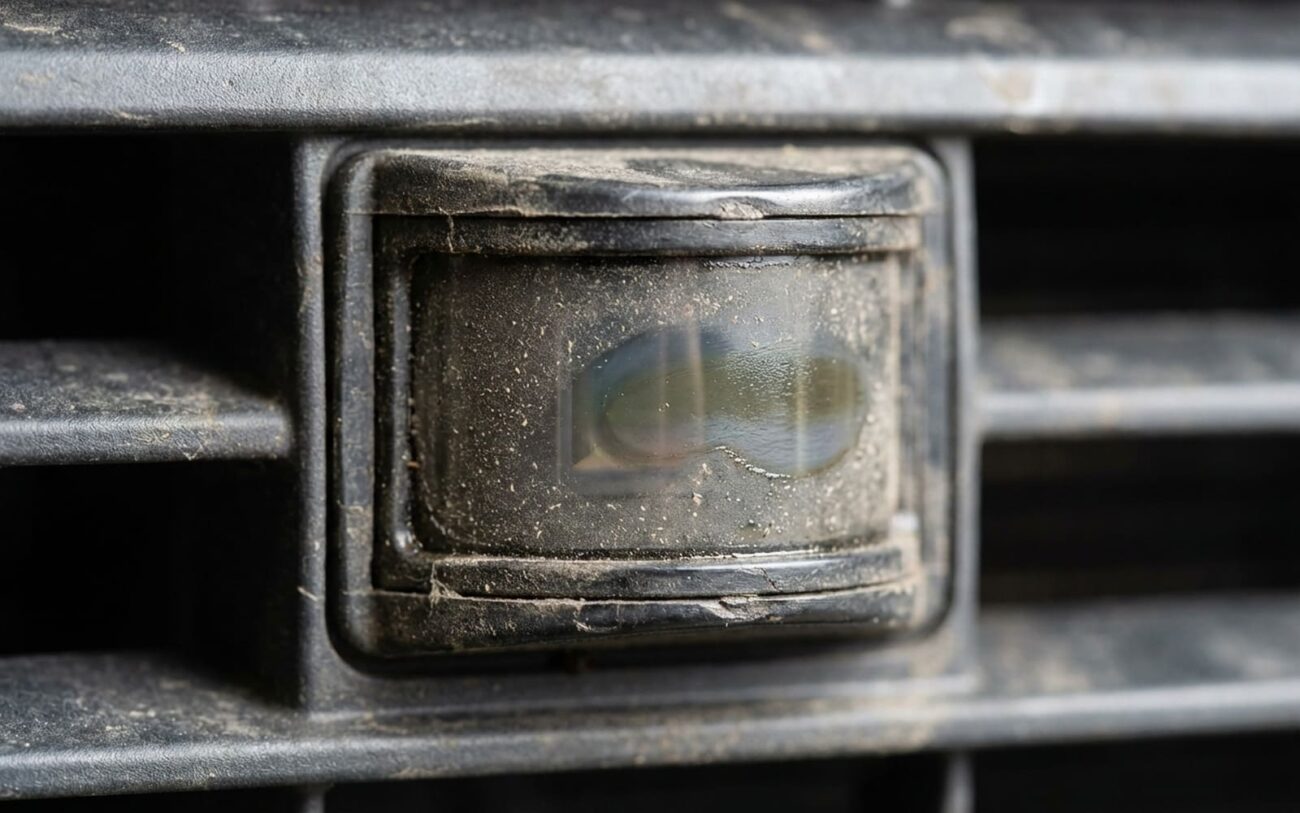
If your Volvo’s City Safety system works fine during the day but goes blind at night—no warnings, no automatic braking when pedestrians cross—that’s not a glitch. It’s a failure in the infrared illumination system. I’ve seen this on dozens of SPA-platform Volvos in the last five years, and it’s not the camera. It’s not the radar. It’s the invisible light your car uses to “see” in the dark. When that fails, you’re driving without a critical safety net.
It’s Not the Camera—It’s the Light It Needs
The front-facing camera on your Volvo doesn’t work like your eyes. At night, it depends on an active infrared projector—usually built into the headlight assembly—to flood the road ahead with invisible IR light. Without that light, the camera sees nothing. It’s like trying to read a book in a pitch-black room with no lamp.
And here’s the trap: the system might still work during the day because there’s enough ambient light. So you get no warning until it’s dark—and by then, you’re on your own.
I’ve had customers come in saying, “The camera must be bad.” But when I pull up the fault codes with VIDA, 80% of the time it’s pointing at the Active Bending Light (ABL) module or the IR projector circuit. The camera’s fine. It’s just sitting there in the dark, waiting for light that never comes.
How to Confirm It’s the IR System
Don’t guess. Test.
First, rule out the obvious: a dirty windshield, misaligned camera, or blocked radar grille. Those affect performance all the time—not just at night. If the system works in daylight but drops out after sunset, you’re dealing with the IR system.
| Symptom | Points to IR System | Looks Similar But Isn’t | How I Confirm It |
|---|---|---|---|
| No pedestrian detection at night only | IR projector not emitting—failed emitter, fogged lens, or dead control circuit. | Camera lens obstruction, software hiccup, or temporary radar blockage. |
Hook up VIDA. Check for ABL- codes. Then, at night, use a smartphone with IR sensitivity (most front cameras work) to look at the headlight output from 5 meters. No grid pattern? IR system is dead. |
| “Front Sensor Service Required” message | Fault logged in ABL module—likely IR driver circuit or communication failure. | Camera module (CM) fault or radar sensor issue. |
Run a full VIDA scan. ABL- codes mean the headlight/IR system is at fault. CM- or CEM- codes point elsewhere. Never assume. |
| Reduced performance in all conditions | Severe internal lens degradation or complete projector failure. | Camera or radar misalignment, physical obstruction, or software degradation. |
Try a VIDA camera calibration. If it fails, check the IR lens inside the headlight for cloudiness, moisture, or cracks. No visible damage? Pull the codes. |
Why the IR System Dies
The IR projector is sealed inside the headlight. No user-serviceable parts. It fails for three main reasons:
First, thermal stress. The IR emitter—usually a high-output LED or laser diode—cycles on and off constantly. Each time, it heats up and cools down. Over time, that degrades the internal lens or reflector. I’ve cracked open failed units and seen the plastic yellowed from the inside, like old headlights. Once that happens, the beam scatters. The camera gets weak return data. System disables itself.
Second, the emitter itself burns out. It’s a semiconductor—same as any LED. They don’t last forever. I’ve seen them fail as early as 60,000 miles in harsh climates.
Third, the ABL module’s driver circuit fails. Voltage spikes, moisture ingress, or plain old age can kill the control board. I’ve pulled units from cars in coastal areas where salt air ate through the seals. Corrosion on the circuit board—game over.
One thing to catch early:
If you see condensation inside the headlight, that’s not an IR problem—it’s a seal failure. Moisture blocks the beam and can fry the electronics. But replacing the headlight won’t fix it if the vent system is clogged. I check the breather tube on every one of these now.
And yes, I’ve seen software cause this too—especially on 2015–2018 XC60 and S90 models. A bad IR output calibration in the firmware would trigger a “low signal” fault. A VIDA software update fixed it. That’s why I never skip diagnostics. You could be buying a $2,000 headlight when all you needed was a 20-minute software refresh.
How to Fix It—Without Wasting Money
THIS ISN’T A DIY JOB
Beyond cleaning the lens, this is professional territory. You need VIDA, calibration tools, and the right procedures. No shortcuts.
Clean the Lens—Seriously, Try This First
Replace the Headlight Assembly Professional Only
Replace the ABL Module Professional Only
Did the Fix Work? Don’t Guess—Test.
Just because the warning light’s gone doesn’t mean it’s fixed.
After a lens clean: point the car at a wall at night. Use your smartphone’s front camera. You should see a faint, flickering grid pattern. If one side is dim or missing, the IR system is still failing.
After a headlight or ABL replacement: three steps. First, scan with VIDA—no active codes. Second, verify the IR pattern is visible. Third, run the “City Safety Functional Test” in VIDA. It simulates targets and checks system response. Skip any of these, and you’re rolling the dice.
I had a shop replace a headlight last year—no calibration. Car came in with AEB not working. VIDA showed the camera thought it was aimed at the sky. That’s a $2,000 mistake.
What This Will Cost You
Exterior Lens Clean
DIY. Shop labor: $50–$100. High success rate if dirt was the only issue.
Headlight Assembly Replacement
Parts & labor. Requires VIDA calibration. Skip it, and the system won’t work. Period.
ABL Module Replacement
Parts & labor. Only on select models. Must be programmed with VIDA.
Real talk: if the repair costs more than 40% of your car’s value, think hard. These systems are integrated. If the IR projector failed, the camera, radar, and ABL module are all aging together. I’ve seen customers fix one thing, then face two more failures within a year. That’s when it’s time to ask: is this car still worth the investment?
Keep It Working: Simple Habits
Wash the front end regularly. Salt, mud, and bug guts block sensors. Use a non-abrasive cleaner. Don’t pressure-wash directly at the headlight or grille.
Test It Every Few Months
Park at night, point at a wall, use your phone’s front camera. If you see the grid, you’re good. If not, catch it early. It’s like checking oil or tire pressure—small effort, big payoff. I do this on my own car. And yeah, it’s saved me more than once.
