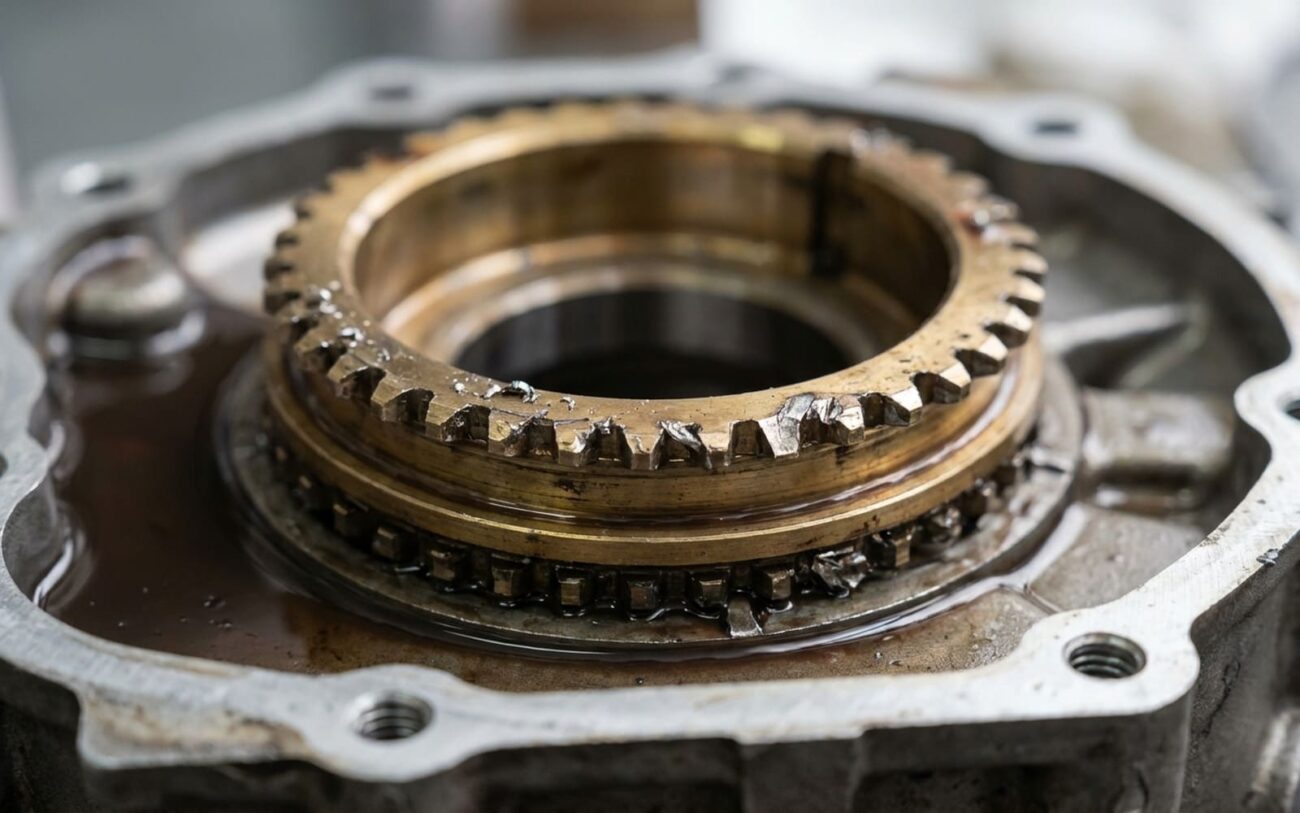
Alright, let’s talk about that awful grinding noise when you shift gears in a manual transmission. I’ve spent over 25 years with my hands inside these gearboxes, and I can tell you, that sound is usually the transmission trying to tell you it’s got a problem. Most times, it points straight to the synchronizers. But before you panic and rip the whole thing apart, we need to be sure. It’s not always what it seems.
The Grind: What It Sounds Like and When It Happens
When a customer comes in complaining about grinding, the first thing I ask is, “When exactly does it happen?” That timing is everything. If you’re hearing a metallic grinding or grating sound precisely as you move the shifter into gear—clutch pedal fully down, shifter in motion—and it stops the moment the gear clicks in or you pull back to neutral, that’s almost always a synchronizer issue. The synchro’s job is to get the gear and the shaft spinning at the same speed so they can mesh smoothly. When it can’t, you get that nasty gear clash.
Alongside the noise, you’ll often feel resistance at the shifter. It’s like the gear is fighting you, especially when you’re trying to downshift into, say, second or third at higher engine speeds. That’s the synchronizer ring—usually brass, carbon, or some other friction material—that’s worn smooth or damaged. No friction, no speed matching, no smooth shift.
How I Diagnose It: Separating Synchro Failure from Other Problems
Before I even think about pulling a transmission, I’ve got to rule out other culprits. A clutch system that isn’t fully disengaging can mimic synchro grinding perfectly. If the input shaft keeps spinning when you press the clutch pedal, the gears can’t mesh, and you get that grind. Common causes for this include a failing clutch master or slave cylinder, air trapped in the hydraulic system, or a warped pressure plate. The trick is knowing how to tell the difference.
The Double-Clutch Test: My Go-To Field Diagnostic
Here’s how I usually narrow it down. With the car stationary and the engine running, press the clutch fully to the floor and try to engage first or reverse. If you get a grind, that tells you the input shaft isn’t stopping completely. It could be the clutch, or it could be internal. But here’s the more telling part:
While driving, try shifting gears without using the clutch at all. You’ll need to carefully match the engine RPM to the road speed for the gear you want. This takes practice, but if you can get the gear to engage smoothly without grinding when you rev-match perfectly, then your clutch system isn’t disengaging properly. If it still grinds, even with perfect rev-matching, then you’re almost certainly looking at worn synchronizers. That’s a pretty definitive test for me.
Listening for Other Noises
Other noises can really throw you off. A whining or whirring sound in neutral that disappears the moment you press the clutch pedal? That’s typically your input shaft bearing. If the noise only appears when you depress the clutch pedal, you’re likely hearing the throwout (release) bearing. And a low rumble that changes with engine RPM but goes away when the clutch is engaged? That points to a pilot bearing. A good mechanic’s stethoscope is invaluable here. I’ll also always drain the transmission fluid and inspect it. Any metal flakes or chunks on the magnetic drain plug are a dead giveaway of internal damage that’s beyond just synchro wear.
| Symptom | Likely Synchronizer Issue | Common External Mimics | How I Confirm It |
|---|---|---|---|
| Grinding during shift engagement | Worn or broken synchronizer ring, damaged shift sleeve | Clutch drag (failed master/slave, air in system, warped pressure plate) |
Stationary Test: Engine running, clutch fully depressed. If it grinds on engagement, it’s either internal or clutch drag. Road Test: Shift without clutch, matching RPM. Smooth engagement = clutch fault. Grinding = synchro issue. |
| Gear “pop-out” under load | Worn synchronizer sleeve teeth or gear dog teeth | Bent shift fork, worn shift linkage, weak detent springs |
First, check and adjust external linkage. If pop-out persists, it’s almost certainly internal wear. Final confirmation requires disassembly and visual inspection of the gear engagement surfaces. |
| Whirring/whining in neutral that changes with clutch | Input shaft or countershaft bearing failure | Throwout (release) bearing noise |
Noise in neutral that goes away when clutch is pressed = input shaft bearing. Noise only when clutch pedal is depressed = throwout bearing. |
| Constant grinding noise in all gears, even when not shifting | Severe bearing failure causing gear misalignment, or major internal component damage. | Pilot bearing failure |
Pilot bearing noise usually varies significantly with clutch position. Major shaft bearing noise, or gear damage, correlates with shaft speed and persists regardless of clutch engagement. This kind of noise usually means the transmission needs to come out for verification. |
Why Synchronizers Fail: The Root Causes
When it comes down to actual synchronizer failure, I see three main culprits:
- Normal Wear: Just like brake pads, the conical friction surface on the synchronizer ring wears down over time. Thousands of shifts eventually smooth out that surface, reducing its ability to create the necessary drag to match speeds. It’s just old age, really.
- Mechanical Damage: The small blocking teeth on the synchro ring or the mating shift sleeve can get chipped, rounded, or completely broken off. This almost always happens from forced shifting, especially aggressive downshifts without proper rev-matching. People trying to slam it into gear, or “power shifting,” are basically asking for this.
- Fluid Condition: Manual transmission fluid (MTF) isn’t just oil; it’s a carefully engineered lubricant with specific friction modifiers that are critical for synchro function. Using the wrong fluid, or running fluid that’s degraded, contaminated with water, or full of debris, can accelerate wear dramatically. I’ve seen transmissions start getting notchy shifts long before any grinding just because the wrong fluid was put in.
Design Limitations & External Factors:
Some vehicles just have known design quirks. For instance, certain Dodge Challenger and Charger models have had service bulletins addressing 2nd gear grind due to insufficient synchronizer engagement force. The fix from the factory was often an updated synchronizer component. But here’s what’s not a synchro issue: a leaking slave cylinder, bent shift linkage, or simply a low fluid level. Those are external problems that affect how the transmission operates, but replacing the synchros won’t fix them. You have to address the root cause, not just the symptom.
Your Repair Options: From Simple to Serious
Once we’ve figured out what’s really going on, we can talk about fixing it. Your options range from pretty simple to a full-blown transmission overhaul.
Fluid Change DIY Feasible
Synchronizer Friction Modifier Temporary / Last Resort
Single Synchro Set Replacement Professional Only
Full Rebuild or Assembly Swap Professional Only
Post-Repair Validation: Proving the Fix
After any repair, proper testing is non-negotiable. If you just changed the fluid or added an additive, take the car for a good 50-mile test drive. Hit city streets, highways, and try some aggressive (but safe) shifts. If that grinding returns—even once—the internal damage is deeper than you thought. Don’t ignore it.
For synchronizer replacement or a full rebuild, validation starts right on the bench. I always make sure the transmission rotates freely in all gears when turned by hand, and that the shift forks engage smoothly with a solid “click.” Once it’s installed, I road test it thoroughly—cold and hot. There should be absolutely zero grinding or notchiness. I even use an infrared thermometer to check the case temperature post-test; abnormal heat can suggest binding or drag. After about 500 miles, I’ll drain a fluid sample. You should see clean fluid with maybe a fine metallic sheen on the magnetic plug—that’s normal bedding-in wear. But if you see shiny flakes or chunks, something’s still failing internally, and it’s time to dig back in.
Cost, Risk & The Hard Truth About Repair Decisions
Let’s talk real numbers, because this is where the rubber meets the road. Repair costs vary widely, and so does the risk of failure. Here’s a breakdown of what I typically see:
| Repair Type | DIY Cost (Parts) | Shop Cost (Est.) | Success Rate | Secondary Risk if Failed |
|---|---|---|---|---|
| Fluid Change | $50 – $150 (OEM fluid) | $100 – $300 | High for early wear cases only | None, if correct fluid used. |
| Single Synchro Set Repair | $200 – $600 (parts kit) | $1,200 – $2,500 | Very High if diagnosis is correct | Undetected bearing wear can lead to repeat failure. |
| Full Transmission Rebuild | $1,000 – $2,500 (master kit) | $2,500 – $4,500+ | High when done by specialist | Incorrect assembly risks immediate, catastrophic damage. |
| Remanufactured Unit Swap | $1,500 – $3,500 (core exchange) | $3,000 – $5,500+ | Very High | Typically includes a warranty, reducing long-term risk. |
My Economic Rule of Thumb
Look, if the repair cost is going to exceed half the vehicle’s current trade-in value (check KBB or NADA), and the car isn’t some rare collector’s item or deeply sentimental, you need to seriously reconsider the investment. I’ve seen too many people pour $4,000 into a $6,000 car, only to face another major issue a few months down the road. Sometimes, the smarter move is to redirect that money toward a more reliable vehicle. It’s a tough call, but it’s often the right one.
Prevention & Monitoring: Keep That Gearbox Happy
Preventing grinding gears really comes down to two things: using the correct manual transmission fluid and driving with care. The fluid isn’t just some optional lubricant—it’s absolutely critical. The wrong MTF can destroy synchronizers quickly because its friction properties aren’t compatible with your transmission’s design. Always, always follow the OEM specification in your owner’s manual.
Best Practices for Longevity
-
Learn to rev-match: This is huge. Blip the throttle during downshifts to align engine and transmission speeds. It dramatically reduces synchro load and makes shifts smoother. Your transmission will thank you.
-
Avoid “crash” shifting: Forcing unsynchronized downshifts—especially from fifth to second at speed—puts tremendous stress on those synchronizer teeth. Don’t do it.
-
Annual fluid checks: If your model has a dipstick or fill plug, check your transmission fluid annually. Fresh MTF is usually clear to amber; dark, burnt-smelling, or milky fluid is a major red flag.
-
Monitor for glitter: When you drain the fluid, always check for metallic glitter. A fine sheen is normal, but anything resembling glitter or chunks is a sign of internal wear. Catching this early with a fluid change can sometimes prevent the first grind from ever appearing.
