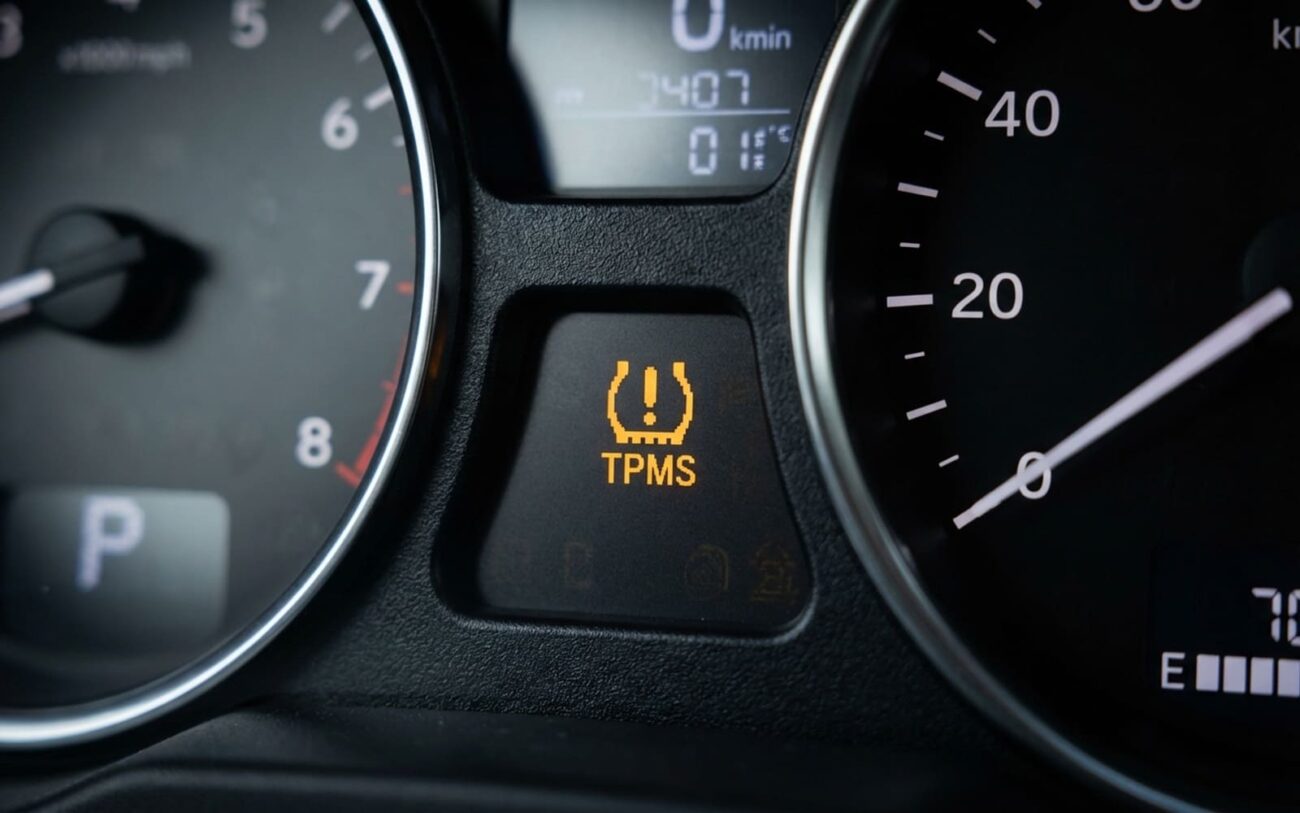
TPMS Light On After New Wheels? Here’s the Real Story
I’ve seen this a hundred times: customer walks in, fresh wheels gleaming, and points at the TPMS light like it’s mocking them. It’s not the car’s fault. It’s not some mystery. It’s almost always one of four things—missing sensors, damage during install, wrong sensors, or signal blockage. Let’s cut through the noise and get you back to a clean dash.
What the TPMS Light Actually Means
A solid TPMS light means the system is up, but it’s missing data. One or more sensors aren’t talking. Could be they’re gone, dead, or just not recognized. If the light flashes for 60 seconds after startup and then stays on? That’s a system fault. The car tried to talk to the sensors and got nothing back.
On cars with a digital tire pressure readout, if you’re seeing dashes, zeros, or “N/A,” that’s your confirmation. No signal. And that means no low-pressure warnings. You’re flying blind. I’ve seen tires drop to 18 psi with no alert—tread wearing unevenly, fuel economy tanking, and the driver has no idea. It’s not just inconvenient. It’s unsafe.
Diagnose It Right—Don’t Guess
You just got new wheels. The light came on. That’s your clue. But don’t assume. You need to know: are the sensors there? Are they alive? Are they speaking the right language?
Here’s how I do it in the shop: grab a TPMS scan tool. Walk around the car, activate each sensor with the low-frequency trigger. If all four respond, they’re present and functional. All you need is a relearn. If one doesn’t answer? Could be missing, damaged, or battery dead (common if sensors sat in a drawer for months).
If the tool reads the sensor but the car doesn’t recognize it? Protocol mismatch. Like handing a USB-C drive to a laptop with only USB-A. Looks like it should fit. Doesn’t work.
Root Causes—What Actually Failed
After 25 years, I can tell you: four things kill TPMS after a wheel swap.
No sensors installed. Simple as that. Most aftermarket wheels ship bare. No sensors. If you or the shop didn’t install them, the light comes on. Not a defect. Just an oversight.
Damage during mounting. TPMS sensors have a valve stem that doubles as an antenna. If the tech uses a standard air chuck, it can snap. Drop the wheel? Same result. Overtighten the retainer nut? The housing cracks. These aren’t repairable. They’re done. I’ve seen brand-new sensors killed in under five minutes by an aggressive tire machine operator.
Incompatible sensors. Aftermarket doesn’t mean universal. Your car expects a specific signal—315MHz or 433MHz, and a specific protocol (like those used by GM, Ford, or Toyota). Plug in a sensor that speaks the wrong dialect, and it’s silence. Budget sensors are especially bad here. I’ve had to replace three sets on a single 2020 Tacoma because the “universal” ones couldn’t hold a signal.
Signal interference. Some wheels block the signal. Thick metallic coatings, carbon fiber liners, even certain center caps can act like a Faraday cage. I had a customer with a set of forged Monroes—beautiful wheels, but the TPMS signal couldn’t get through the brake dust shield. Took us three tries to find a sensor with an external antenna that worked.
And let me be clear: the car’s TPMS module doesn’t suddenly fail when you swap wheels. That’s not how this works. If the light came on after the install, the problem is in the wheels or sensors. Not the car’s brain.
How to Fix It—No Shortcuts
No sensors installed Professional Only
Damaged sensor Professional Only
Incompatible sensor Professional Only
Signal interference Professional Only
If you can’t fix it now? Do manual checks. Use a calibrated gauge every time you drive. The light stays on. It’s annoying. But it beats a blowout. Just don’t make it permanent—especially in states like California, Texas, or New York, where a working TPMS is required for inspection.
Did It Work? Here’s How to Know
Don’t just trust that the light went off. Validate it.
To Validate the Repair
-
1. Drive 15–20 minutes over 15 mph. The system needs motion to wake up and sync.
-
2. Check the dash. Light should be off. If your car shows pressures, they should match your gauge (±1 psi).
-
3. Have a tech scan the OBD2 port. Confirm all four sensor IDs are recognized and active. That’s the gold standard.
I’ve seen too many cases where the light went out, but one sensor never synced. The car thinks it’s fine. It’s not. Don’t skip the scan.
What It’ll Cost—Real Numbers
Here’s what you’re looking at, based on what I see every day:
Diagnosis only (no repair)
Most shops waive this if you do the repair.
New OEM-spec sensors installed (tires already on)
Higher if specialty tools needed to avoid breaking bead.
New sensors + tire dismount/remount
Includes mount, balance, disposal.
Replace incompatible sensors + reprogram
Programming adds labor; cloning helps avoid coding issues.
If the TPMS repair costs more than 20% of the wheel price, you didn’t plan right. Some older car owners live with the light and do manual checks. That’s their call. But know this: it can fail inspection, and you’re giving up real-time safety alerts.
Pro Tip: Buy Smart Next Time
Ask the seller: “Do these wheels come with TPMS sensors installed and programmed?” If not, budget for it. And don’t assume your old sensors will survive removal—especially if they’re over 5 years old. The rubber seals dry out. I’ve had them crumble in my hand.
Prevent It Next Time
When shopping for wheels, get the TPMS details upfront. Use a trusted supplier with a fitment guide. Enter your exact year, make, model, trim. Confirm frequency and protocol. Avoid “universal” sensors unless you know they’re programmable.
After any tire work—rotation, flat repair, new tires—do the relearn. Some cars do it automatically. Others need a button press or scan tool. And take a test drive. If the light’s still on, go back. It’s easier to fix when the shop still has your wheels.
One last thing: if your car has ADAS—Lane Keep, Blind Spot, AEB—TPMS matters more than you think. Wrong tire pressure throws off camera and radar calibration over time. So a working TPMS isn’t just about tire safety. It’s about keeping your driver aids accurate. I’ve seen shops miss this for months.
