Speedometer Dead? Odometer Frozen? Here’s How I Diagnose It – No Guessing
Look, I’ve been turning wrenches for over 25 years, and when a customer walks in saying their speedometer’s dead and the odometer hasn’t moved in weeks, the first thing I do is stop them from replacing the instrument cluster. That’s usually not the problem. And throwing parts at it? That’s how you waste money and still drive blind.
There are two systems here: one creates the speed signal, the other displays and stores it. Confuse them, and you’ll chase your tail. Let me break it down the way I do in my shop—symptom by symptom, test by test.
Step 1: What’s Actually Broken? (It’s Not Always Obvious)
Start with the symptoms. I’ve seen every variation—speedo dead, jumping, or working fine while the odometer resets. Each tells a different story.
No speedometer movement, odometer frozen.
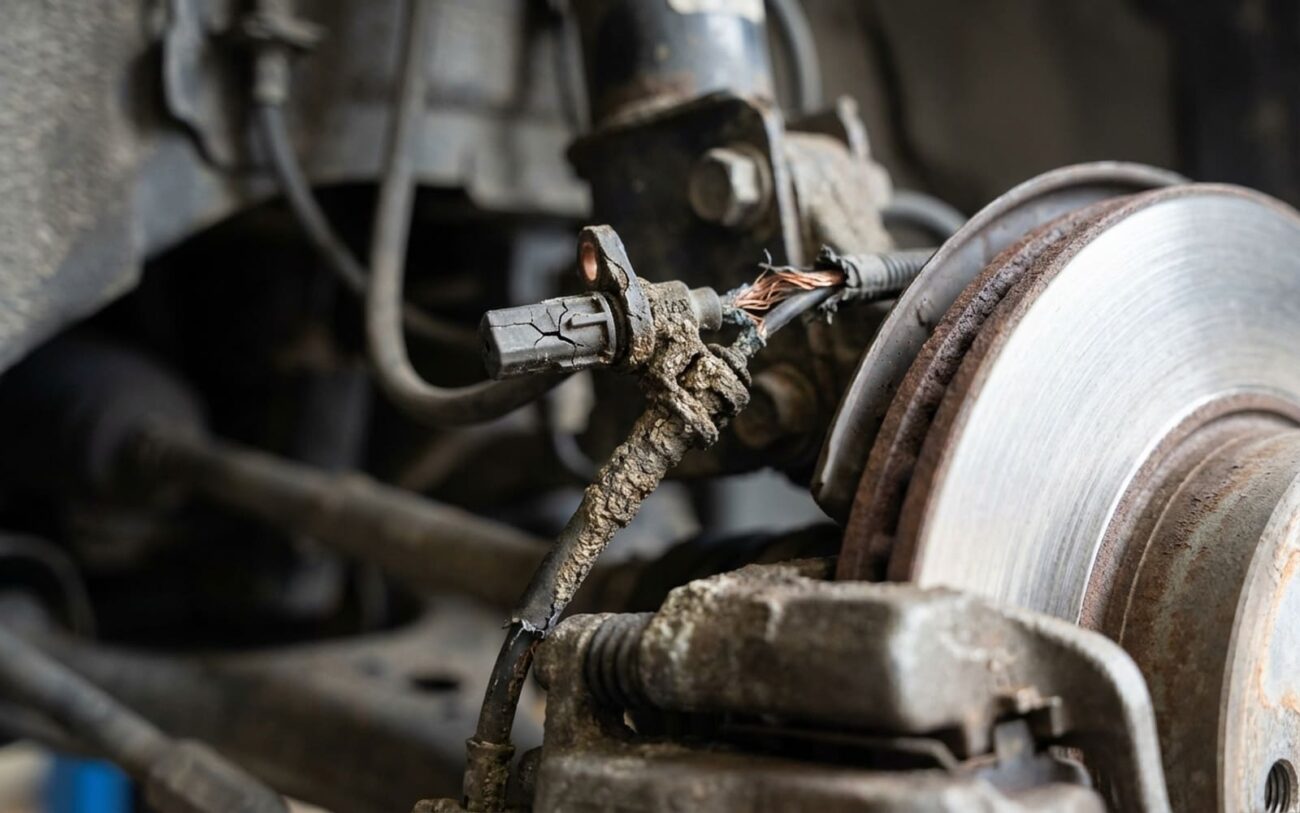
This screams VSS circuit failure. The signal’s not being generated. But don’t just yank the sensor—check the whole chain. I’ve had guys replace three sensors only to find a chipped tone wheel on the output shaft. The sensor was fine; the signal source was gone.
On the 2013–2018 Silverados, the VSS mounts on the rear of the transmission. Road salt eats the connector, corrosion sets in, and boom—intermittent signal. I always pull it, clean the bore, inspect the O-ring, and check for pitting on the pins.
Speedometer works, but odometer won’t increment.
Now we’re in cluster territory. The PCM is getting speed data—your ABS, cruise, and transmission are all fine—but the odometer’s frozen. That means the signal is arriving, but the cluster can’t store it. This is 100% an internal electronics issue. No amount of sensor replacement fixes this.
I see this a lot on 2008–2013 Fords. The EEPROM chip wears out from constant write cycles. Or worse, the solder joints under the memory chip crack from thermal cycling. You’ll need a scan tool to confirm: monitor the Vehicle Speed PID. If it matches GPS speed, but the odometer doesn’t move? Cluster’s the culprit.
Odometer resets to zero or shows wrong mileage.
This isn’t a VSS problem. This is a dead giveaway that the cluster’s backup power supply failed. Most clusters use a supercapacitor (usually 0.47F, 2.5V) to hold memory during battery disconnects. When that dries out or leaks—common in hot climates like Arizona or Texas—the mileage resets every time the battery’s disconnected.
And no, a normal battery replacement shouldn’t cause this. If it does, that capacitor was already dying. I’ve tested dozens: swollen, bulging, or just reading 0.1F on an ESR meter. Game over.
Step 2: Confirm with Testing – Don’t Guess
I don’t care what the code says—P0500 (Vehicle Speed Sensor “A” Malfunction) is a starting point, not a diagnosis. You need live data.
Test 1: Scan Tool Check
Hook up a capable scan tool and pull up the Vehicle Speed PID. Drive the car. If the PID reads 0 mph while you’re moving, the issue is upstream—VSS, wiring, or tone wheel. If it matches GPS speed, the problem is downstream—in the cluster.
On some Toyotas, a failing ABS module can corrupt the speed signal on the CAN bus. So if the VSS PID is erratic, check ABS codes too. Don’t assume it’s the transmission-mounted sensor.
Test 2: VSS Output Check (Magnetic Inductive Type)
Unplug the VSS. Set your multimeter to AC voltage. Spin the wheel by hand (or put it on a lift). You should see 0.5–2V AC, increasing with speed. No signal? Check the air gap—most are 0.5–1.5mm. Too wide, and the signal drops out. Too tight, and you risk rubbing.
And inspect the tone wheel. I use a borescope. Missing or chipped teeth? That’s your real problem. I’ve seen this on Acuras where the rear hub bearing failed, let the shaft wobble, and chewed up the tone ring. Replace the bearing and ring, or the new sensor fails in three months.
Test 3: Cluster Power and Memory
If the speed signal is good but the odometer won’t hold, pull the cluster. Check for constant 12V and switched ignition power at the connector. If both are solid, the fault is internal.
Now, look at the circuit board. A swollen or leaking capacitor near the memory chip? That’s your guy. Use an ESR meter if you can. If not, replace it—0.47F 2.5V is standard on most GM, Ford, and Chrysler clusters from 2005–2018.
Step 3: Repair – What Actually Works
VSS Replacement (DIY-Friendly)
This is usually a DIY-FEASIBLE job. Use OEM or high-quality aftermarket—Bosch, Denso, or NTK. Cheap sensors often have wrong air gap tolerances or weak magnets.
Torque spec is usually 8 N·m (71 in-lb). Overtighten, and you crack the sensor housing or strip the aluminum threads. I use a torque wrench—every time.
After install, clear codes and test drive. Monitor the PID. If it drops out, check for chafed wiring near the transmission case.
Cluster Removal (DIY to Pull, Pro to Fix)
Removing the cluster is DIY-FEASIBLE TO REMOVE, PROFESSIONAL-ONLY FOR REPAIR. Use plastic trim tools. Many clusters are near airbags—don’t pry like a madman. Disconnect the battery first.
Once out, handle by the edges. Static discharge can kill the board.
Cluster Repair (Not for Beginners)
Fixing a failed capacitor or reflowing cold joints is PROFESSIONAL-ONLY (SPECIALIZED ELECTRONICS REPAIR). You need a temperature-controlled iron, fine tip, flux, and ideally a hot-air station.
I’ve seen DIYers fry the CAN transceiver by overheating the board. Not worth it.
Step 4: Verify the Fix – Because “Looks Good” Isn’t Good Enough
I don’t sign off until I’ve done two things.
For VSS Repairs:
Drive it. Monitor the PID. It should be smooth, no dropouts. Compare to GPS—within 2–3 mph is normal. If it spikes at 45 mph, check for a damaged harness rubbing on the driveshaft.
For Cluster Repairs:
Drive 5–10 miles. Confirm the odometer increments.
Then disconnect the battery for 10 minutes. Reconnect. Turn the key to “on.” The gauges should sweep, and the odometer must show the same number as before. If it resets? The backup system is still dead.
Also, scan for communication with the IPC module. If it’s not on the CAN bus, check power, ground, and programming. Some clusters need VIN and mileage programmed with factory-level tools (like Tech2 or IDS).
Costs and When to Walk Away
Here’s the reality:
- VSS replacement: $40–150 DIY, $150–300 shop. 95% success if you use a good part.
- Cluster capacitor repair (specialist): $200–500. 85% success. Risk of damaging the board if done poorly.
- New OEM cluster + programming: $800–$2000+. 100% fix, but expensive.
My rule: if the repair costs more than 40% of the car’s value, consider a used cluster from a reputable puller. But—and this is non-negotiable—it must be programmed to your VIN and actual mileage. No exceptions. A mismatched cluster can disable the PCM or set U0100 (lost communication) codes that shut down the car.
Prevention – Because You Don’t Want to Do This Twice
Keep transmission fluid clean. Metal shavings from worn gears or bearings can stick to the VSS tip or damage the tone wheel. Change fluid every 60k–100k miles, depending on use.
Use quality sensors. I’ve tested $15 aftermarket VSS units—they output half the voltage of OEM. Weak signal = intermittent speedo, ABS lights, and transmission issues.
And if your cluster acts up after a battery change—flickering, resets, dead trip meter—don’t ignore it. That’s your backup capacitor telling you it’s on its way out. Replace it now, or you’ll be pulling the cluster later.
Electrical gremlins are rarely isolated. A key fob that only works on the driver’s side? Might be a weak antenna, but it could also mean low system voltage or CAN bus noise. Treat odd behavior as a symptom, not a quirk.
