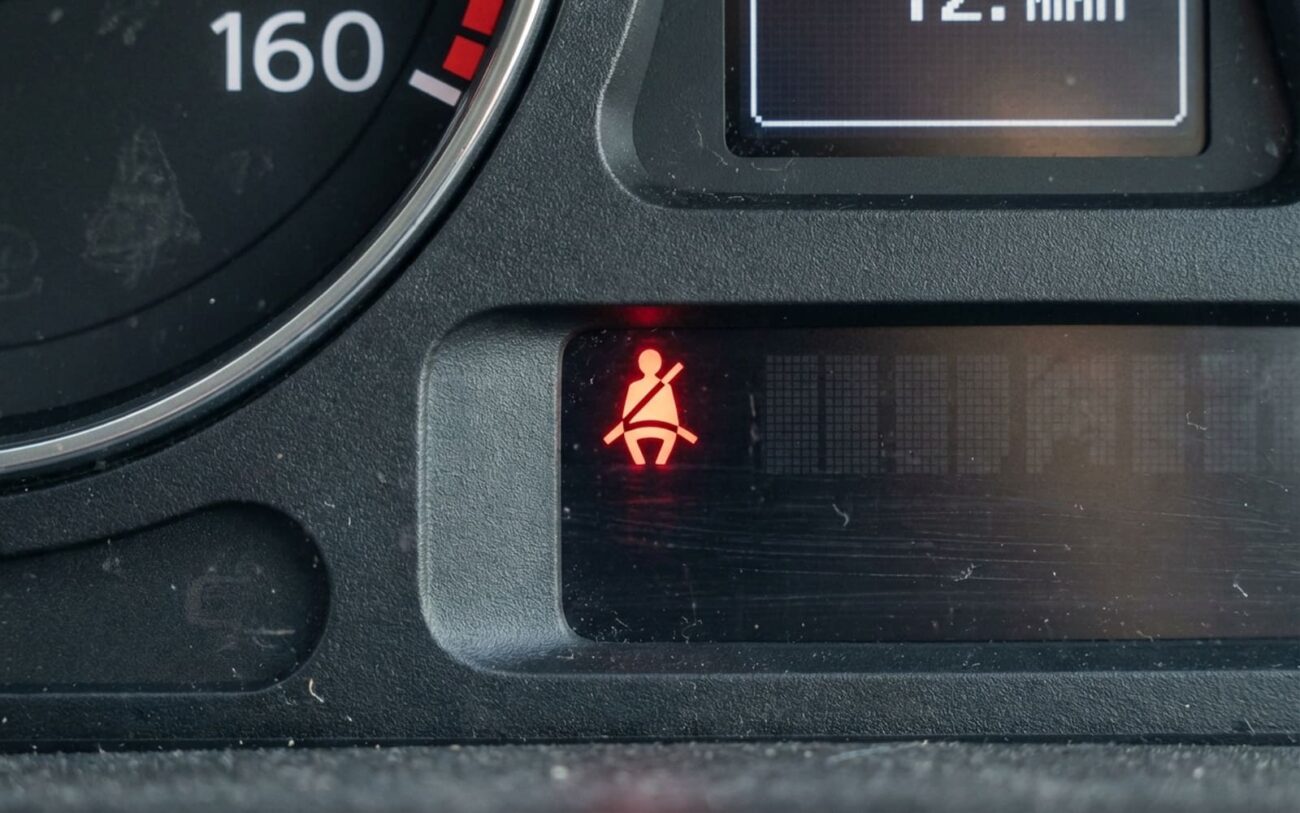
Alright, let’s talk about that seat belt warning light. It’s more than just annoying; it’s your car telling you something’s wrong with the Safety Restraint System (SRS). And trust me, you don’t want to ignore this. We’re talking airbags here.
Usually, when that light stays on, it boils down to one of two main culprits: either the Occupant Classification System (OCS) in the passenger seat, or the seat belt buckle switch itself. I’ve seen both, and diagnosing them incorrectly can cost you time, money, and potentially, your safety. The key is to pay attention to the exact symptoms – they’ll point you right to the problem.
What the Car’s Telling You: Diagnosing by Symptom
You can’t fix this by guessing. Throwing parts at it is just a waste of money and doesn’t guarantee success. You need a logical diagnostic approach, and that starts with a capable scan tool that can talk to the Restraints Control Module (RCM) or the Body Control Module (BCM). Live data and stored fault codes are your best friends here. Let’s break down the common scenarios I see in the shop:
Symptom: Warning light on with an empty passenger seat
This is the classic OCS failure. You’ve got an empty passenger seat, but the warning light is on, and maybe the chime is going off. The car thinks someone’s there when there isn’t. Why? That Occupant Classification System (OCS) sensor mat, buried in the seat cushion, is probably giving a false reading. I’ve seen them read 5, 10, even 50 pounds on an empty seat. That’s your first clue.
Definitive Test: Grab your scan tool, go into the RCM or BCM live data, and look for ‘Passenger Seat Weight’ or ‘Occupancy Status’. If it’s showing weight (anything above 5-10 lbs, depending on the vehicle) when the seat is empty, you’ve found your culprit. It usually means the mat itself is faulty due to an open circuit or calibration drift, but sometimes it’s a corroded under-seat connector or the OCS module itself.
Signal: ERR_CAL
Symptom: Chime activates only when passenger is unbuckled
If the light and chime only come on when someone is actually sitting there and not buckled, that’s usually normal operation. But if it never registers as buckled, even when it is, then we’re looking at the seat belt buckle switch. This usually means the switch is stuck in the “open” or “unbuckled” state.
Definitive Test: Monitor the ‘Passenger Belt Switch’ status in your scan tool’s live data. If that status never changes to “Belted” or “Latched” when the belt is fastened, then the switch itself is dead. Sometimes it’s a wiring break, but the switch is the most common failure point.
Symptom: Warning light stays on despite being buckled
This is the more concerning buckle switch issue. Someone’s buckled in, the belt is latched, but that warning light just won’t go out. The car thinks it’s still unbuckled. This usually means the buckle switch is shorted or stuck in the “unbuckled” position – often due to internal contamination or physical damage.
Definitive Test: This is a quick one I often do in the shop. Disconnect the buckle connector under the seat. If the warning light on the dash turns off, the fault is definitely in the buckle switch itself or its immediate wiring. If it stays on, you might be looking at a pinched or grounded wire further up the harness, or even a BCM input fault, but that’s less common.
Why These Parts Fail: The Nitty-Gritty
The OCS Sensor Mat
That OCS mat is a pretty delicate piece of tech, if you think about it. It’s a thin, flexible printed circuit embedded right in the seat foam. Over time, constant pressure from heavy passengers, kids jumping on the seat, or even just general wear and tear can cause microfractures in those tiny conductive traces. But the biggest killer I’ve seen? Liquids. Spilled coffee, soda, water from wet clothes – it seeps into the foam, corrodes the mat, and boom, false readings. I’ve pulled out mats that looked like they’d been soaked in soda; no surprise they failed.
Pro Insight on TSBs:
Some manufacturers have issued technical service bulletins (TSBs) specifically addressing OCS mat failures due to liquid intrusion. I’ve seen this particularly in models where the front cup holders are close to the seat base. It’s a recognized issue in certain mid-2010s to early-2020s sedans and SUVs. Always check for TSBs for your specific vehicle.
The Seat Belt Buckle Switch
The seat belt buckle switch is simpler, but it’s not immune. Crumbs, dirt, sand, or liquid spills can get down into the mechanism and jam it up or cause internal corrosion. It’s an electrical switch, so if it’s not making contact (stuck open) or it’s stuck making contact (shorted/stuck closed), the car gets confused. It’s almost always an internal electrical failure within the buckle assembly itself – not a problem with the retractor or the belt webbing.
The Fix: How We Do It (and What NOT to Do)
Safety System Integrity: No Shortcuts
Look, I’ve seen people try to ‘fix’ these issues with resistors to fake a “buckled” signal or by taping the switch closed. DON’T. EVER. DO. THAT. You’re messing with a safety system designed to save lives. If you trick the car into thinking the belt is buckled or the seat is empty, you could disable the airbag when you need it most, or even cause it to deploy unnecessarily. There are no safe shortcuts here. It’s not worth the risk.
OCS Sensor Mat Replacement Professional Only
Seat Belt Buckle Replacement DIY-FEASIBLE with caution
Post-Repair Validation: Don’t Just Assume It’s Fixed
Once you’ve done the repair, don’t just breathe a sigh of relief because the light went out. You HAVE to verify the repair. This means getting the scan tool back out and checking live data again. This system is too important to just cross your fingers.
Here’s My Validation Checklist:
-
Scan tool confirms “OCS Calibration Complete” with no active or pending fault codes in the RCM/BCM.
-
Live data shows “0 lbs” or “Empty” when the passenger seat is vacant.
-
The passenger airbag “OFF” indicator light on the dash behaves correctly (on when empty, off when an adult is occupied).
-
The seat belt warning light turns off within 2–3 seconds of buckling the belt. If any of these aren’t right, you’ve still got a problem.
The Bottom Line: Cost, Risk, and Common Sense
So, what’s this going to set you back? Here’s a general idea based on what I see in my shop:
| Repair Type | DIY Cost (Parts) | Shop Cost (Labor + Parts) | Secondary Risk of Failure |
|---|---|---|---|
| OCS Sensor Mat Replacement | $250–$500 | $500–$1,200 | Airbag may fail to deploy or deploy unnecessarily, leading to severe injury or death. |
| Seat Belt Buckle Assembly | $150–$400 | $300–$600 | Airbag suppression due to false “unbuckled” signal, or unnecessary deployment. |
Prevention: Keep These Systems Healthy
A Few Simple Tips:
The biggest thing for OCS mats? Keep liquids away from the front passenger seat. Spills are the leading cause of mat failure, no question. If you use a seat cover, make sure it’s OCS-compatible – some aftermarket covers can interfere with the sensor. Also, don’t forget the basics: a failing battery can cause all sorts of module communication errors that ripple through the SRS, so rule out power supply issues early on.
