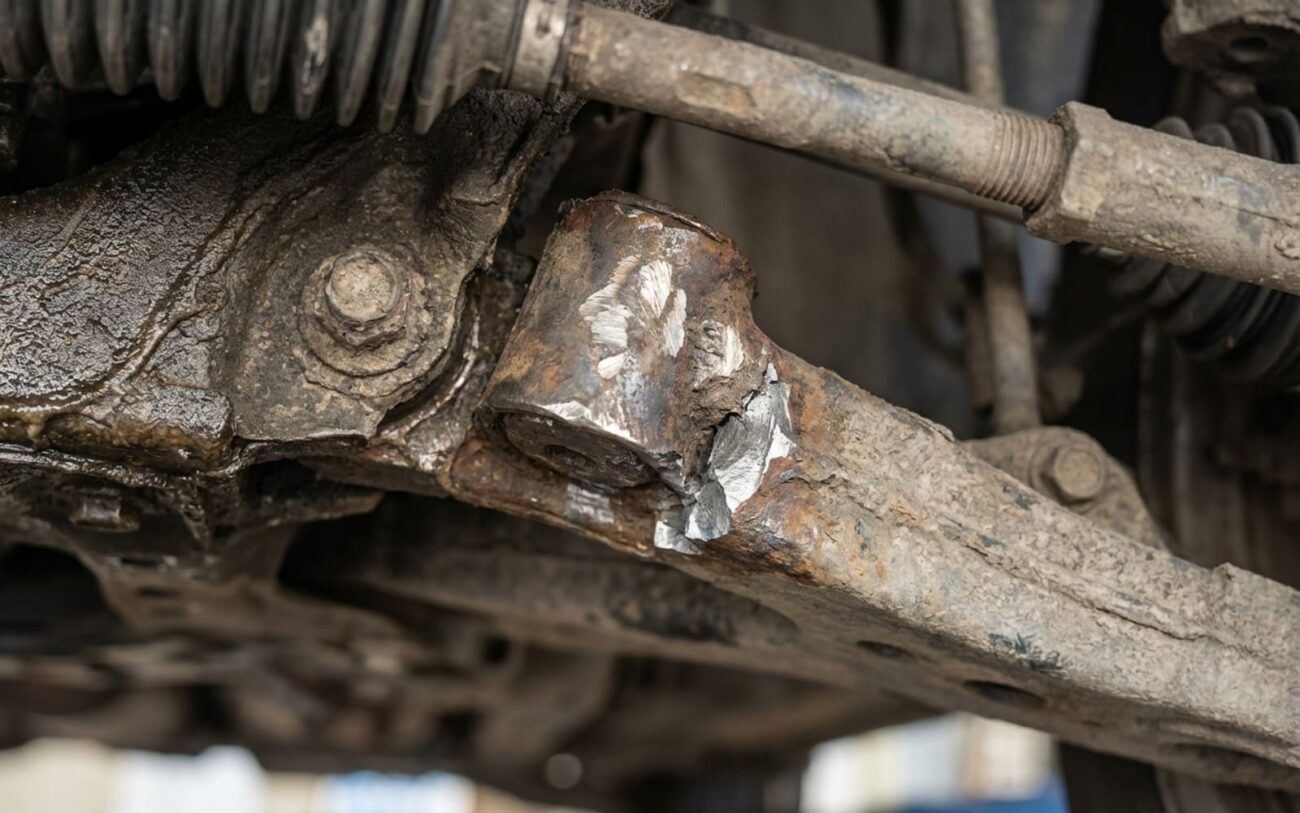
Alright, let’s talk about that steering clunk you’re feeling. I’ve been turning wrenches for over 25 years, and when a customer tells me they get a sharp, metallic clunk or thud right when they hit full steering lock—like pulling into a tight parking spot—my mind immediately goes to the steering rack. This isn’t just some random noise; it’s a clear mechanical signal from deep inside the rack itself.
The Tell-Tale Clunk: What It Means
When you turn your steering wheel all the way, the internal piston inside the steering rack reaches its maximum travel. There are supposed to be little “limit stops” in there—think of them like internal bumpers—designed to absorb that final impact. When those stops wear out, crack, or break loose, the piston has nothing to cushion it. It slams directly into the aluminum or steel housing of the rack, and that’s the clunk you feel. It’s an impact, plain and simple.
You might even notice a slight “release” in the steering effort right at that moment of impact. While you won’t suddenly lose steering control during normal driving, ignoring this symptom is a bad idea. I’ve seen it lead to damaged internal seals, power steering fluid leaks, and eventually, a complete loss of assist. Fix it early, and you’ll save yourself a much bigger headache and repair bill down the road.
Diagnosing It: Is It Really the Rack?
Before we jump to pulling out a steering rack, which is a big job, we always need to rule out the more common—and usually cheaper—front-end issues. A lot of worn components can mimic that clunk, especially when you’re turning. Here’s what I typically check first:
- Outer Tie Rod Ends: A worn tie rod might clunk earlier in the steering arc, or over bumps, not just at full lock. You’ll often feel play in the wheel.
- Strut Mount Bearings: These usually produce a creak or a popping sound when turning at low speeds, especially on uneven ground. It’s more of a rotational noise.
- Intermediate Steering Shaft U-joint: If this is worn, you might get a rhythmic clunk during tight turns or when you turn the wheel quickly, but it’s usually not a single, sharp impact right at the end of travel.
- Loose Subframe or Control Arm Bushings: Sometimes, a clunk can be transmitted through the chassis if these components are loose, but again, the timing and feel are usually different.
The key difference with an internal rack stop failure is its precision: it’s almost always a single, isolated clunk, happening exactly at mechanical lock. To confirm it in my shop, here’s the procedure I use:
- Get it on the lift: You need the wheels off the ground and the suspension unloaded.
- Assistant on standby: Have someone sit in the car and slowly turn the steering wheel lock-to-lock.
- Hands-on inspection: While they’re turning, I’ll place my hand directly on the steering rack housing. I’ll also visually inspect the tie rod boots for any tears or leaks, and check for any visible play in the outer tie rods or strut mounts.
- Listen closely: If that distinct clunk transmits through the rack body itself, and there’s no visible play in any external steering or suspension components, then I’m confident the problem is internal. A mechanic’s stethoscope pressed against the rack housing can really pinpoint the noise with certainty.
Why These Stops Fail
That internal stop mechanism isn’t just a passive piece; it’s a critical wear point. Over years and thousands of full-lock turns, those repeated impacts take their toll. What I usually see is fatigue cracking or deformation of a stamped steel stop washer, or sometimes a machined ledge inside the rack. In some designs, a snap ring or circlip holds the whole assembly in place, and if that gives up, the stop can shift or collapse, allowing metal-on-metal contact. It’s like a door swinging open and slamming into the wall because the bumper fell off.
Corrosion from old, degraded power steering fluid can also play a role, making the piston sticky and causing it to release suddenly with a clunk. I’ve seen this pattern quite a bit on front-wheel-drive cars, especially those with transverse-mounted engines where the tight engine bay packaging puts extra stress on steering components. Some manufacturers have even issued service bulletins for specific models that have known issues with fractured internal stop retainers. It’s worth a quick check on your vehicle’s specific TSBs if you’re seeing this problem.
Your Repair Options: What I Recommend
Since that stop is an internal component, there’s no external patch-up. Your options really depend on whether your specific rack model is even serviceable. Most modern racks are designed as sealed units—you replace them, you don’t rebuild them.
This is Professional Territory
Working inside a steering rack requires specialized tools, precision, and a deep understanding of hydraulics. One missed torque spec, a nicked seal, or a speck of dirt can lead to immediate loss of steering assist or dangerous binding. This is not a job for the average DIYer.
Making Sure the Fix Actually Worked
After any steering rack work, whether it’s a rare internal service or a full replacement, validation is key. I always perform a lock-to-lock test with the wheels off the ground first. There should be no clunk, binding, or hesitation. Then, it’s time for a test drive. I’ll hit an empty parking lot or a quiet street and do several full-lock turns in both directions. Listen and feel for any recurrence of that clunk. Once I’m back in the shop, I’ll do a thorough leak check, especially around the end caps and all fluid connections (high-pressure and return lines).
My Post-Replacement Checklist:
-
Confirm smooth, clunk-free operation through the full steering range.
-
Check for leaks at all fluid connections.
-
Verify system pressure holds steady under load (typically 1200–1500 psi at lock for hydraulic systems).
-
If it’s an electric power steering (EPS) rack, calibrate steering angle sensors and clear any diagnostic trouble codes (DTCs) from the EPS module.
Costs, Risks, and Preventing Future Problems
This isn’t a cheap fix, so understanding the financial side helps you make smart decisions. The biggest cost driver is whether you’re looking at a rare internal service or a full replacement.
| Repair Type | DIY Cost (Parts) | Shop Cost (Parts & Labor) | Success Rate | Secondary Risk |
|---|---|---|---|---|
| Internal Stop Service | $120–$180 | $500–$800 | ~85% | Internal leak or binding may still require full replacement. |
| Full Rack Replacement | $750–$1,400 | $1,200–$2,200 | ~98% | Incorrect torque or alignment can cause premature wear or fluid leaks. |
A Practical Tip from My Shop:
If you’re replacing the entire rack, don’t automatically go for a brand-new OEM unit. I often recommend a high-quality remanufactured unit. Many reman racks are rebuilt with upgraded seals or improved stop designs, and they can save you 30–50% on parts without sacrificing reliability. I see a lot of unnecessary OEM sticker shock; sometimes a good reman is the smarter move.
Prevention starts with good maintenance and smart driving habits. The single most important thing you can do is keep your power steering fluid clean and fresh. Over time, that fluid breaks down, loses its lubricity, and can even become acidic, leading to internal corrosion and seal degradation. Follow your manufacturer’s recommended service interval—often around every 60,000 miles—and always use the correct fluid type (ATF, CHF-11S, etc.). Never mix fluid types; it’s asking for trouble.
Fresh fluid reduces wear on all internal components, including those rack stops and piston seals. For early detection, ask your technician to perform a quick steering sweep during oil changes or tire rotations when the car is on the lift. A simple lock-to-lock turn with a hand on the rack housing can catch a developing clunk before it gets severe. Also, don’t overlook the rack mounting bushings—excessive movement there can amplify internal impacts. And make sure the rest of your suspension is in good shape: sagging springs or worn control arm bushings can alter geometry and increase stress on steering components. A well-maintained front end spreads the load evenly and keeps the steering rack operating as designed.
