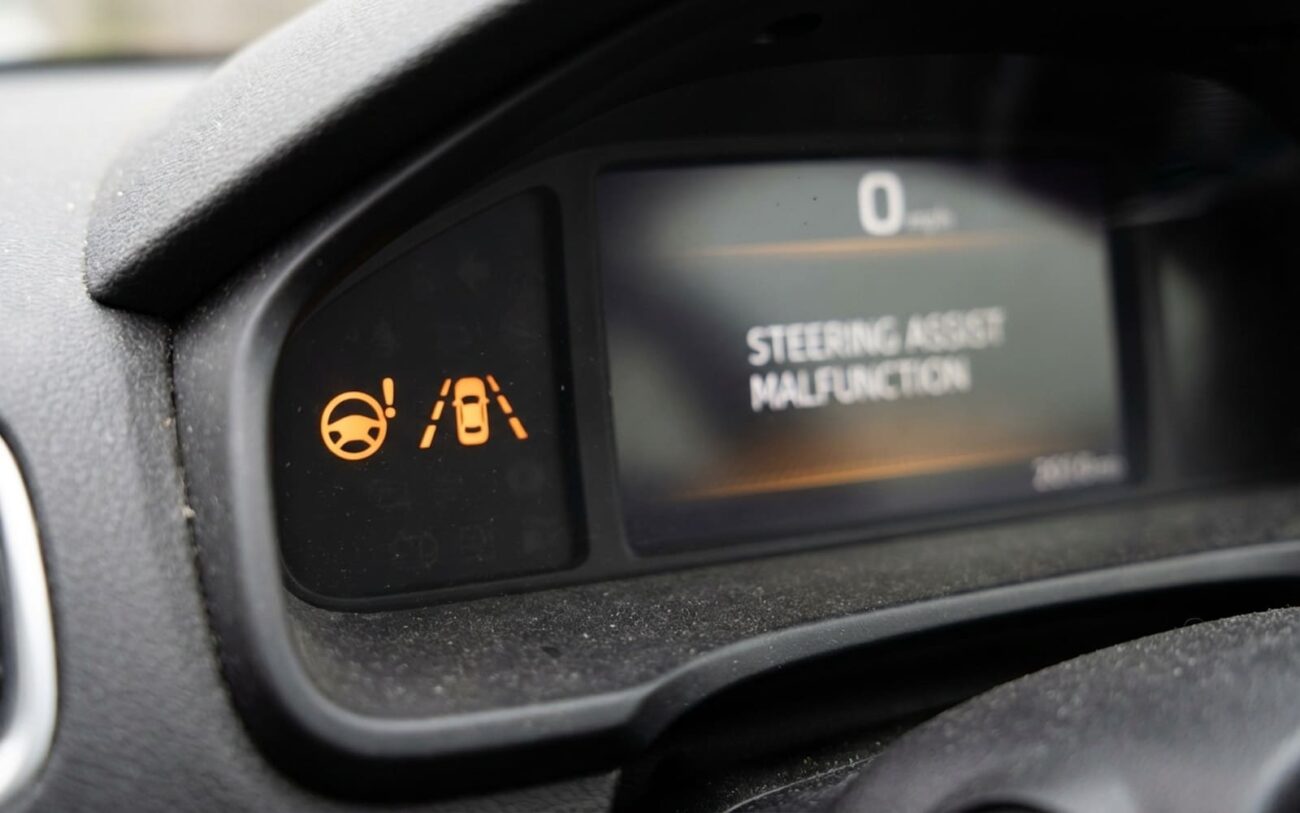
Steering angle sensor issues? Yeah, I’ve seen this a hundred times. It’s not some mystery—it’s a system that fails in predictable ways, but only if you know how to read the signs. The SAS isn’t just another sensor. It’s the cornerstone of your ESC, traction control, and lane keeping assist. When it goes bad—or worse, acts up intermittently—you’re driving with one hand tied behind your back. And no, throwing parts at it won’t fix it. You need a plan.
What the Dashboard Is Really Telling You
You turn the key, and the dash lights up like a Christmas tree—ESC, traction control, maybe even a “Service Driver Assistance” message. Don’t panic. But do take it seriously. These aren’t random warnings. They’re symptoms of a system that’s lost trust in the steering angle data.
I’ve pulled codes like C0051, C0055, C0460, and C0465 more times than I can count. They all point to the same thing: the SAS signal is out of range, erratic, or missing. But here’s the kicker—those codes don’t always mean the sensor is dead. Sometimes it’s just lost calibration. Other times, it’s a wiring issue or a bad ground. And sometimes? The sensor is feeding garbage data, and the computer shuts down ESC as a safety move. That’s not a glitch—that’s by design.
The real red flag? When lane keeping assist starts jerking the wheel on its own. I had a 2018 Camry come in last month doing exactly that—would yank the steering wheel left while driving straight. Owner thought it was possessed. Turned out the SAS was sending 45° left when the wheel was dead center. The camera saw a straight road, but the computer believed the steering sensor more than the camera. Bad data wins every time.
How I Diagnose It (And Why Most Shops Get It Wrong)
Most shops see a SAS code and swap the sensor. Bad call. I’ve torn down plenty of “bad” sensors that tested perfect—turned out to be a chafed wire near the clock spring or a corroded connector at the EPS module. You don’t fix this with guesswork. You test.
First step: live data. I hook up a bi-directional scan tool—no generic OBD2 reader. I need to see “Steering Angle” in real time. I turn the wheel lock-to-lock, slowly. A good sensor reads smooth and linear—say, -540° to +540°—and returns to within ±2° of zero when the wheels are straight. If I see jumps, flat lines, or it never resets to zero? That’s a failed sensor or bad calibration.
But here’s where it gets tricky. If the LKA is acting up but the SAS data looks clean, I check the camera. I graph both SAS angle and lane offset during a straight drive. If the car is drifting but the SAS says zero, the camera’s misaligned. If the SAS is swinging between -10° and +15° while driving straight? That’s your culprit. I’ve seen both. Don’t assume.
And don’t forget the yaw rate sensor. It works with the SAS to calculate vehicle dynamics. If it’s off, the whole stability system freaks out. I verify it reads 0°/sec when the car is parked on level ground. If it doesn’t, I recalibrate or replace it—but only after ruling out the SAS.
Repair Paths: What Actually Works
There are four scenarios. Pick the right one, or you’ll waste time and money.
Recalibrate Only DIY-FEASIBLE
Replace Stand-Alone SAS Professional Only
Replace Clock Spring Assembly Professional Only
Clean the Sensor? Only in Desperation Last Resort
Why Sensors Fail (And Which Cars Are Prone)
Internal failure usually comes down to one of three things: optical disc degradation, magnetic ring drift, or moisture intrusion. Heat cycling cracks the plastic discs. Road splash sneaks past bad seals and corrodes the circuit board. And voltage spikes—especially during jump-starts—can fry the memory chip. I’ve seen a dead SAS after a customer tried to start their car with a 24V truck. Bad idea.
Some platforms are worse than others. Early 2010s GMs—especially Equinox, Terrain, and Acadia—had a rash of SAS failures. TSBs exist, but dealers often push full column replacement when a $150 sensor would’ve done. And certain BMWs? The clock spring fails every 80k miles—just plan for it.
But not every fault is hardware. I’ve had customers come in with “bad SAS” after an alignment shop disconnected the battery and didn’t recalibrate. That’s not a failure. That’s a missed step.
Validating the Fix—Because Clearing Codes Isn’t Enough
You recalibrate. You replace. You clear the codes. Now what? You test.
With the car on level ground and wheels straight, pull up live data. The SAS should read 0° ±2°. Take it for a drive—turn left, turn right, come back to straight. Data should return to zero. If it doesn’t, the calibration failed or the sensor’s still bad.
Then test the systems. Drive on a marked highway. LKA should detect lanes and gently nudge you back if you drift. If it jerks the wheel or ignores the line, check camera alignment. And scan again—no pending codes should return. If they do, you’ve got a wiring issue or bad ground.
Cost vs. Safety: Is It Worth Fixing?
Let’s be real. A clock spring job at a dealer can hit $1,500. At an independent shop with ADAS experience? More like $800. And yeah, that hurts. But losing ESC means no stability control in a panic swerve. No traction control on wet roads. And no LKA on a long drive when you’re tired. That’s not just inconvenient—it’s dangerous.
I tell customers: if the car’s worth keeping, fix it right. If it’s on its last legs and the repair costs more than 40% of its value, weigh the risk. But don’t drive around with disabled safety systems and think you’re fine. I’ve pulled cars out of ditches where the driver lost control in the rain—turned out ESC had been off for months. That could’ve been avoided.
Prevention: Keep It From Happening Again
I tell my customers: treat the steering system with respect.
-
Don’t crank the wheel against the stops. Those shock loads wear out the internal gears over time.
-
Be careful with jump-starts. Voltage spikes below 10.5V or above 15V can corrupt the SAS memory. Use a smart charger if the battery’s weak.
-
Always disconnect the battery properly when doing electrical work. And recalibrate after any power interruption.
-
If the ESC light stays on at startup, don’t ignore it. Get it scanned. Early diagnosis saves money and keeps you safe.
