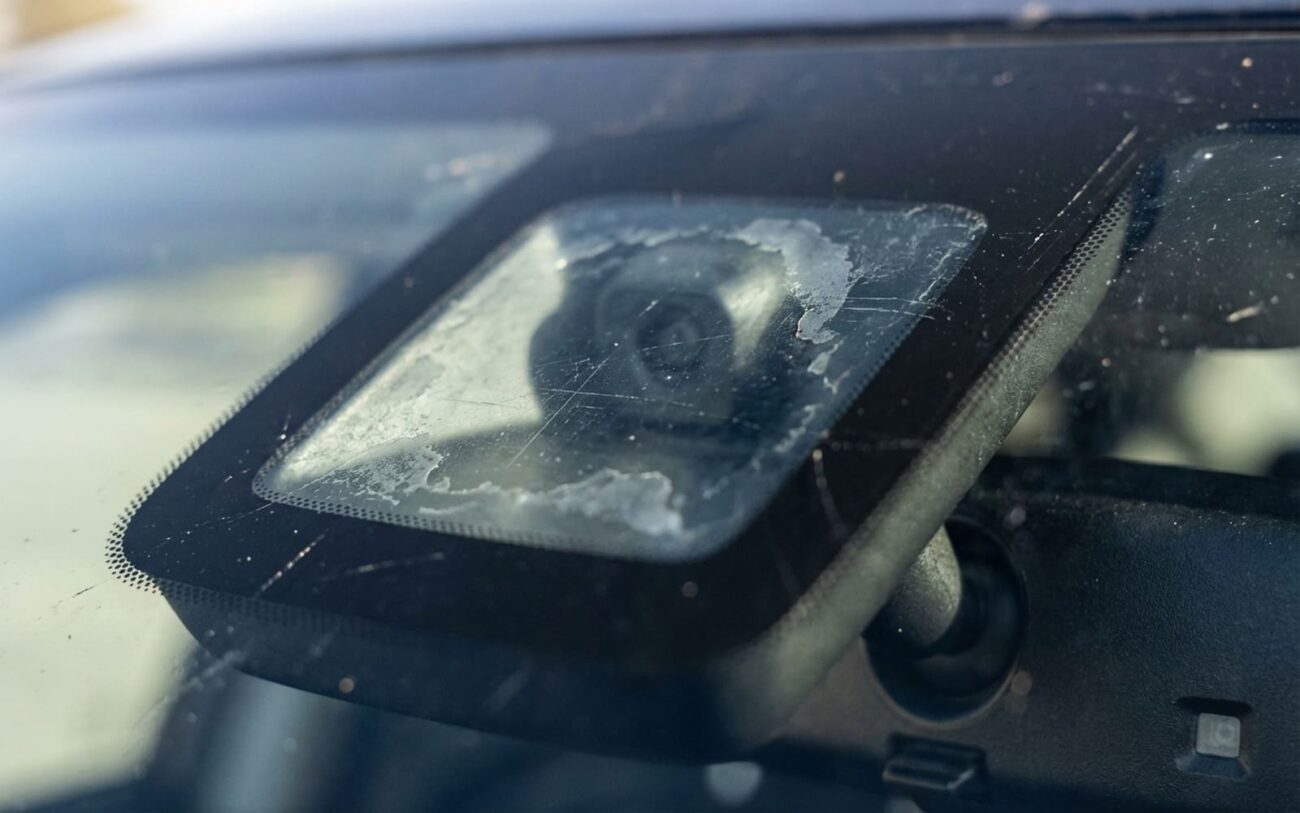
If your lane keep assist cuts out at dawn or your adaptive cruise won’t engage—especially after a clean windshield—don’t jump to replacing the camera. I’ve torn down hundreds of these systems. More often than not, the problem isn’t the sensor. It’s the glass it’s looking through. That camera behind your mirror? It’s not just a backup cam slapped on the dash. It’s a precision optical instrument. And like any lens, it fails when the glass is damaged—even if you can’t see it from the driver’s seat.
When the Glass Lies to the Camera
I get the call all the time: “ADAS systems keep failing, but the camera’s clean.” First thing I ask: “When’s the last time you replaced the wipers?” That tells me more than any scan tool.
Here’s what most drivers don’t realize—the camera doesn’t need to be dirty to fail. It needs optically flat, undistorted glass. Years of wiper blade abuse, grit, and cheap washer fluid eat away at the surface. You end up with micro-scratches that scatter light like a fogged headlight. The camera sees glare, blooming, or false edges. So it shuts down. Not because it’s broken—but because it can’t trust what it’s seeing.
On a 2018–2022 Honda Accord, I once diagnosed a “camera unavailable” fault that came and went at sunrise. No codes, no corrosion. Pulled the mirror—glass looked fine. Until I shined a 10,000-lumen LED across it at a 10-degree angle. Suddenly, a web of fine scratches lit up like a spider’s nest. That was it. Driver had been using worn blades for 18 months. The damage was in the glass, not the electronics.
Windshield or Camera? How I Tell the Difference
You don’t start pulling glass until you rule out the rest. Corroded connectors, failing ECUs, CAN bus glitches—they all mimic optical issues. But the behavior is different.
If the system fails randomly—rain or shine, day or night, every restart—look at the wiring or module. But if it only happens at low sun angles, or after a car wash, or when the windshield is wet? That’s optical. That’s the glass.
| Symptom | Points to Windshield | Other Likely Causes | How I Confirm It |
|---|---|---|---|
| Persistent ‘Camera Obstructed’ | Scratches, pitting, or delamination in camera’s view (behind mirror) | Internal camera condensation, ECU fault, connector corrosion |
Borescope inspection from camera mount; compare clarity to known-good windshield |
| Intermittent failure at sunrise/sunset | Micro-scratches causing lens flare in low-angle light | Steering angle sensor drift, calibration corruption, CAN errors |
Shine high-intensity LED at shallow angle; monitor live camera feed for glare or blooming |
| Erratic high-beam activation | Chip or crack in camera’s optical path | Failed ambient light sensor, BCM fault |
Map FOV with OEM template; inspect zone under 10x magnification |
Bottom line: if the failure correlates with lighting or a visible defect on the glass, the windshield is the culprit. I’ve seen more bad wiper blades cause ADAS issues than failed cameras. Hands down.
How the Windshield Breaks the System
It’s not just cracks. It’s degradation. And it happens in four ways:
- Surface abrasion: Wiper blades loaded with sand or grit act like sandpaper. Over time, they leave a network of fine scratches. Cleaning won’t fix it—because the damage is in the glass. I’ve measured up to 0.003” of material loss in bad cases. That’s enough to scatter infrared and visible light.
- Impact damage: A stone chip—even one you can barely see—can refract light like a prism. Depth matters. A surface chip might be polishable. A through-crack? That’s a goner. On a Subaru EyeSight system, even a hairline crack in the camera zone will trigger a permanent fault.
- Lamination failure: The PVB layer between glass sheets can delaminate. You’ll see clouding or fogging between the layers. It’s not moisture—it’s the bond breaking. Once that happens, the glass is optically compromised. No fix. Replace it.
- Aftermarket films: Some DIY tints applied over the camera area bubble or haze. Even factory films can degrade. I’ve seen 5-year-old vehicles with tint peeling in the ADAS zone—blocks IR transmission, kills night vision performance.
And yes—internal camera issues exist. Condensation, failing sensors, U3000 codes. But those usually come with other symptoms: multiple system warnings, communication faults, or failures in dry conditions. Optical issues? They’re predictable. They follow the light.
Fix It: Polish or Replace?
Here’s where I draw the line.
This Isn’t a DIY Job
ADAS calibration isn’t guesswork. It’s precision work. If you’re not using OEM procedures, the right tools, and a certified process, you’re rolling the dice with safety.
Now, about that “quick fix” SiO₂ sealant everyone’s selling? It might fill micro-scratches and improve water beading. But it can interfere with rain-sensing wipers and does nothing for deep defects. I’ve seen it make blooming worse under low-angle light. So save your money.
Professional Polishing Professional Only
Windshield Replacement & Calibration
Did It Work? Here’s How I Know
You don’t just clear codes and call it done. I validate every repair.
After polishing: I shine a point-source LED across the glass at a shallow angle. If I see streaking or scattering, it’s not fixed. Better yet, I pull up the live camera feed on a scan tool. Image should be clean, no artifacts, no blooming.
After replacement? Full calibration—no shortcuts.
- Static calibration: Done in the shop with OEM targets. Must complete with zero alignment errors. If it fails, check mounting surface flatness and glass fit.
- Dynamic calibration: Drive 10–30 miles on a straight, well-marked road. Speed, lane markings, and road curvature matter. Miss the spec, and the system won’t finalize.
- Verification scan: After calibration, I scan for codes. Then I cycle the ignition three times. No U3000, no alignment faults, no “camera unavailable.” If it comes back, the bond’s off or the glass is wrong.
You need a factory-level scan tool or high-end J2534. Skip any step, and you’re handing the customer a time bomb.
Cost vs. Risk: What I Tell Customers
Let’s be real. A proper windshield replacement with calibration runs $1,000–$2,500. That stings. But driving without functional AEB or adaptive cruise? That’s playing roulette.
| Repair Type | DIY Cost | Shop Cost | Success Rate | Secondary Risk if Failed |
|---|---|---|---|---|
| Professional Polish | $0 (Not Recommended) | $150–$300 | ~40% for moderate defects | Coating damage or warping, leading to mandatory replacement |
| Windshield Replacement & Calibration | $0 (Not Recommended) | $1,000–$2,500 | ~95% with OEM glass and certified tech | Improper install causes leaks, noise, chronic calibration failures |
I tell customers: if you’re spending $2,000 on a non-ADAS windshield to save cash, you’re wasting money. It may fit, but the camera won’t work. On a Toyota Safety Sense system, I’ve seen lane centering fail repeatedly because the aftermarket glass had 0.5° of angular deviation. That’s all it takes.
If the repair costs more than 10% of the car’s value? Tough call. But if you drive highways, rely on cruise, or have kids in the back—replace it. These systems prevent crashes. Not luxuries. Tools.
Keep It Clear: My Prevention Routine
I treat the camera zone like a lens. Because it is.
Prevention is Everything
-
Clean the camera zone (behind mirror) with microfiber and dedicated automotive glass cleaner. No ammonia-based products—they eat coatings over time.
-
Change wiper blades yearly. Hardened rubber holds grit. That grit scratches glass. It’s physics.
-
No paper towels, sponges, or scrub pads near the camera area. Only soft cloth.
-
Inspect every six months. Sit in the driver’s seat at sunrise. Tilt your head. Look for haze, pitting, or swirls catching the light. Catch it early, maybe you save a polish. Wait until it fails? Replacement’s the only option.
Same as noticing a slow window motor or a creak in the suspension—early detection saves money and keeps systems working. The windshield’s not just glass. It’s part of the safety system. Treat it that way.
