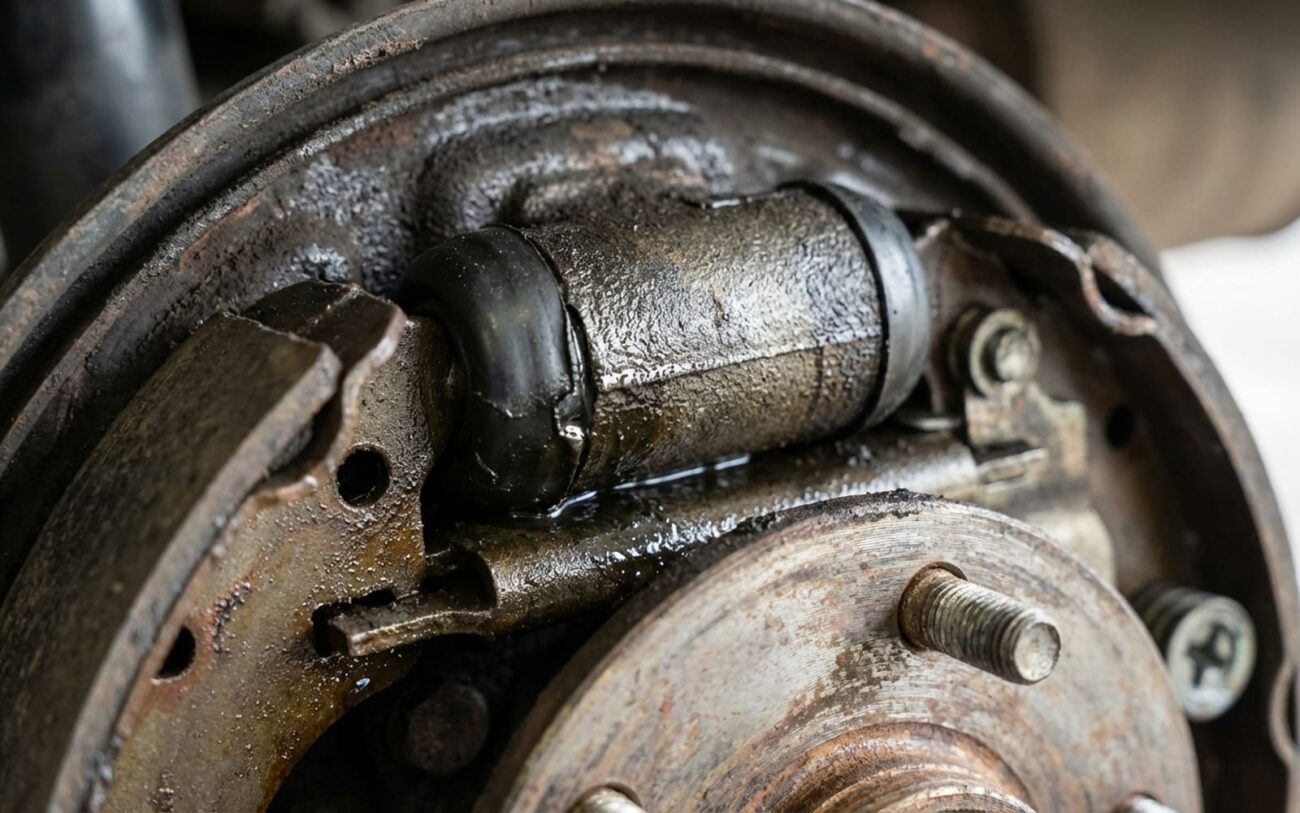
After 25+ years wrenching on everything from classic muscle to modern SUVs, I’ve seen my share of brake issues. Rear drum brakes, while less common on new cars, are still out there, and their wheel cylinders are often overlooked until they cause real trouble. These little guys are critical, and when they go bad, they usually do it in one of two ways: they start leaking fluid, or they seize up. Either way, you’ve got a problem that needs immediate attention. Trust me, you don’t want to ignore your brakes.
How to Spot Trouble: Symptoms of a Failing Wheel Cylinder
Let’s talk about what you’ll actually see or feel. The two most common failure modes I see are leakage and sticking. Each one gives you different clues.
Leaks: The Obvious Sign
This is usually the easiest to spot. If you pull a rear wheel off—maybe for a tire rotation—and notice any wetness, drips, or dark streaks on the inside of the backing plate, especially around those rubber dust boots on the cylinder, you’ve likely got a hydraulic leak. Brake fluid is clear to amber, feels a bit oily, but it’s not greasy like engine oil and it evaporates faster. If you see it, that’s a red flag. It means you’re losing fluid, and that’s a direct path to losing braking power.
Sticking: The Driving Hazard
This one’s more about how the car drives. You might feel a subtle pull to one side when you hit the brakes, or even a constant drag that makes the car feel sluggish, like you’re driving with the parking brake slightly on. After a drive, you might smell something hot and burnt coming from one rear wheel—that’s the brake shoe dragging on the drum, generating extreme heat. The brake pedal might feel a bit spongy or low, but then firm up after a few pumps. Once you get the drum off, you’ll often see one brake shoe on that side worn down way more than the other. That’s because one piston in the wheel cylinder is stuck, holding that shoe against the drum, while its partner is moving normally.
Pinpointing the Problem: Differential Diagnosis
Okay, so you’ve got symptoms. Now, how do you know it’s definitely the wheel cylinder and not something else? This is where a lot of DIYers (and even some less experienced pros) go wrong, replacing parts they don’t need. You’ve got to isolate the issue, whether it’s hydraulic or mechanical.
Is that fluid leak actually from the wheel cylinder?
It’s easy to jump to conclusions, but fluid on the backing plate isn’t always brake fluid. It could be a leaking brake line flare fitting, a faulty bleeder screw, or even a rear axle seal leaking gear oil onto your brake shoes. That last one is a big deal, as gear oil will ruin your brake shoes in a hurry.
My test: Clean the area thoroughly. Then, with the drum removed, have someone gently press the brake pedal while you watch the wheel cylinder. If you see any weeping from the piston boots or the bleeder screw area, you’ve found your hydraulic leak. If it’s gear oil, it’ll usually have a distinct sulfur smell, and it won’t evaporate like brake fluid. Brake fluid will feel oily but quickly disappear when wiped, whereas gear oil leaves a greasy residue.
Is that brake drag truly a stuck cylinder?
Brake drag isn’t always a seized wheel cylinder. A collapsed rubber brake hose can act like a one-way valve, holding pressure in the line. Binding brake hardware (springs, adjusters) or a seized parking brake cable can also cause a shoe to drag. You need to rule these out.
My test: With the wheel still dragging (or immediately after a drive where you felt the drag and the wheel is hot), carefully open the bleeder screw on the suspect wheel cylinder. If the drag immediately releases and the wheel spins freely, you know it’s a hydraulic issue—likely the wheel cylinder or a collapsed hose further upstream. If the drag doesn’t release, then you’re looking at a mechanical issue within the drum assembly itself or the parking brake cable.
Why They Fail: Root Causes of Wheel Cylinder Failure
Once you’ve confirmed the wheel cylinder is the culprit, it’s worth understanding why it failed. In almost every case I’ve come across in my 25 years, it boils down to moisture contamination and corrosion.
Brake fluid is hygroscopic, meaning it loves to absorb water from the air over time. That water accumulates, especially in the lowest points of the system, which are often the rear wheel cylinders. Think of your brake fluid like a sponge: once it’s saturated with water, that water starts to attack the metal components.
This water in the fluid leads to rust forming inside the cylinder bore. Even tiny bits of pitting can damage those critical rubber piston seals, causing them to leak. Worse, that corrosion can completely seize the piston, preventing it from retracting and leading to that annoying (and dangerous) brake drag. I’ve pulled cylinders from vehicles with less than 60,000 miles that looked like they’d been submerged in saltwater, all because the brake fluid hadn’t been flushed in a decade.
Technician’s Note on Storage:
If a vehicle sits for a long time, especially in a humid climate, that risk of piston seizure goes way up. Corrosion builds up during inactivity, leading to a quick failure the moment you put it back on the road. I see this often with classic cars or seasonal vehicles.
Getting It Fixed: Repair Options
Safety First: This Isn’t Optional
Brake work isn’t something to take lightly. If you’re not absolutely confident in your ability to bleed the system correctly, get the right torque specs, and handle brake fluid safely, please consult a professional. A mistake here can mean you lose your brakes entirely, and that’s not a risk worth taking. Your life, and others’, depends on it.
Bleeder Screw Only
Cylinder Rebuild
Full Replacement My Recommendation
Confirming the Repair: Verification Steps
You’ve done the work, but you’re not done until you’ve verified it. You need to confirm two critical things: no leaks and no drag.
After you’ve bled the system and you’ve got a firm brake pedal, have someone press and hold the pedal down hard while you get under the car and inspect the newly installed wheel cylinder. Look very closely around the dust boots and the bleeder screw. There should be absolutely no seepage, not even a tiny bit. If you see anything, you’ve got to re-evaluate your work.
Next, release the parking brake and spin the hub by hand. You should feel a very light, consistent contact from the brake shoes, but the hub should rotate freely without any noticeable drag or binding. If it’s hard to spin, you’ve still got a problem, and you’ll need to recheck your assembly and the bleeder test.
Keeping Your Brakes Healthy: Prevention & Ongoing Maintenance
The Best Prevention: Fluid Flush
The best way to avoid a failed wheel cylinder is to keep moisture out. Change your brake fluid every 2 to 3 years. It’s the single most effective way to prevent internal corrosion in your entire brake system.
Beyond fluid flushes, a little regular attention goes a long way:
Ongoing Maintenance Checklist
-
Always use the specified fluid type (DOT 3 or DOT 4, never mix) from a sealed container.
-
Inspect backing plates for wetness during every tire rotation or oil change.
-
Pull the drums annually to check cylinder boots for cracks, bulges, or any signs of fluid seepage.
-
Monitor your master cylinder fluid level monthly; a slow, consistent drop is a red flag for a leak somewhere in the system.
