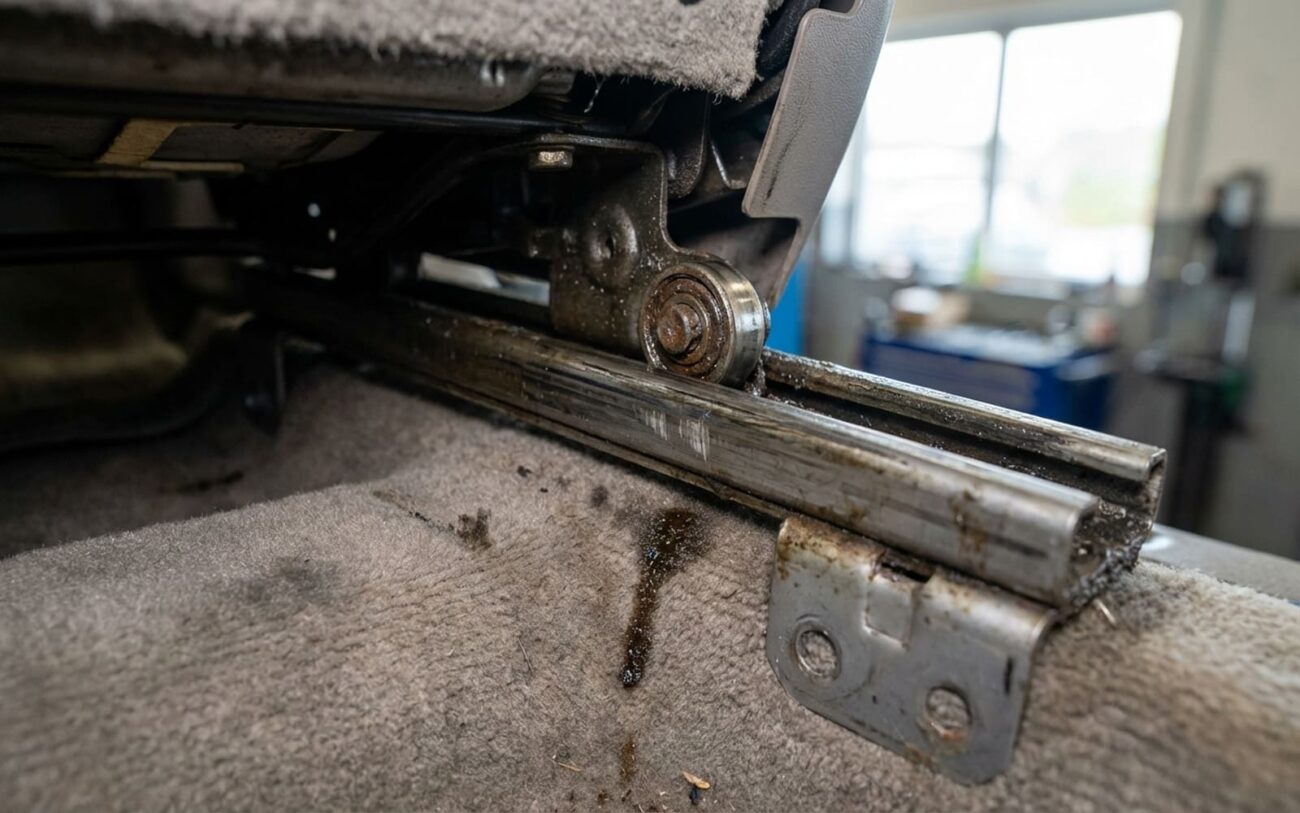
Seat rails fail quietly at first—just a squeak, maybe a little wiggle when you brake hard. But I’ve pulled enough seats over 25 years to know: that’s not “just wear.” That’s the beginning of a safety-critical failure. And once the internal components start breaking down, you’re one pothole away from a seat that moves when it shouldn’t. That changes everything—seatbelt geometry, airbag timing, your control in a crash. So let’s cut through the noise and talk about what actually goes wrong, how to confirm it, and what to do next.
Symptoms That Mean Trouble (Not Just Annoyance)
Fore-aft play—where the seat shifts forward under braking or backward when you accelerate—is the reddest of red flags. I’ve measured up to 5mm of movement on some customer vehicles. That’s not “a little loose.” That’s a failed locking mechanism or worn rack gear. And it’s not just about comfort. If the seat moves during impact, the occupant isn’t where the airbag and seatbelt expect them to be. That’s a design compromise you don’t want.
Lateral wobble—side-to-side rock when you get in or corner hard—usually points to ovalized bushings or pin holes inside the rail. These are supposed to be tight, precision-fit joints. Once they wear, the whole seat feels like it’s floating. On Fords and GMs, I see this a lot in high-mileage fleet vehicles where multiple drivers adjust the seat daily.
Grinding during adjustment? That’s not “dry.” That’s metal-on-metal. The plastic sliders inside the rail have likely cracked or turned to dust. I’ve opened rails where the sliders were just granules at the bottom of the track. No lubrication in the world fixes that.
Binding or jamming—especially at certain positions—usually means debris: coins, gravel, even dropped bolts. But if cleaning doesn’t fix it, the rollers or guides are failing. And a consistent squeak over bumps, even when you’re not adjusting the seat? That’s often the first sign of lubrication breakdown. Don’t wait. I’ve seen squeaks turn into seized rails in under six months.
Is It the Rail—Or Something Else?
Before you pull the seat, rule out the mimics. I’ve seen guys replace rails only to find loose mounting bolts or a cracked seat frame. Waste of time, waste of money.
| Symptom | Likely in Rail | Common Mimics | How to Confirm |
|---|---|---|---|
| Fore-aft play | Worn rack gear teeth (manual), stripped drive channel (power) | Loose floor bolts, cracked seat frame near lock |
Remove seat (battery disconnected, wait 10 min). Inspect rack and pawl. Any lash over 2mm = rail wear.
|
| Lateral rock | Worn internal bushings or pin holes | Loose seat pedestal, worn riser bushings |
Rock seat with hands. If movement is at rail joints, it’s rail wear. Torque-check all pedestal bolts—spec is usually 35–50 ft-lbs.
|
| Grinding during adjust | Broken plastic sliders, collapsed rollers | Debris in track, failing motor/gearbox |
Remove seat. Disconnect motor on power seats. Move rail by hand. If grinding remains, it’s in the rail.
|
| Squeaking over bumps | Dry or degraded internal lubrication | Seat springs, trim rub, frame bushings |
Use a stethoscope or long screwdriver. Touch it to different points while someone rocks the seat. Sound at the rail? That’s your source.
|
Why Rails Fail (And It’s Not Always Wear)
Wear is the obvious culprit—especially on high-mileage vehicles. Every time the seat moves, the rack gear teeth take a hit. Over time, they round off, the pawl slips, and you get play. But I’ve seen rails fail at 80,000 miles with no heavy use. Why? Corrosion.
Salt, moisture, and road grit get under the seat and sit in the rail channels. On vehicles from the Northeast or Great Lakes, I routinely find pitted rails even when the undercarriage looks decent. Rust increases friction, accelerates wear, and can seize the mechanism entirely.
And don’t overlook galvanic corrosion—especially on newer models with aluminum rails and steel bolts. Dissimilar metals + moisture = seized fasteners and damaged threads. I’ve had to cut bolts out because they fused to the rail.
Plastic sliders? They’re a weak point. Designed to reduce friction, but they age. Heat cycles, UV exposure (if sunroof is open), and constant load make them brittle. Once they crack, they jam the rail or disintegrate. I’ve seen rails where the sliders turned into a fine black powder—no wonder it wouldn’t move.
Impact damage is rarer, but it happens. Forcing the seat forward over a jammed seatbelt buckle, or a minor collision that bends the rail slightly, can cause binding. Even a bent floor pan from a previous repair can misalign the rails.
Here’s something I’ve confirmed in the shop:
Several manufacturers—especially on 2019–2022 models—had issues with under-lubricated rails from the factory. I’ve pulled seats where the rack was bone dry, no grease at all. Not a design flaw, but a production oversight. A TSB exists for some models, but even without one, relubrication fixes the squeak and slows wear.
How I Fix It (And What I Avoid)
If the rail moves smoothly and there’s no structural damage, cleaning and relubing is the way to go. But do it right.
First: disconnect the battery and wait 10 minutes. Airbag system must be de-energized. Then remove the seat—usually Torx T50 or E14 bolts. Label the harness connectors before unplugging.
Clean the rails with brake cleaner and a nylon brush. No metal tools—scratches become wear points. Blow out debris with compressed air. Inspect for burrs, deep pitting, or broken plastic parts.
If everything’s intact, apply a thin, even coat of OEM-spec grease. Nyogel 767A is what I use—designed for plastic/metal sliding surfaces. Don’t use lithium grease. It’s too thick, attracts dirt, and can degrade plastic sliders. And never use WD-40 or dry lube sprays. They wash away or turn into grinding paste. I’ve seen rails fail faster after a “quick lube” with silicone.
If the rack teeth are worn, the rail is bent, or the sliders are gone—replace the assembly. For most seats, the rail bolts to the frame. Swap it out, transfer the motor if needed, and torque to spec. Power seat motors are usually integrated, so you replace the whole unit.
But if the rail is welded to the frame? That’s a full seat frame replacement. You’re disassembling the entire seat—foam, trim, heaters, controls—and rebuilding on a new frame. Labor-intensive, but necessary if the structure’s compromised. I’ve done it on BMWs and Lexuses where the rail was part of the frame casting.
Did It Work? Here’s How I Test
After reassembly, run the seat through full cycles—forward, back, up, down. Listen for hesitation or grinding. On power seats, check memory positions. If it hesitates, the motor’s straining—could mean binding or misalignment.
Once installed, lock it and test for play. Lean back hard, then push forward against the dash like you’re braking hard. No movement. None. If you feel even a millimeter of shift, the rail or mounting isn’t secure.
Rock the seat side-to-side. Movement should only happen at the hinges, not at the floor. If it’s loose laterally, check the pedestal bolts and internal rail bushings.
Finally, drive it. Hit bumps, make turns. Listen. If it’s quiet and solid, you’re good. If a squeak comes back, you missed a lubrication point—or the sliders are still failing.
Cost vs. Value: When to Replace, When to Walk
| Repair Type | DIY Cost | Shop Cost | Success Rate | Risks |
|---|---|---|---|---|
| Clean & Re-lube | $20–$40 | $150–$300 | High (if no wear) | Over-greasing can migrate to carpet |
| Replace Rail | $150–$400 | $500–$900 | Very high | Misalignment, loose seat if not torqued |
| Replace Frame | $700–$1,500 | $1,500–$3,000+ | High, but labor-sensitive | SRS faults from harness damage |
My Rule of Thumb
If the repair costs more than 40% of the car’s value, look at a used seat assembly. Pull one from a salvage yard with low miles, same trim, and matching safety features. Bolt it in, and you’re done. On a 2018 Honda Accord, I’ve saved customers $2,000 this way. Just verify airbag connectors and seat controls match.
Prevention: What I Tell My Customers
Vacuum under the seats every few months. Sand and salt are rail killers. I’ve seen more damage from road grit than from mechanical wear.
Never force the seat. If it binds, stop. Clear the track. Forcing it bends rails or strips gears.
During oil changes or tire rotations, take 30 seconds to look at the exposed rail. Rust? Clean and grease it before it spreads.
And once a year, do the “brake test”: lock the seat, push hard against the dash. If it moves, you’ve got play. Time to dig in.
Fixing diagnose seat track wear early isn’t about comfort. It’s about keeping the occupant where they need to be when it matters most. That’s not just repair work. That’s safety.
