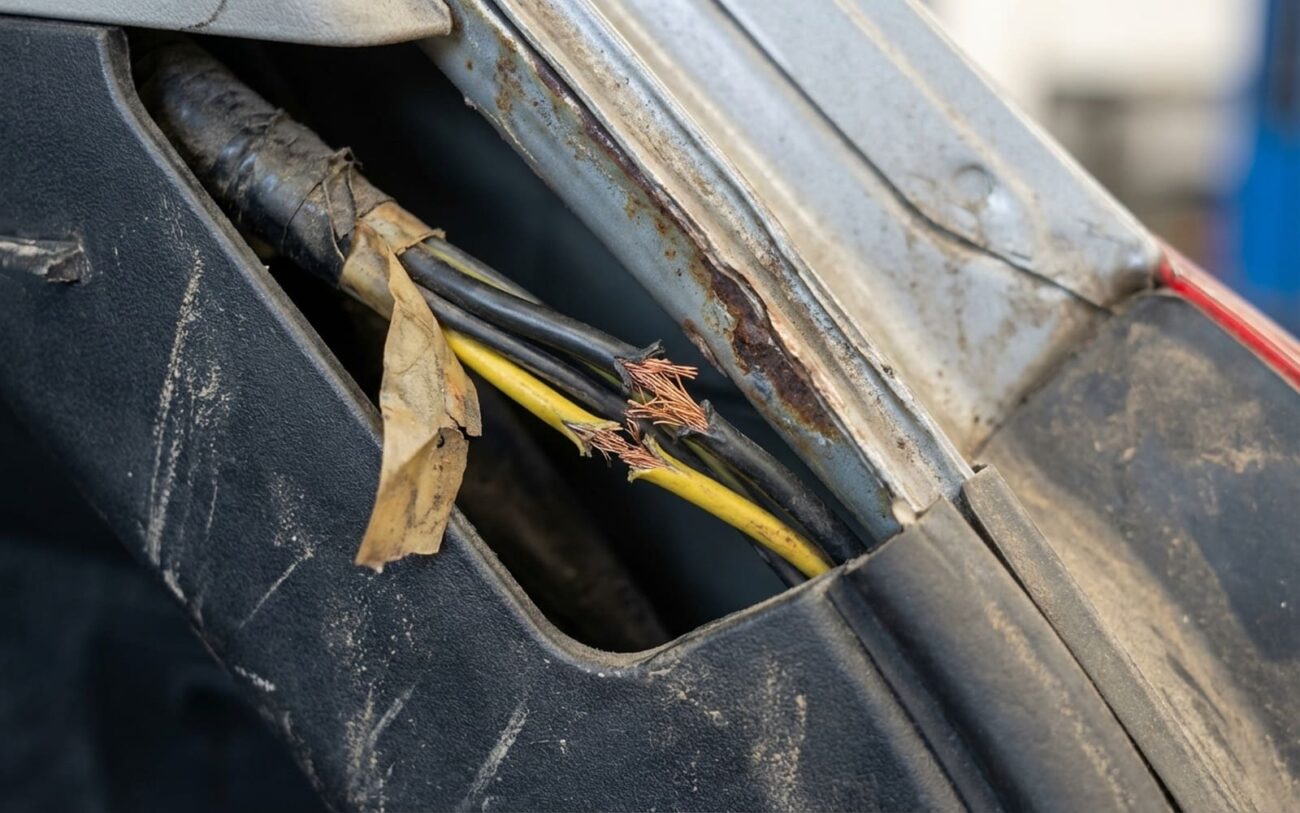
If your third brake light is out but the left and right still work, don’t start swapping parts. I’ve been doing this for over 25 years—seen this exact issue on everything from Camrys to Chargers—and I can tell you: 9 times out of 10, it’s not the light. It’s the wires running up the C-pillar, fatigued from opening and closing the trunk. The fix? Depends on what you find behind the trim. But first, you’ve got to test.
Symptom First, Then Logic
CHMSL dead. Main brake lights fine. That tells you something right away: power is getting to the brake switch, the fuse is good, and the BCM is waking up. This circuit is separate. So don’t waste time checking fuses or scanning for codes. You’ll just spin your wheels.
Now—does the light flicker when you open the trunk? That’s not a maybe. That’s a yes or no. If it flickers, you’ve got a broken wire in the flex zone. Period. The copper’s fractured inside the insulation. Looks fine on the outside, but it’s done. I’ve cut open dozens of these harnesses—same story every time.
Test at the Connector—No Exceptions
Before you touch a single trim clip, grab your multimeter. Back-probe the CHMSL connector in the spoiler while someone hits the brake pedal. Look for 12 volts on the signal wire and solid ground on the return.
You get voltage? Then the light’s bad. Replace it. Simple.
No voltage? Now you’re in the harness. But don’t jump to conclusions. Could still be a bad ground at the splice point, or a pinched wire near the hinge. I’ve seen guys replace the whole light assembly—$180 part—only to find out the wire was broken two inches from the connector. Waste of time. Waste of money.
| Symptom | Likely Fault | Definitive Test |
|---|---|---|
| CHMSL dead, no flicker | Open circuit in C-pillar harness or failed light | Back-probe connector: voltage present? If yes, replace light. If no, trace upstream. |
| Flickers when trunk moves | Fractured wire in flex zone (usually near hinge) | Disconnect harness at both ends. Use multimeter in continuity mode. Flex the wire. Intermittent beep = broken conductor. |
What’s Really Breaking: Three Failure Modes
Wire fatigue is the big one. On a daily driver, that trunk opens 5, 10, 15 times a week. Over three years? That’s thousands of flex cycles. Copper doesn’t like that. It work-hardens, cracks, fails. Most breaks happen just above or below the hinge—where the bend radius is tightest. You won’t see it. Insulation stays intact. But inside? Dead.
Pinched harness—usually someone’s fault. Maybe a previous repair. Stereo install. Body work. They didn’t reclip the loom, and now it’s getting crushed between trim and metal. Saw a 2016 Accord once—wire cut clean through by a misaligned pillar cover. Took me 10 minutes to spot it.
Corrosion sneaks in when water gets down the pillar. Clogged sunroof drain? Failed seal? Moisture pools, wires corrode. Green gunk on terminals. High resistance. Then nothing. I’ve pulled apart C-pillars on Jeeps from up north—looked like a science experiment in there.
On 2008–2014 Dodge Chargers and Challengers? This was a known issue. Chrysler even issued a TSB—can’t quote the number offhand, but it’s out there. They recommended replacing the entire harness section. Not splicing. Not “fixing.” Replace it. And honestly? They were right.
How I Fix It—Based on What I Find
One broken wire, visible and accessible DIY-FEASIBLE
No need to panic. Strip the wires, solder them. Use heat shrink with adhesive liner—none of that cheap tape-and-butt-connector junk. The adhesive seals out moisture when you heat it. Then, coat the terminals with dielectric grease before plugging it in. Prevents corrosion down the road.
And for God’s sake—route it right when you put the trim back. Don’t let it hang or bind. I’ve seen guys fix the wire only to pinch it during reassembly. Then it fails again in six months.
