Troubleshooting Laser Headlights: Real-World Diagnosis
I’ve been working on BMW and Audi laser systems since they first rolled out in 2015. Let me tell you — when one fails, it’s not just a “headlight out” situation. These are complex, safety-critical systems that shut down hard when something goes wrong. And yes, I’ve seen shops replace $4,000 headlight assemblies only to find out the real issue was a $12 fuse.
So before you start tearing into the module, let’s walk through how I actually diagnose these — step by step, in the order I do it. Not how the manual says, but how it works on the lift.
First: What’s Really Broken?
Two main failure patterns I see:
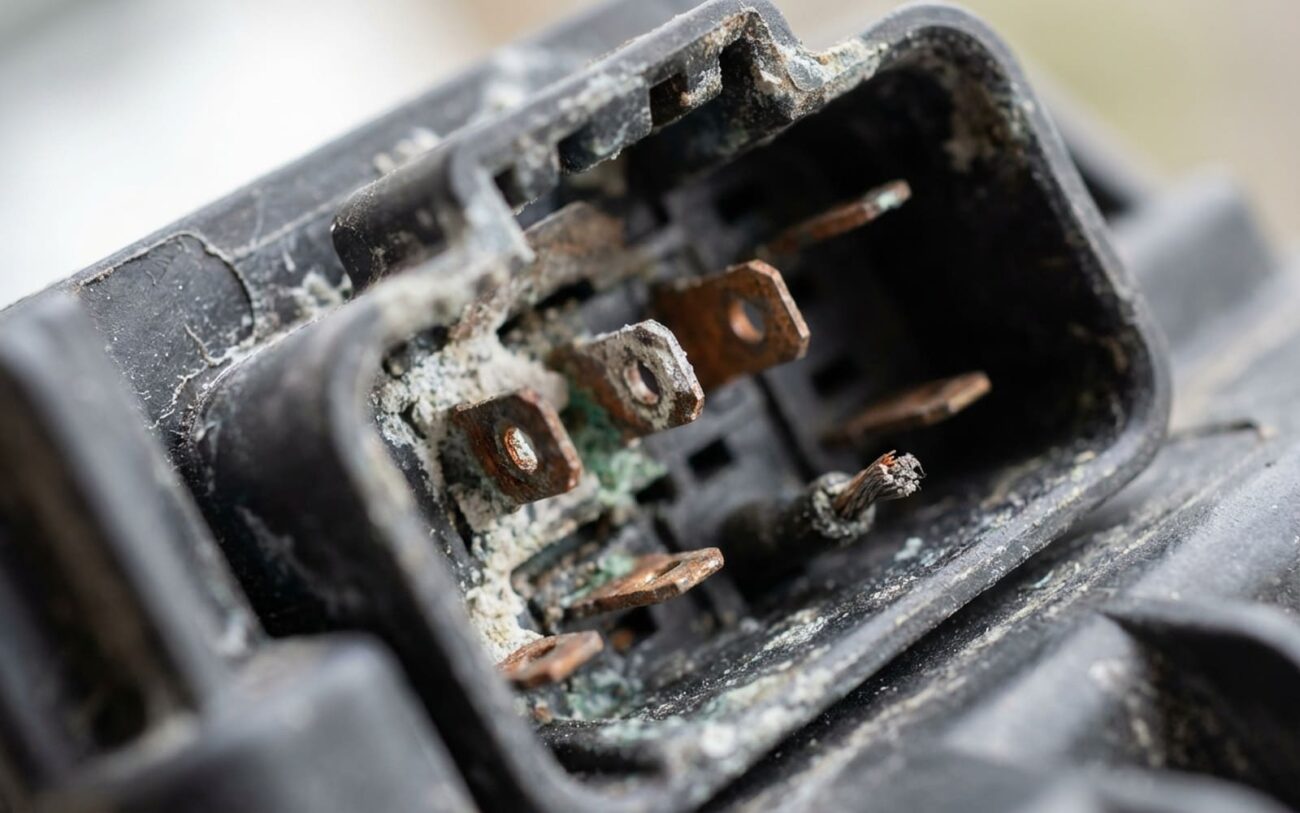
Complete shutdown — lights don’t come on, dashboard throws a “Laser Light Inactive” or “Communication Failure” message. This looks like total system death. But don’t assume it’s the laser module. Could be power, ground, or CAN bus. I’ve had more than one case where a corroded connector in the front junction box killed comms to the LDM (Laser Driver Module).
Active range limitation — low beams work fine, high beams come on but don’t extend. You get a “Laser Range Limited” warning. The car defaults to LED-only high beam. It looks functional, but you’re missing 300+ meters of range. This one’s trickier because it could be internal (diode, phosphor wheel) or external (camera, leveling sensor).
Here’s what most techs miss:
The LDM has thermal lockout built in. If it sees overheating, loss of optical feedback, or a short, it shuts down permanently — no restart, no reset. You can’t clear it with a scanner. And no, reflashing the module won’t fix it. I’ve tried. Once that lock trips, the LDM is toast unless the manufacturer has a reset procedure (BMW does, but only through dealer-level ISTA).
Step One: Rule Out the Cheap Stuff
I don’t touch the headlight until I’ve checked the basics. And I mean all of them.
Start with a full scan using ISTA (BMW) or ODIS (Audi). Look for codes in the headlight control module, but also check the front camera, leveling sensors, and body domain controller. A faulty glare-free high beam camera can mimic a laser fault — I’ve seen it on three 2018 A8s this year alone.
Then go physical:
-
Check fuse F23 (or equivalent — varies by model). Not just visually — test for voltage with the system powered.
-
Inspect the LDM connector at the headlight. Look for corrosion, bent pins, or moisture. On coastal cars, this is often the culprit.
-
Verify power and ground at the module. You need 11–14V on the supply line, and less than 0.2V drop on ground.
-
Check Low-Speed CAN signal integrity with an oscilloscope. Look for clean 2.5V–3.5V differential signals. Noise or flatlining means wiring or module communication issues.
When It’s Actually the Laser Module
Okay — you’ve ruled out fuses, wiring, sensors, and comms. Now you’re looking at internal failure. Here’s what I find inside, in order of frequency:
Laser diode degradation — not sudden death, but slow decay. Output drops over time due to “efficiency droop.” You’ll see DTCs like “Laser Output Below Threshold.” On the scope, the drive current looks normal, but light output is down 30–50%. Often tied to cooling issues. I’ve pulled modules where the micro-channel cold plate was clogged with debris from degraded coolant.
Phosphor wheel failure — this is common on BMWs from 2015–2017. The wheel spins at 6,000 RPM and gets roasted by blue laser light. Over time, the ceramic phosphor coating cracks or delaminates. You can sometimes see this with a borescope — look for dark spots, warping, or flaking. When it fails, the system can’t convert blue to white efficiently, so output drops and the LDM throws a fault.
Optical contamination — internal outgassing from plastics or adhesives coats the lens or mirror. It’s subtle — you won’t see it from the outside. But over 5–7 years, transmission drops enough to trigger monitoring codes. I’ve measured 40% light loss on units that looked pristine externally.
Cooling system failure — sealed coolant loops or micro-channels can leak or clog. No external signs. But thermal imaging shows hot spots on the housing. Once the thermal paste degrades or coolant leaks, the diode overheats during operation, triggering repeated shutdowns. Eventually, the lockout kicks in.
Repair Options: What Actually Works
Let’s be real — there’s no “fix” for a failed laser diode or phosphor wheel. These are sealed assemblies. No OEM service procedure exists to open and repair them. Any shop claiming they can “rebuild” the photonics core is guessing.
Replace the Laser Driver Module Professional Only
The LDM is replaceable on some models (BMW F90, G11), but it must be coded with ISTA. No workaround. And yes, you need a full system calibration afterward. I’ve had cases where the laser came back online but the adaptive beam shaping didn’t work — missed coding step.
Replace the Entire Headlight Assembly Professional Only
This is the standard fix on most Audis and later BMWs. Cost? $3,000–$6,000 installed. But here’s what they don’t tell you: the new unit must be aimed with a certified optical aimer. Even 0.2° off can blind oncoming traffic. And in Germany? That’s an AU failure. I’ve had customers come back after “replacing it themselves” — lights were aimed at the sky.
External Seal or Connector Repair Rare
If you catch it early — say, minor connector corrosion — you can clean and reseal it with OEM-approved dielectric grease and sealant. But once moisture hits the PCB? Don’t waste time. The salt residue will keep causing shorts. I’ve tried cleaning — it always comes back.
Validation: Don’t Skip This Step
Replacement isn’t the end. You have to verify it.
After LDM Replacement:
-
Clear codes, power cycle, then re-scan. No pending codes.
-
Run the built-in laser function test via ISTA/ODIS. Must complete without errors.
-
If possible, measure optical output with a 450nm laser power meter. Should be within 10% of spec (typically 5–7W).
After Full Headlight Replacement:
-
All functions must work — low beam, high beam, cornering, adaptive beam.
-
Dynamic leveling calibration must complete successfully.
-
Static aim checked with optical aimer. Tolerance: ±0.2° vertical, ±0.1° horizontal.
These tools — ISTA, laser power meter, optical aimer — aren’t DIY-grade. If your shop doesn’t have them, find one that does. Driving with misaimed laser beams isn’t just illegal — it’s dangerous.
Cost vs. Value: When to Walk Away
I use a simple rule in my shop: if the repair exceeds 40% of the car’s private-party value, consider alternatives.
One option — and I’ve done this on several high-mileage M5s and A8s — is to reprogram the car to accept OEM LED headlights. You lose the 600-meter range and adaptive high beam, but you get reliable, road-legal lighting for under $1,000 per side. The car doesn’t fault, and you can still use high beam assist — just not laser-enhanced.
It’s not perfect, but it’s better than driving with one headlight out.
Prevention: Keep It Alive Longer
You can’t stop aging, but you can slow it down.
-
Heat kills. Keep the engine cooling system in top shape. Overheating the underhood environment stresses the LDM’s thermal management.
-
Scan early. During oil changes, pull codes from the headlight module. Look for “Laser Output Trend Increasing” — that’s early degradation.
-
Check for moisture. Persistent fogging? Seal’s failing. Fix it before corrosion hits the PCB.
-
Avoid harsh cleaners. Some detailers use solvents that degrade headlight seals over time. Stick to mild soap and water.
