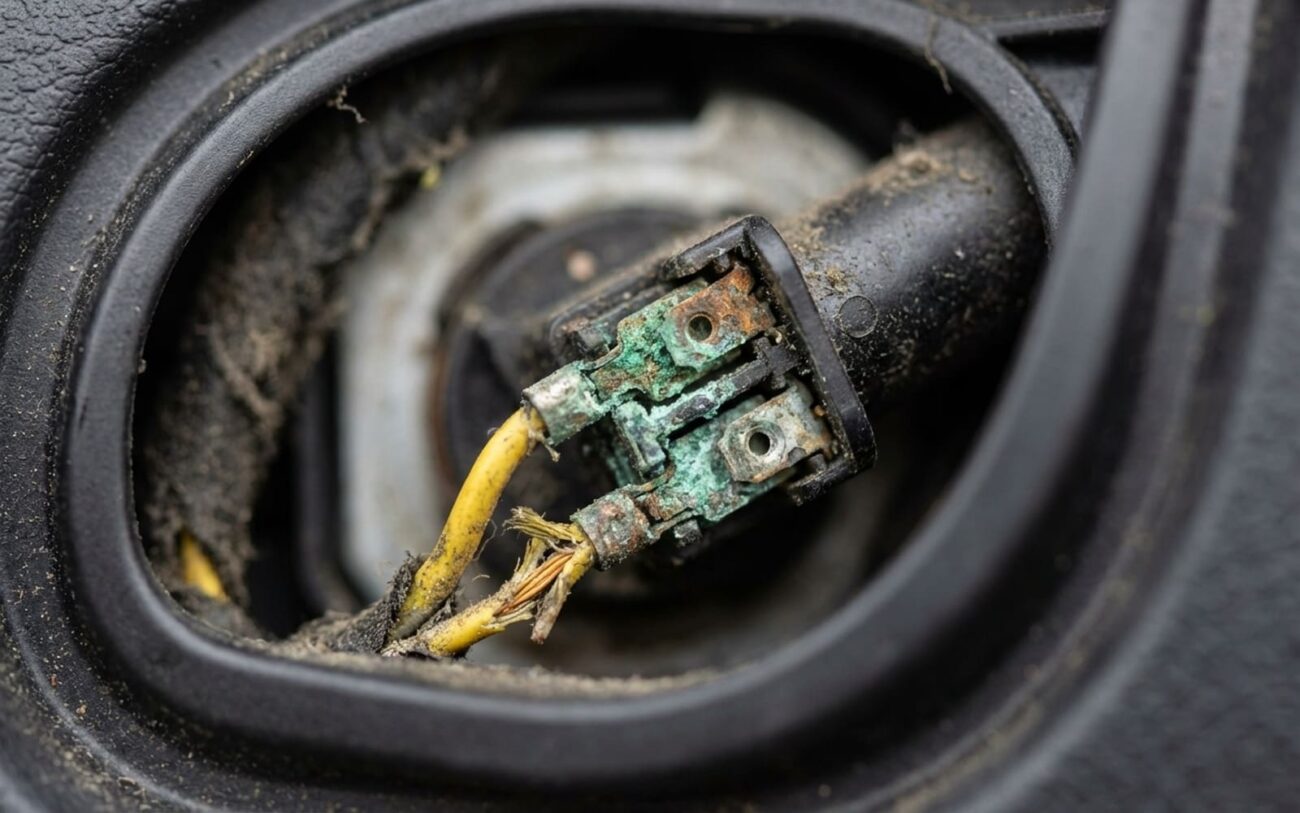
That airbag light on your dash? It’s not just another warning—it’s the system telling you it’s taken itself offline. When you see it, one or more airbags or pretensioners are disabled. Period. And if the code pulling it up is B0080 or B0081, you’re almost certainly dealing with a side impact sensor circuit issue. But here’s the thing I’ve learned after 25 years: the sensor itself is rarely the root cause.
Symptom First, Diagnosis Second
Let’s start with what you actually see. The SRS light comes on and stays on. No blinking, no intermittent flickering—just solid. That means the control module has stored a hard fault. On most vehicles, the system defaults to disabling side airbags when it sees a problem in the impact sensor circuit. So yes, you’re driving unprotected from the side.
Now, B0080 and B0081 aren’t “bad sensor” codes. They’re circuit codes—specifically, open or high-resistance faults in the side impact sensor circuit. Could be the sensor. Could also be a broken wire under the rocker panel, a corroded pin in the harness, or a loose terminal at the airbag module. I’ve replaced exactly zero sensors on 2018–2022 Toyota Camrys where the real issue was under the rear seat—water got in, wires rotted. The sensor was fine.
And don’t ignore physical damage just because the light isn’t on. I’ve pulled sensors from vehicles with no codes, no warnings, but the housing was cracked from a minor curb strike. These aren’t dumb switches—they’re precision MEMS accelerometers calibrated to detect lateral G-forces within milliseconds. Crack the housing, and the calibration’s shot. Doesn’t matter if it still reads “good” on the scanner. It won’t deploy when it should.
How I Diagnose: No Guessing, Just Testing
I don’t care what the scan tool says until I’ve tested the circuit. And that means more than reading codes. You need a real SRS-capable scan tool—not a $30 OBD2 reader from the auto parts store. You also need a high-impedance multimeter and patience. This isn’t a rush job.
| Symptom | Likely in Sensor | Common Mimics | Definitive Test |
|---|---|---|---|
| Stored DTC: “Open Circuit” or “Resistance High” (e.g., B0080) | Internal failure, cracked solder, corroded pins at sensor | Wiring break, loose connection at module, bad ground |
Do a terminal drag test on the sensor connector—check for loose pins. Then measure resistance from the SRS module to the sensor. If it’s under 1 ohm and you’ve got solid continuity, the sensor’s the problem. If not, start chasing wiring. |
| Stored DTC: “Short Circuit” or “Plausibility Failure” | Internal short, calibration drift from impact | Pinched wire, moisture in harness, faulty module, cross-talk |
Disconnect the sensor. Check for continuity between signal wires and ground or power on the harness side. If there’s no short, the sensor’s suspect. For plausibility codes, compare live data to a known-good side. Tap the B-pillar gently—if the values don’t respond symmetrically, the sensor’s compromised. |
| Visible damage to housing or bracket | Sensor integrity likely compromised | Damaged trim or body panel, not the sensor |
Remove the sensor per OEM procedure—battery disconnected, wait 3+ minutes. Inspect for internal cracks, moisture, or misalignment. If anything’s off, replace it. No second chances here. |
Here’s what I see weekly: techs replace the sensor because the code points to it, but they never test the harness. On a 2016 Honda Accord, I found a chafed wire under the driver’s seat—same circuit, same code. Replaced the harness section, cleared the code, done. Sensor was fine. Save your customer the cost and your reputation the hit—test first.
When the Sensor Is Actually Bad
Yeah, sometimes the sensor really is the problem. But it’s not usually age. It’s damage.
Sub-threshold impacts are a big one. A hard door slam into a pole, a low-speed fender bender—these don’t trigger deployment, but they can deform the internal accelerometer. The sensor still powers up, still communicates, but its response curve is off. It might not register a real side impact when it counts. I’ve tested these with controlled taps—output is sluggish or erratic. Game over.
Corrosion is another killer, especially in coastal areas or where roads are salted. The connector O-ring fails, moisture gets in, and you get green corrosion on the terminals. I’ve pulled sensors from 2014–2017 Fords with known TSBs on this—TSB 16-0073, if you’re looking. The repair? Replace the sensor and seal the harness entry point better than stock.
And yes, electrical overstress happens. Jump-start with reversed polarity, a bad alternator spiking voltage, or a poorly done aftermarket install—any of these can fry the sensor’s internal circuitry. But again, don’t assume. Test the power and ground circuits first. A failed sensor won’t take down the whole bus, but a bad module might mimic one.
Repair: No Shortcuts, No Exceptions
Professional Territory Only – SRS System
This isn’t a “figure it out as you go” system. If you’re not trained, don’t touch it. Period.
Confirmed Internal Sensor Fault Professional Only
Bent or Broken Mounting Bracket Professional Only
Corroded Harness Connector Professional Only
Did It Work? (Spoiler: Test It)
Reconnecting the battery isn’t the end. The SRS light should come on for 6–8 seconds, then go out. If it stays on, you’ve got a problem. If it blinks, you’ve got a code. Either way, it’s not fixed.
Use your scan tool to check for codes. None should remain. Then pull live data from the side impact sensor. At rest, it should read 0.00 ±0.02 g. Tap the B-pillar—value should spike momentarily and return. If it’s sluggish, floating, or reads 0.5 g at idle, something’s wrong. Recheck mounting, wiring, initialization.
And physically inspect: connector fully seated? Secondary lock engaged? Mounting bolts torqued? Any of these missed, and you’re rolling with a latent fault.
Cost? Risk? Let’s Be Real
| Repair Type | DIY Cost | Shop Cost | Success Rate | Secondary Risk if Failed |
|---|---|---|---|---|
| Sensor Replacement (Part + Labor) | Not Recommended | $300 – $800 | 99%+ | Wrong torque, missed initialization, or poor handling can cause non-deployment. Or worse—accidental deployment during service. |
| Wiring/Connector Repair | Not Recommended | $200 – $500 | 95%+ | Bad crimp or unsealed connection leads to intermittent faults, recurring codes, or moisture damage down the road. |
Look—this isn’t a “wait and see” repair. You don’t drive with a known SRS fault. Not if you care about safety. Not if you’ve got passengers. The cost is nothing compared to the risk. And no, it doesn’t matter if you “don’t get in accidents.” Accidents don’t schedule appointments.
Prevention: Stay Ahead of the Curve
After any side impact—shopping cart, curb, door ding—get the system scanned. Even if the light’s off. Modern modules log near-deployment events. These don’t always set codes, but they can affect sensor calibration. I’ve pulled “event history” from a 2020 Subaru that showed a 3.2g lateral hit—driver had no idea.
During routine service, take 30 seconds. Pop the kick panel, check the sensor mount. Look for corrosion, loose bolts, pinched wires. On vehicles stored outside or driven in wet climates, this is non-negotiable.
And one last thing—don’t ignore ADAS issues. If Lane Keep Assist is pulling toward the shoulder or the HUD isn’t showing ADAS data, it might not be related. But on some platforms (looking at you, GM and BMW), power distribution and ground networks overlap. A bad ground in the SRS circuit can mess with other modules. Always test the system, not just the symptom.
