Alright, let’s talk EV batteries. When your electric car starts acting up, everyone’s first thought is usually “Oh no, the big battery!” And yeah, sometimes it is. But after 25 years under the hood, I can tell you it’s not always the monster under the floor. We’re talking about that high-voltage traction battery pack, the one that actually powers the car. Not the little 12-volt auxiliary battery that runs your radio and lights – though, believe it or not, a weak 12V can trick the car’s computer into thinking the big pack has issues. The traction pack is a complex beast, full of lithium-ion cells grouped into modules, all constantly watched by the Battery Management System (BMS). Any real discussion about range, power, or charging problems starts right there.
Spotting a Real Pack Problem
So, how do you know it’s the big battery and not something simpler? The most common sign I see is a significant, consistent drop in driving range. I’m not talking about losing 5-10% over five years – that’s just normal aging, like us getting a bit slower. I mean, you used to reliably get 240 miles on a full charge, and now you’re struggling to hit 180, and you’ve verified this over multiple charges and drives under similar conditions. That’s a red flag.
Another tell-tale sign is when your car repeatedly refuses to charge past 80% or 90%, even when you’ve told it to go to 100%. What’s usually happening there is the BMS is stopping the charge because one particular cell group is hitting its maximum voltage too quickly. That’s a classic sign of cell imbalance, meaning some cells are weaker or stronger than others, and the system has to protect the weakest link.
First Checks: Don’t Blame the Big Battery Yet
Before you panic about a $20,000 battery replacement, let’s rule out the easy, less costly stuff. A lot of symptoms that look like battery pack issues actually come from other places. The biggest culprit I see? The 12-volt auxiliary battery. If it’s old or weak, it can mess with the BMS communication, leading to inaccurate range estimates or charging faults. It’s like the car’s brain getting bad info. Other factors, like underinflated tires, driving like you’re on a race track, or blasting the AC/heat, can also make your energy consumption look worse than it is. The key here is methodical elimination, just like any good diagnosis.
| Symptom | Likely Pack Issue | Common Mimics | How I Confirm It’s the Pack |
|---|---|---|---|
| Reduced Range | Cell imbalance, high internal resistance, or overall capacity loss. | Weak 12V battery, low tire pressure, extreme temps, aggressive driving, or faulty energy sensors. |
I run a controlled capacity test. Fully charge it, then drive at a steady 60 mph on a level highway until it’s almost empty. Log the total miles and energy used (in kWh). Compare that to the car’s original EPA highway rating. If the actual kWh used is way below the pack’s rated capacity, then yeah, degradation is confirmed. An OBD2 adapter with an app like ScanMyTesla or Car Scanner is invaluable here. |
| Won’t Hit 100% SOC | One or more cell groups reaching voltage limit early, forcing the BMS to cut charging. | Charger issues (AC or DC), user-set charge limit, faulty charge port temp sensor, or a failing onboard charger. |
I monitor individual cell group voltages during a DC Fast Charge session using an OBD2 tool. If one group spikes to 4.2V while others are still lagging at 4.0V or lower, that’s a clear sign of imbalance within the pack itself. |
| Reduced Power / Limp Mode | High internal resistance in a cell group causing voltage sag under load, triggering BMS power derating. | Drive unit overheating, inverter fault, or a stuck contactor. For instance, a failing inverter can absolutely feel like pack power loss. |
I log cell voltages during wide-open-throttle acceleration. If one group drops significantly below the others (say, to 3.0V compared to 3.5V for the rest), the problem is definitely inside the pack. |
What’s Actually Failing Inside the Pack?
Once we’ve confirmed it’s the traction battery, we start looking at the root causes. The most common thing is just gradual capacity loss due to calendar and cycle aging. It happens to all lithium-ion batteries; it’s unavoidable. More concerning, and often linked to those charging issues, is cell imbalance, where individual modules degrade at different rates. This often happens because the passive cell balancing system isn’t keeping up, especially in older packs or ones that have seen a lot of fast charging cycles.
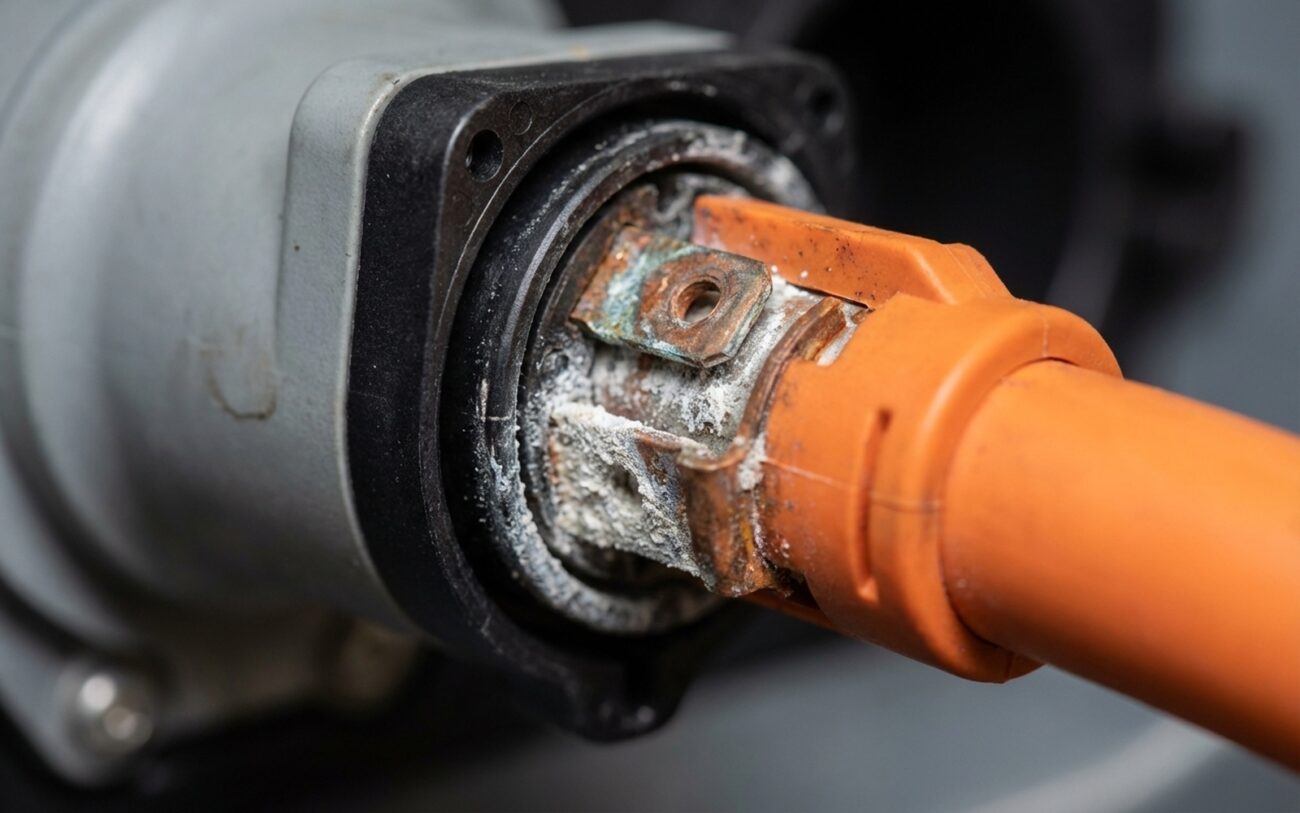
Then there are the physical failures. Repeated heating and cooling cycles can weaken the busbar connections between modules, increasing resistance and creating hot spots. Internal contactors – those big high-voltage relays inside the pack – can also weld shut or develop pitting over time, messing with current flow. These can be repaired in some cases, but it means getting inside the sealed pack, which is a specialized job.
Fixing It: Your Options
Once you’ve got a clear diagnosis, what you do next depends on what we found. There are generally three paths:
Path A: Minor Cell Imbalance DIY-FEASIBLE WITH CAUTION
Path B: Single Failed Module or Cell Group PROFESSIONAL-ONLY
Path C: Widespread Severe Degradation or Internal Damage NON-REPAIRABLE
Buying Time: A Temporary Workaround
[TEMPORARY / LAST-RESORT] If you’re waiting for a repair or trying to squeeze a bit more life out of a dying pack, you can extend usability by minimizing stress. Drive gently, avoid highway speeds, precondition the battery while it’s plugged in, and try to keep your charge between 50% and 80%. This reduces voltage sag and delays limp mode, but understand, it does absolutely nothing to stop the underlying degradation.
Did It Work? Post-Repair Validation
Never, ever assume a repair worked without verifying it. For a rebalance (Path A), success means all your cell group voltages are within 50 millivolts of each other at full charge and under light load. If that spread is still over 100mV, the imbalance is still there. For a module replacement (Path B), I always recommend a full capacity test: drive a repeatable route and log the kWh used. You’re looking for 90–95% of the expected capacity for a pack of that age and mileage. Then, monitor cell voltages over five full charge cycles – any drift over 30mV between groups suggests a compatibility issue or that the new module is aging faster than the rest. Use the same OBD2 tool and app you used for diagnosis to keep your data consistent.
The Hard Truth: Cost, Risk, and When to Walk Away
Repairs vary wildly in cost and risk. Here’s how I break it down for my customers:
| Repair Type | DIY Cost | Shop Cost | Success Rate | Secondary Risk if Failed |
|---|---|---|---|---|
| Re-balance | $50–$150 (OBD2 adapter + app) | $0–$200 (diagnostic or monitoring fee) | ~80% for mild imbalance | None. It’s non-invasive and you can always try again. |
| Module Replacement | N/A (Not DIY-safe) | $2,000–$7,000+ | ~95% with qualified technician | The new module might age differently than the original pack, potentially leading to re-imbalance within 1–2 years. |
| Full Pack Replacement | N/A | $10,000–$25,000+ | 100% (restores full function) | Mainly dependent on warranty terms. New or remanufactured packs might have limited coverage, so read the fine print. |
My Mechanic’s Rule of Thumb
If a full pack replacement costs more than 50% of the car’s current market value, and it’s out of warranty, you need to seriously consider selling it or parting it out. For example, putting $15,000 into a 10-year-old EV worth $18,000 rarely makes financial sense. Unless you’re deeply attached to the car or only use it for very low-mileage daily driving, it’s usually time to move on.
Keeping Your Battery Healthy & Catching Problems Early
Good habits go a long way in preserving battery health. To minimize calendar aging – that’s just the battery getting old – avoid leaving the car at 100% State of Charge (SOC) for extended periods, especially in hot climates. Most manufacturers, and I agree, recommend keeping your daily charge between 50% and 80%. This just reduces chemical stress on the cells.
Also, try to limit DC Fast Charging to when you absolutely need it. Frequent fast charging accelerates both capacity loss and cell imbalance. If you do use a fast charger, let the car precondition the battery while it’s still plugged in. This brings the cells to their optimal temperature before that high-current flow starts, which really cuts down on strain.
My Early Detection Routine for Owners
-
Monthly: Check your energy efficiency – Wh/mi or mi/kWh – using your car’s trip energy screen. A steady increase in Wh/mi (or decrease in mi/kWh) is a red flag for rising internal resistance.
-
Quarterly: Note down the car’s rated range at 100% charge (that’s the fixed EPA estimate, not the car’s adaptive guess). Sudden drops here are definitely red flags.
-
Annually: Use your OBD2 adapter to log cell group voltages at 90% SOC. Save that data. Next year, compare it. Even a 50mV drift in one group can signal the start of imbalance – catching it early means you can act before it really impacts performance.
