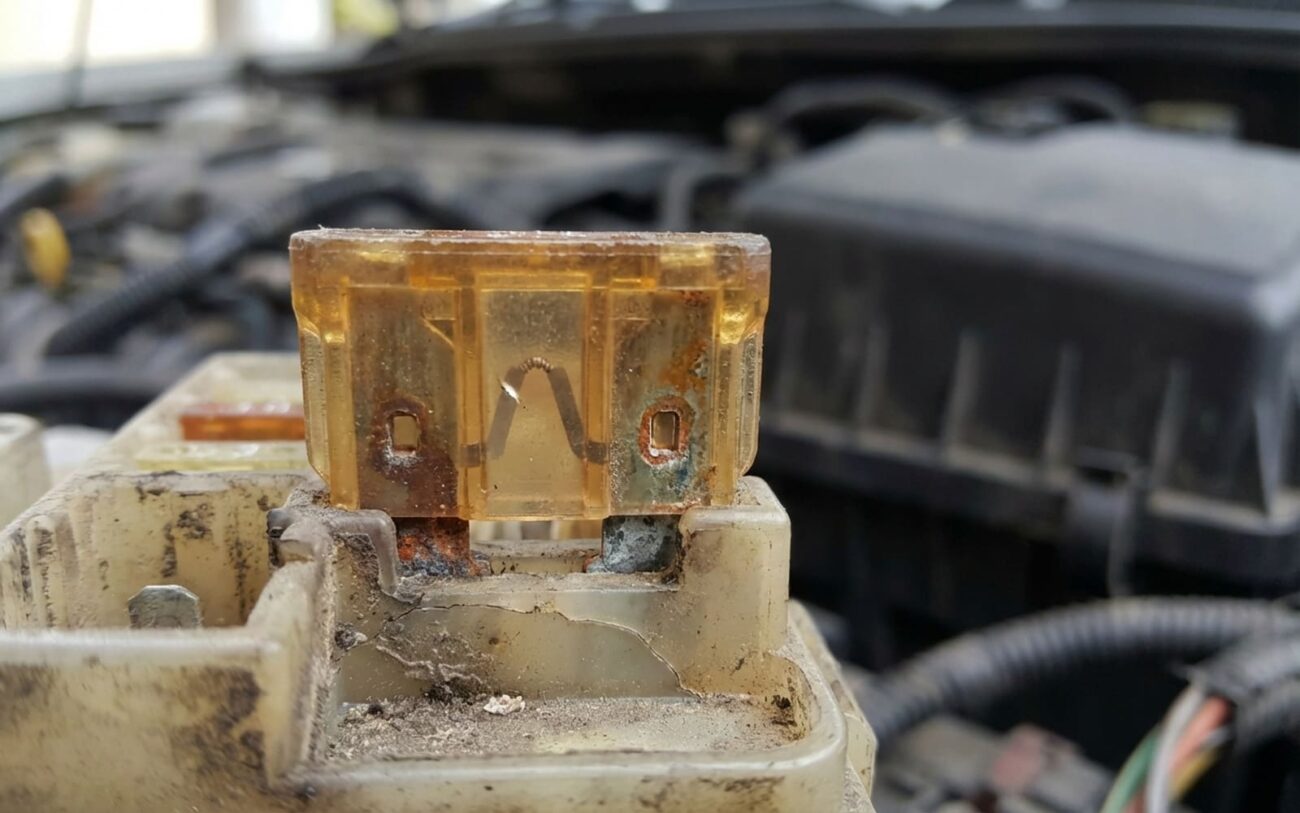
You changed a headlight bulb and now the whole thing’s dead? I’ve seen this a hundred times—especially on vehicles where the headlight socket’s cramped and your fingers are fighting for space. It’s not bad luck. You didn’t “get a bad bulb.” What you did was accidentally short the circuit, and now the fuse blew. That’s the system doing its job. But here’s the thing: if you just throw another fuse in without checking what happened, you’re setting yourself up to burn wiring or fry a control module. Let me walk you through how I diagnose this—for real.
What Actually Happened
If both low and high beams are completely dead right after bulb replacement, it’s almost certainly the fuse. Not the bulb, not the socket, not the switch. The fuse. Why? Because during installation, your tool or a stray wire touched power to ground—maybe in the socket, maybe at the connector. That instant surge trips the fuse. It’s designed to fail so everything else survives.
Intermittent flickering? That’s different. That could be a failing relay, a loose connector, or a bad ground. But total failure? Fuse first. Always.
Step-by-Step Diagnosis
Grab your multimeter. This isn’t optional. You need to test, not guess.
1. Test the Fuse (Properly)
Don’t just look at it. I’ve pulled fuses that looked fine but were cracked internally. Set your meter to DC voltage. Turn the ignition on, headlight switch on. Probe both metal tabs on the fuse.
-
12V on one side only? Fuse is blown.
-
12V on both sides? Fuse is good—move to the relay.
-
No voltage on either side? Could be a failed headlight switch or open in the feed wire. Rare, but happens.
2. Check the Relay
If the fuse is good but no power reaches the headlight, the relay’s next. Most headlights use a relay—especially if they’re HID or high-wattage LED. The relay is usually in the underhood fuse box. Find it by matching the label (often “HEAD LT L” or “HL LP LEFT”).
Here’s a trick I use: swap it with the horn relay. Same pinout, same specs, and you’ll know right away if it’s the problem. If the horn works and the headlight comes on—you found it. If not, the issue’s upstream.
3. Rule Out Ground Issues (Especially for Flickering)
If the light works sometimes but cuts out—especially over bumps—check the ground. On most cars, the headlight grounds near the radiator support or fender (G100, G200, etc.). Clean the point down to bare metal. Corrosion here kills performance.
Test it: with the light on, measure voltage between the battery negative terminal and the headlight’s ground wire. More than 0.1V? That’s resistance. Fix the ground before blaming the fuse or relay.
Why Fuses Blow (And Why They Keep Blowing)
A blown fuse is a symptom, not the problem. It’s like a smoke detector going off—you don’t just disconnect it and go back to sleep.
The most common cause? Accidental short during bulb install. But if the fuse blows again after replacement, something’s wrong. Could be:
-
Pinched or frayed wire in the socket
-
Oil or moisture in the bulb base (halogens hate skin oil)
-
Failing HID ballast drawing too much current
-
Aftermarket LED conversion with poor driver design
On 2014–2018 Accords, I see ballast failures all the time. The fuse blows, customer replaces it, it blows again. The root cause? The ballast. There’s a TSB for it. Same on some Rams—poor relay grounding in the fuse box causes voltage drop and premature failure.
How to Fix It (And Not Make It Worse)
Replacing a fuse? DIY-FEASIBLE. Just make sure it’s the right amperage—10A or 15A is typical. Use the diagram on the fuse box lid. Don’t guess.
Replacing a relay? Also DIY-FEASIBLE. Match the part number. Bosch-style 4-pin or 5-pin relays are standard. If you’re unsure, take the old one to the parts store.
But if the new fuse blows immediately? Stop. That’s not a fuse problem. That’s a short circuit. And now you’re in PROFESSIONAL-ONLY territory. You need current draw testing, maybe a wiring diagram, maybe a circuit tracer. I’ve seen guys burn through three fuses trying to “clear the fault” — all they did was cook the headlight switch.
After the Repair: Test Like a Pro
Don’t just turn the lights on once. Cycle the ignition three times. Check low beam, high beam, DRLs. If it works now but cuts out later, you missed something.
If the relay clicks but the light doesn’t come on, go back to the socket. Test for power and ground at the bulb connector. No power? Trace back to the relay output. No ground? Find the grounding point and clean it.
For stubborn issues, I use a thermal camera. A failing relay or high-resistance connector heats up under load. You’ll see it glowing on the screen before it dies completely.
Prevention: Do This Every Time
I disconnect the battery negative terminal every time I work on headlights. Takes 30 seconds. Eliminates the risk of a short. On modern cars with tight engine bays, it’s worth it.
Keep a fuse kit in your glove box: 5A, 10A, 15A, 20A blade fuses, and one spare headlight relay. Costs $15. Could save you a tow.
And for God’s sake—wear gloves when handling halogen bulbs. Skin oil creates hot spots on the glass. That’s how they fail early. I’ve had customers swear the bulb was “defective” — no, it was their fingers.
Final Word
This isn’t rocket science, but it’s easy to mess up if you’re in a hurry. Test the fuse. Test the relay. Don’t assume. And never, ever bypass the system’s protection. I’ve fixed too many cars where someone tried to “make it work” and ended up with a $1,200 BCM replacement. Not worth it.
Do it right once. Then you can drive at night without worrying.
