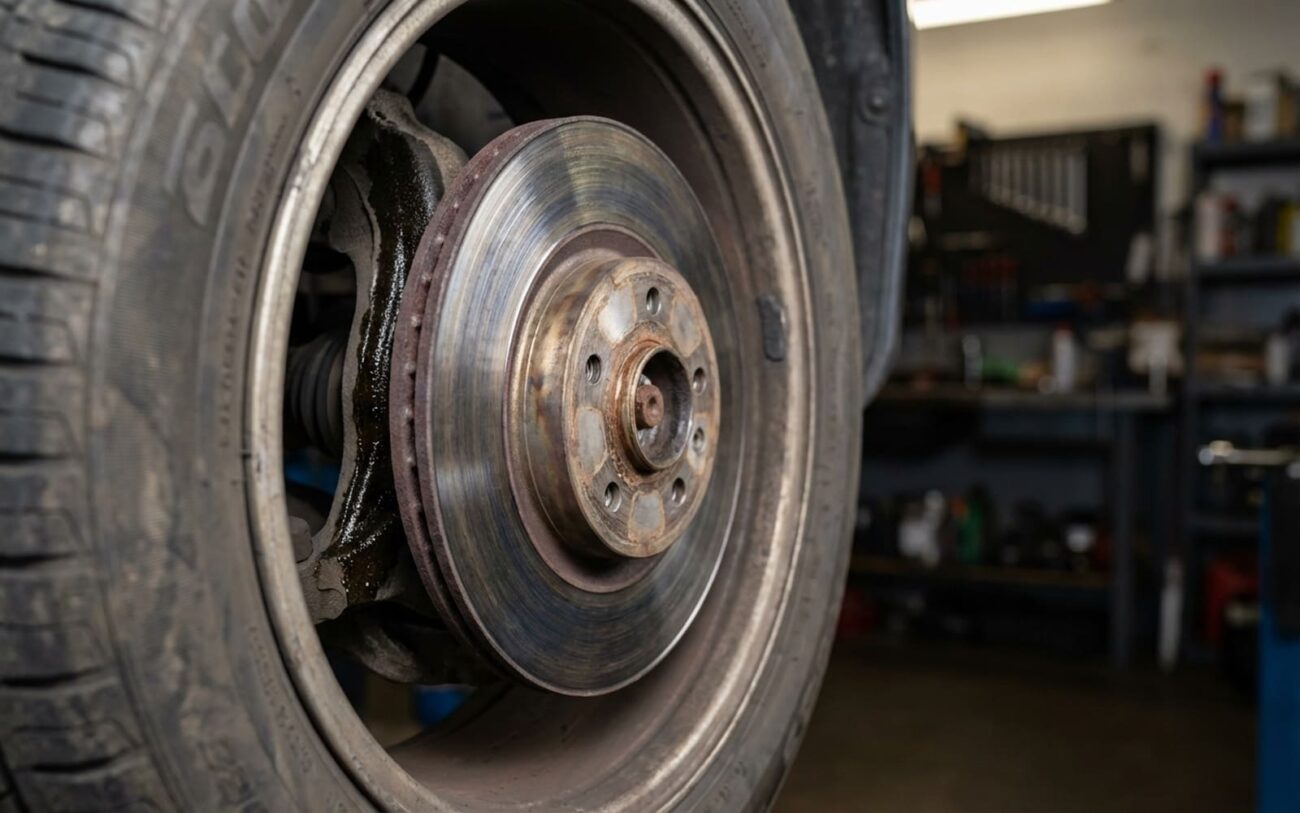
After 25 years turning wrenches, I’ve seen it all. And I mean all. But if there’s one thing that consistently fools even experienced drivers – and sometimes even greenhorn techs – it’s tire pressure. People come in convinced they need a full front-end rebuild, and I send them home after adding a few pounds of air. Seriously, it happens weekly.
We all do it. Your car feels a little off, and your mind immediately jumps to the worst-case scenario: “Must be bad struts,” or “Definitely needs an alignment.” That’s natural, but I’m here to tell you, more often than not, the real culprit is something far simpler, and far cheaper to fix: your tire pressure. Incorrect inflation can perfectly mimic classic suspension and steering issues. The symptoms overlap so much that even I, early in my career, misdiagnosed them. Before you even think about tearing into ball joints or replacing shocks, rule out tire pressure. It’s the first thing I check, every single time.
TPMS MONITOR
Delta: 6.5 PSI
Common Symptoms & Why We Get Fooled
Let’s break down some of the most common ways incorrect tire pressure can trick you into thinking you’ve got bigger problems.
The “Vehicle Pull” Mystery
If your car drifts to one side while you’re trying to drive straight, your brain probably screams “alignment!” or maybe “dragging brake!” And yeah, those are possibilities. But I’ve seen this dozens of times: a pressure difference of just 5 PSI between the two front tires can cause the exact same effect. The lower-pressure tire has more rolling resistance, and it literally pulls the car toward it. I had a customer once, swore up and down his F-150 needed a $1,200 front-end rebuild. Turns out, one front tire was 28 PSI, the other was 35. A quick air check, and his “problem” was gone. Cost him nothing.
Uneven Tire Wear: More Than Just Alignment
This is another classic. If the outer edges of your tires are worn down, that’s usually a dead giveaway for chronic underinflation. On the flip side, if the center of the tread is wearing out first, you’re likely overinflated. These wear patterns are textbook, but they’re often misattributed to alignment issues or worn suspension components. The key difference? Suspension problems typically cause uneven wear on one side only – think inner shoulder wear from negative camber. Pressure-related wear, though, is symmetrical across the tread and predictable. Always check pressure before blaming your alignment.
Vague or Heavy Steering
Ever had the steering wheel feel heavy, or like it’s just not responding as sharply as it should? Most people immediately think “power steering pump is going out!” or “low fluid!” But severely underinflated tires increase sidewall flex and rolling resistance. That makes the car work harder to turn, giving you that impression of a sluggish steering system. It’s not just a comfort thing, either – it increases driver fatigue on long trips and definitely hurts your fuel economy.
The “Bumpy Ride” Deception
This is where the confusion really sets in. A harsh, jarring ride, especially over small bumps, feels exactly like blown shocks or struts. And you’d be right to suspect them. But here’s the kicker: overinflated tires have almost no sidewall flex. They act like rigid hoops, transmitting every single bump directly into the chassis. I’ve had customers swear their struts were completely shot, only to smooth out the ride completely by dropping 8 PSI from each tire. They couldn’t believe the difference.
The Expert View
“Tire pressure is the foundation of vehicle dynamics. If the foundation is soft, the whole house feels shaky.”
My Diagnostic Approach: Tires First, Always.
Alright, so how do you tell if it’s just air or if you’ve got real suspension trouble? Simple: you start with the easiest, cheapest check first. Always. And that’s your tire pressure. It costs nothing, takes minutes, and honestly, it’s the fix more often than not. Here’s how I approach it in the shop:
| Symptom | Likely from Tire Pressure | Common Suspension Mimics | My Definitive Test |
|---|---|---|---|
| Vehicle Pull | Pressure imbalance of 5 psi or more between tires on the same axle. | Wheel misalignment, brake drag, worn control arm bushings. | Use a calibrated digital gauge. Inflate all tires to door jamb spec. Drive it. If it still pulls, rotate front tires side-to-side. If the pull changes direction, it’s definitely a tire issue (internal belt separation, etc.). If not, then you look at alignment or brakes. |
| Uneven Tire Wear | Underinflation (shoulders wear) or Overinflation (center wears). | Alignment issues (toe/camber), worn ball joints, bad wheel bearings. | Measure tread depth across the tire. Symmetrical wear across the entire tread = pressure. One-sided wear (inner or outer shoulder only) or feathered edges = alignment/suspension. |
| Vague Steering | Severe underinflation causes excessive sidewall flex. | Low power steering fluid, failing pump, binding steering U-joint, worn rack & pinion. | Correct pressures to door jamb spec. Drive the car. If the steering feel returns to normal, it was pressure. If not, then I’m checking fluid levels, looking for pump whine, and inspecting steering components. |
| Harsh Ride | Overinflation reduces sidewall compliance. | Failed shocks/struts, broken springs, stiff bushings. | Check against door jamb spec. Adjust pressures. If the ride softens, you found it. If it’s still harsh, then I’d do a proper bounce test on each corner: healthy shocks should settle the vehicle after one rebound. |
Why Your Pressures Might Be Off (And How to Set Them Right)
It’s important to understand that low tire pressure isn’t usually a “failure” in the way a broken strut is. It’s almost always a maintenance oversight or a slow leak. But it still causes all those suspension-like symptoms.
Pro Tip: Ignore the Sidewall, Check the Door Jamb
This is a huge one. Drivers often see the “MAX PRESSURE” number on the tire sidewall and inflate to that. That number is the tire’s maximum safe load pressure, not the vehicle’s recommended operating pressure. The correct number for your specific vehicle is always on the sticker inside your driver’s side door jamb. Always.
Another big factor is temperature. For every 10°F drop in ambient temperature, your tire pressure drops about 1 PSI. So, if you set your tires in the heat of summer and then don’t check them again by January, you could easily be running 5–6 PSI low. That’s more than enough to mess with handling, accelerate wear, and trigger those annoying TPMS warnings.
Getting It Fixed: Your Options
Once you’ve confirmed tire pressure is the issue, here’s how to tackle it, from DIY to professional help.
Simple Pressure Adjustment DIY-FEASIBLE
Replacing a Leaky Valve Core DIY-FEASIBLE
Bead Leaks or Punctures Professional Only
Post-Fix: Always Verify
Just because you added air doesn’t mean it’s fixed. You’ve got to verify. For a simple pressure correction, here’s my rule: all four tires (and the spare, if it’s a full-size) must hold the placard-specified pressure, within ±2 PSI, when measured cold. Check them again after 72 hours, and then after a week. If those pressures stay stable, you’re good. If not, you still have a slow leak somewhere, and you need to find it.
Cost, Risk, and Making Smart Decisions
| Repair Type | DIY Cost | Shop Cost | Success Rate | Secondary Risk |
|---|---|---|---|---|
| Pressure Correction | $20–$50 (for a good gauge) | $0 (often free with other service) | 100% (if no leak) | None. Zero invasiveness. |
| Valve Core Replacement | <$10 (tool & cores) | $10–$25 | ~98% | Cross-threading the valve stem, which is a pain. |
| Professional Repair | N/A (don’t try this at home) | $25–$50 | >95% | Poor workmanship leading to future leaks or tire damage. |
My “$500 Rule”
If you’ve spent more than $500 chasing a vague handling complaint – replacing shocks, doing alignments, swapping parts – and the issue still isn’t resolved, stop immediately. Go back to square one. Recheck all tire pressures with a known-good, calibrated gauge. I’ve seen it save customers hundreds, sometimes thousands, of dollars.
Prevention is Key: My Maintenance Advice
-
Check your tire pressure monthly. Seriously, put it on your calendar. And always check before any long road trips. Use a high-quality digital gauge – they’re worth the twenty bucks.
-
Always check when tires are cold. That means the car has been parked for at least three hours, or hasn’t been driven more than a mile or two. Driving heats up the air inside, giving you a falsely high reading.
-
Don’t wait for the TPMS light to come on. That system is designed for safety, not optimal performance. It often only triggers when a tire is already 25% or more underinflated, which is way too low for good handling and tire life.
