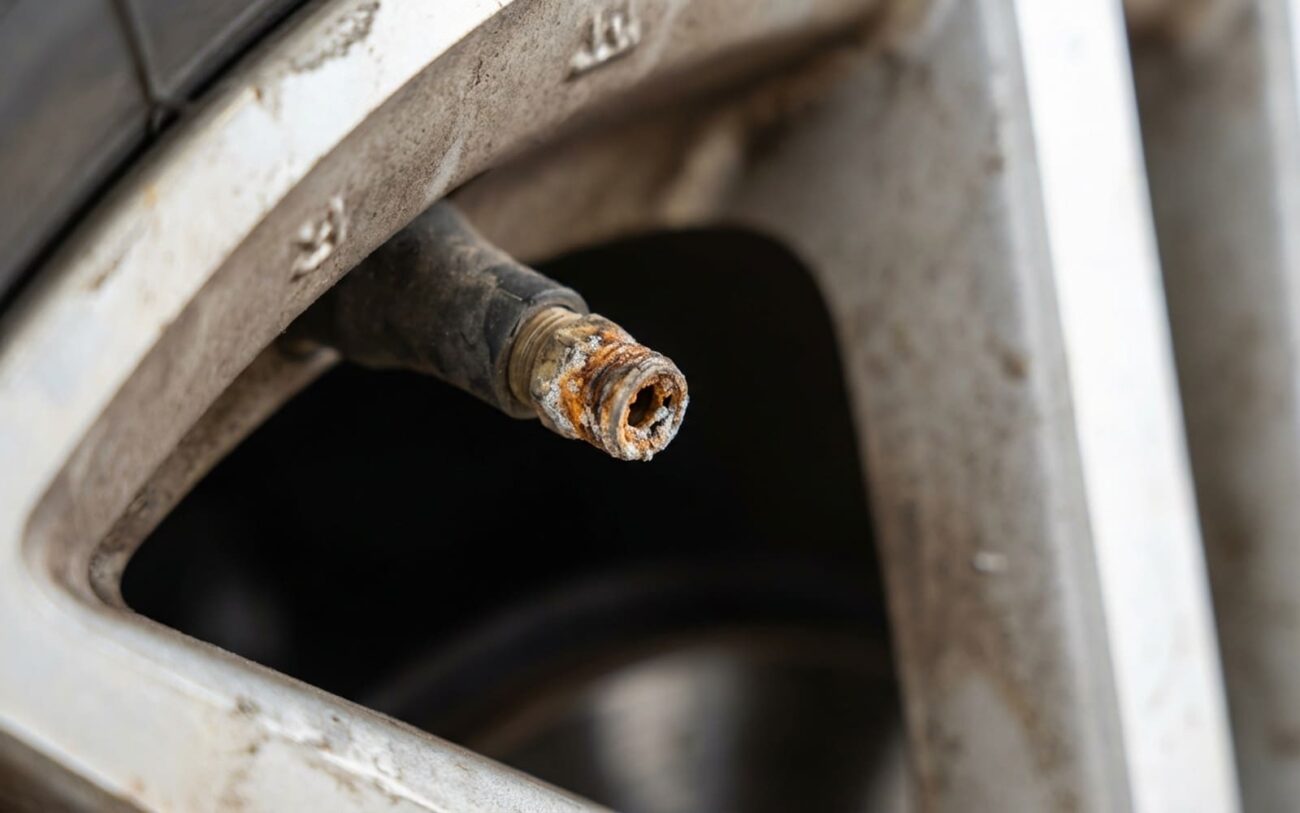
You’ve checked the tire pressure with a real gauge—35 psi all around, just like the door jamb says. But that damn TPMS light won’t shut up. No reading for one wheel, or maybe it’s flashing. You reset it. Drive. Nothing. I’ve seen this more times than I can count, especially come spring in the Northeast and Midwest. Salt, slush, and sensors going quiet.
Let me save you the guesswork: if the tires are properly inflated and the light’s still on, it’s almost certainly not a leak. It’s the sensor. And no, it’s not always because the battery died after 10 years—though that happens too. Out here in the rust belt, I see something else kill sensors just as often: corrosion at the vent hole. That tiny little opening? Yeah, that one. It’s more critical than most people realize.
Why the vent hole matters
That vent hole—usually less than half a millimeter wide—is how the sensor references atmospheric pressure. Without it, the transducer can’t calculate absolute tire pressure. It’s not just a vent; it’s part of the measurement system. Block it, and the sensor either reads wrong or stops transmitting entirely.
Now imagine winter: road salt, brake dust, water, and heat cycling every day. That mix sprays up into the wheel well. If your sensor has a stainless steel housing and the valve stem is aluminum (common), you’ve got galvanic corrosion waiting to happen. Different metals, electrolyte (saltwater), and contact. Boom—corrosion starts right where the vent hole sits.
I’ve pulled sensors off 2016–2020 Camrys and Malibus where the vent was completely plugged with white crust—aluminum oxide. Green stuff? That’s copper corrosion, usually from the gasket or circuit traces. Either way, once moisture gets past that hole, it’s game over. The circuit board corrodes, solder joints fail, and the sensor goes dark. And no, drying it out won’t fix it. These aren’t user-serviceable units.
How to tell if it’s corrosion — not just a dead battery
Here’s the problem: a dead battery, impact damage, and vent hole corrosion all look the same on the dash. You need a real TPMS tool—like an ATEQ VT56 or Bartec BT56—to see inside. Without it, you’re throwing parts at a guess.
What I do in the shop: I scan every sensor. I want to see pressure, temperature, battery voltage, and ID. If the battery reads above 2.8V but the pressure is stuck at zero or bouncing around, that’s not a dead battery. That’s internal damage—usually from moisture. And if the tool can’t wake the sensor at all? I try a forced activation: release a quick burst of air from the valve. If nothing comes back, and the base has crust around it, I know what I’m dealing with.
One trick I use: swap the suspect sensor to another wheel. If the “no data” fault follows the sensor, it’s not the car’s receiver module. It’s the unit itself. And if you see powdery buildup near the vent—especially white or green—don’t bother cleaning it. That’s not surface dirt. That’s corrosion already inside.
Can you clean it? (Spoiler: not really)
I’ve tried. Early on, I thought maybe a careful cleaning could save a sensor. Remove it, use a 0.4mm brass wire, hit it with electronic cleaner, compressed air, the works. Under magnification. If the blockage was fresh and just on the surface—no internal moisture—I’ve had it work once or twice. But that’s it. Less than 10% of the time.
More often, you either push debris deeper or damage the hole. And even if it works today, the corrosion’s still active. It’ll come back. I don’t recommend this for DIYers. You risk killing a sensor that might’ve lasted a few more months. And once it’s dead, you’re replacing it anyway.
Replacement: the only real fix
When the sensor’s gone, it’s gone. Replacement is the only reliable fix. You’ll need:
-
One new sensor (OEM or quality aftermarket—don’t cheap out on Dorman if you’re in a salt-heavy region),
-
A fresh rubber gasket/seal kit (always replace this),
-
Valve core tool,
-
TPMS diagnostic tool for programming.
Torque matters. Most sensors need 35–50 inch-pounds (3–4 Nm). Over-tighten, and you crack the housing or strip the stud. Under-tighten, and you get a slow leak. I use a small torque wrench—yes, they make them for inch-pounds. And always hand-start the nut to avoid cross-threading.
After install, you’ve got to relearn the sensor. Some cars use an OBD2 tool, others need a drive above 20 mph. Skip this, and the light stays on—even with a brand-new sensor. I’ve seen guys install a $120 sensor, skip the relearn, and call it a “bad part.” Nope. User error.
Did it actually work? Don’t assume.
Drive it. Get above 15–20 mph for a few minutes. The light should go off, and all four tires should show pressure on the dash. But that’s not proof enough.
I check with the TPMS tool. I want to see:
-
The ID matches the one I programmed,
-
Pressure within ±1 psi of my handheld gauge,
-
Battery voltage above 2.8V (new ones should be 3.0V+),
-
Strong, consistent signal—not intermittent.
If the tool sees it, and the dash clears, you’re good. If not, dig deeper. Maybe the sensor didn’t wake up. Maybe the relearn failed. But now you know where to look.
Is it worth fixing?
Let’s be real. If you’ve got a 12-year-old Corolla with 180k miles and the TPMS light’s on, dropping $250 for one sensor might not pencil out. I get it. Some customers just disable the warning via a scan tool (if the car allows it) and commit to checking pressure weekly.
Is it safe? As long as the tires are maintained, yes. But you’re giving up an early warning system. No alert if a tire slowly leaks. No heads-up before a blowout. And TPMS isn’t just safety—it affects fuel economy and handling. But for a beater? Sometimes the math wins.
For what it’s worth, I usually recommend replacing all four if one’s failed from corrosion. The others are likely in the same environment. I’ve seen three go within six months. Better to do it once.
How to keep it from happening again
You can’t stop corrosion forever, but you can slow it down.
First: don’t blast the valve stems with high-pressure water when cleaning wheels. You’re forcing moisture past seals. Same with acidic cleaners—some of those wheel sprays are nasty. Use pH-neutral stuff.
Second: inspect them. Every time you rotate tires or swap to winter wheels, take 30 seconds. Shine a light on the base. Look for white or green crust. Wipe it gently if you see buildup. No wire brushes. No abrasives. You’ll scratch the coating and make it worse.
Some shops offer to clean and reseal sensors during rotation, but unless it’s caught early, it’s usually too late. And those little plastic caps? They don’t do much. Moisture gets in regardless.
Bottom line: TPMS sensors are sealed for a reason. Once water’s in, it’s done. But catching corrosion early won’t save the sensor—it might just save you from getting stranded in January with a blinking light and no idea why.
