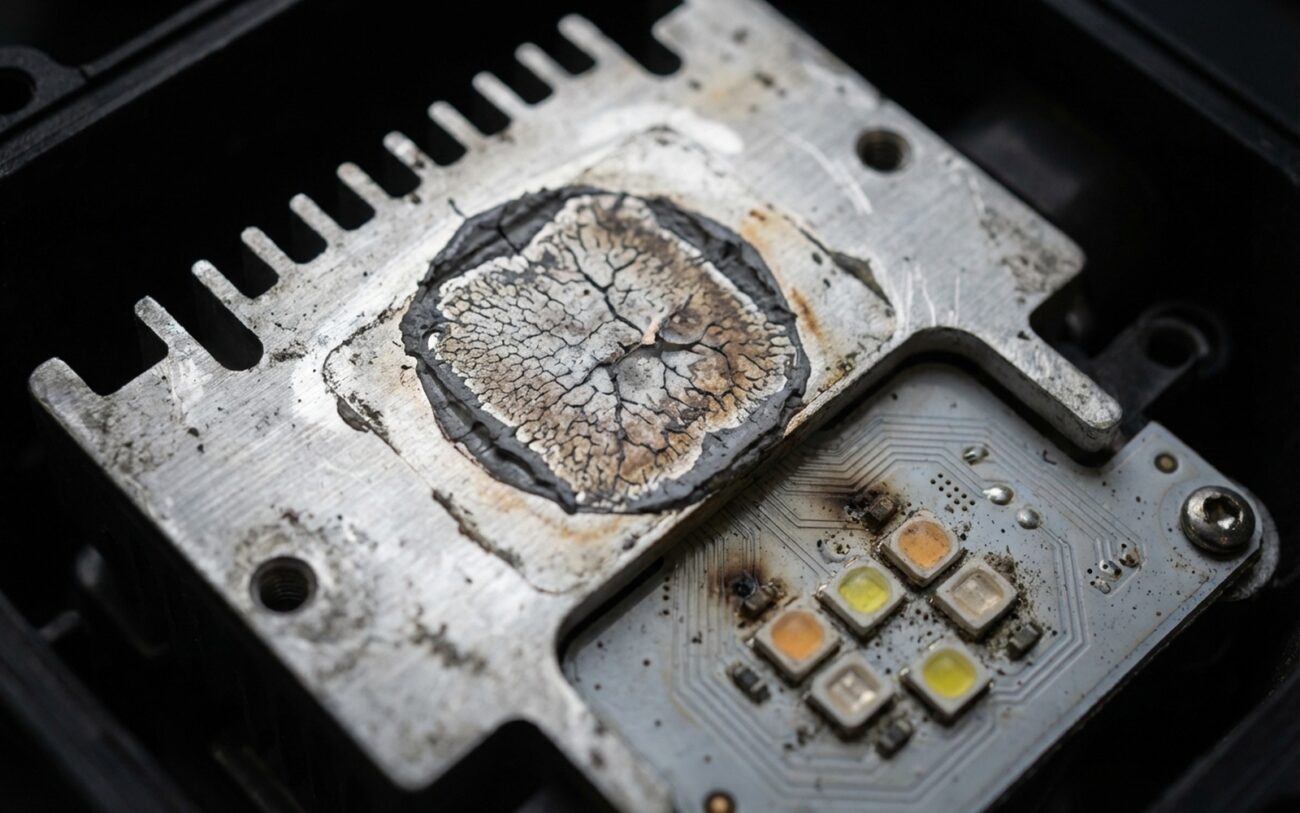
If your LED headlights shut off after 20 minutes of driving and don’t come back until the car’s been sitting for hours—yeah, that’s thermal protection kicking in. I’ve seen this on everything from Audi A4s to RAM 1500s. It’s not a fluke. It’s the Local Control Module (LCM) doing its job: killing power before the LED driver board fries. But when it happens too soon? That’s a failure in progress. And if you ignore it, you’re looking at a $2,500 headlight swap instead of a $150 fix.
Symptoms That Point to Internal Overheating
First, rule out the obvious: this isn’t a blown fuse or a bad battery. We’re talking about a pattern—lights work fine cold, then cut out under load. Maybe they come back after an hour. Maybe only part of the matrix stays on before the whole thing dies. That’s classic thermal derating.
On a BMW G30 or a Mercedes W213, I’ve watched the high-beam segments drop out one by one before total blackout. That’s the LCM throttling individual LED banks as their drivers overheat. It’s not random. It’s the system trying to survive.
And here’s what most shops miss: the failure isn’t always the LEDs. It’s the path heat takes to escape. These assemblies are sealed units. No airflow. Heat has to move from the chip → thermal pad → heatsink → housing → outside air. Break any link, and the junction temp spikes. At 110°C, the LCM kills power. That’s not a defect—it’s a failsafe. But if it’s triggering at 70°C? Something’s wrong.
Is It the Headlight or Something Else?
Before you crack open a housing, make sure you’re not chasing ghosts. A failing BCM or a corroded ground can mimic thermal shutdowns. But those usually don’t follow a heat curve. If the lights die after 30 minutes of driving every single time? That’s not a CAN bus error. That’s physics.
I use a scan tool to pull the headlight’s live temperature PID. On a Toyota Camry or a VW Passat, you can read the internal sensor right from the LCM. If the temp hits 100°C and the light shuts off—boom. Confirmed. No guesswork.
One trick I use: aim a thermal camera at the back of the housing after a 20-minute high-beam run. If you see a hot spot above 95°C near the driver board, that’s your culprit. I’ve found cracked thermal pads this way—no disassembly needed.
Why the Heat Builds Up: The Real Culprits
After tearing down hundreds of these, I can tell you the top three causes—no surprises.
First: dried-out thermal paste or cracked thermal pads. Factory-applied interface material degrades over time. On a 2016–2018 A4, Audi used a silicone pad that turns brittle by year six. Once it loses contact, the LED junction temp can jump 40°C in minutes.
Second: failed internal fan. Some units—like on the RAM 1500 or Ford F-150—have a tiny 12V fan inside the housing. Bearings wear out. Dust clogs the blades. No airflow, no cooling. I’ve pulled fans that sounded like a coffee grinder.
Third: blocked cooling fins. SUVs and trucks are the worst. Mud, bugs, road salt—packed into the rear vents like insulation. I had a Tacoma come in last winter with fins completely sealed in ice. No wonder it shut down.
And don’t forget the sensor itself. An NTC thermistor can drift high—reading 110°C when it’s really 80°C. The LCM doesn’t argue. It shuts down. I test these with a multimeter and a heat gun. Resistance should drop smoothly as temp rises. If it’s erratic? Replace it.
What to Do Next: Real-World Fixes
Clean the cooling fins
Replace the internal fan Professional-Only – Requires Housing Disassembly
Update LCM software or replace module Professional-Only
Remove aftermarket covers Temporary
How to Know It’s Fixed: Test Like a Pro
Don’t just turn the lights on and call it good. That’s how comebacks happen.
For cooling repairs: run high beams for 60 minutes, engine off. Monitor the LCM’s temperature PID. If it climbs past 95°C or shuts down, the thermal path is still broken. I’ve had guys swear they fixed it—only to see 108°C on the scanner.
For software or adaptive fixes: take a 30-minute night drive. Watch how the beams adjust. Any stutter? Any delay? That’s a sign the LCM is still struggling. Then scan for codes. Clear them first, then recheck.
Best tool in my box? A $200 FLIR thermal camera. After a long run, scan the housing. Hot spots mean poor heat transfer. Cold spots mean dead LEDs. It doesn’t lie.
What This Will Cost You—Real Numbers
| Repair Type | DIY Cost | Shop Cost | Success Rate | Secondary Risk if Failed |
|---|---|---|---|---|
| Cleaning external fins | $0 | ~$50 | High | None |
| LCM software update | N/A | $150–$300 | High | None |
| Internal fan replacement | $100 (fan) + $500+ (tools/sealant) | $400–$800 | Medium | Condensation, corrosion, failure |
| Complete headlight replacement | $1500–$3000 | $2000–$4000 | 100% | None, if calibrated |
Here’s the truth: if the repair costs more than 40% of your car’s value, think hard. I’ve had customers replace headlights on a $4,000 Civic. That’s not smart. A quality reman unit from a place like Headlight Revolution? $800. Same performance. Save the money.
But never skip calibration. A misaligned LED matrix can blind oncoming traffic. I’ve seen it cause accidents. The system adjusts beams based on steering, speed, and pitch. If it’s off by 0.5 degrees, you’re not just breaking the law—you’re endangering people.
How to Keep It From Happening Again
Simple: treat the headlight like an engine. It generates heat. It needs cooling. Clean the fins every few months. No wraps. No tint films. Use OEM-spec bulbs for DRLs and turn signals—some aftermarket LEDs draw more current and add heat to an already tight system.
And pay attention. If you notice flickering or pulsing on a long drive, pull over. Let it cool. That’s your early warning. I’ve had customers ignore it until the LCM died. Then it’s not a $100 fix—it’s a $2,500 one.
One last thing: check for condensation right after driving. A little fog that clears in minutes? Normal. Beads of water on the lens or pooling inside? Seal’s bad. Fix it now. Moisture on the driver board degrades thermal paste and causes corrosion. I’ve pulled boards that looked like they’d been in the ocean.
